Get Full Government Meeting Transcripts, Videos, & Alerts Forever!
Get email alerts on the Education Policy Advocacy topic
No spam. Unsubscribe anytime.
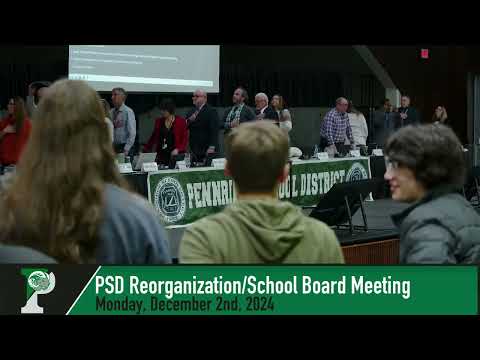
Pennridge board restores older 'political activities' rule, repeals 'advocacy' policy after extensive public comment
Summary
After extended public comment and hours of board discussion, the Pennridge School District board voted to repeal Policy 3-21 'Advocacy Activities' and reinstate the prior Policy 3-21 'Political Activities.' The change was framed by supporters as restoring teacher trust and by opponents as removing protections for vulnerable students.
The Pennridge School District board voted to repeal Policy 3-21, commonly called the "advocacy" policy, and reinstate the district's earlier Policy 3-21, "political activities," following extended public comment and a lengthy board discussion.
The vote came after more than a dozen members of the public addressed the board during public comment, with speakers sharply divided. Supporters of the repeal argued the advocacy policy was vague and hampered teachers. "The advocacy policy ... is incredibly vague, confusing, and discriminatory," Stacy Smith told the board. Several other speakers asked the board to return to the prior political-activities language so teachers could focus on academics and avoid what they described as outside political influence.
Opponents warned the repeal would remove explicit protections for students and staff. Kim Badillion described past uses of visible signals she said helped students find supportive adults, then urged the board to "Please keep the advocacy policy intact." April Fultz argued that in schools advocacy can be "Supporting and speaking up for students' needs, rights, and concerns, and it's a good thing." Maggie Connolly and other commenters said parents should be informed when sensitive topics are raised with students.
Board members discussed several implementation issues during the meeting. Some members said they supported returning to the prior political-activities policy while directing the administration to develop an administrative regulation (AR) or guidance to clarify boundaries, referral steps to student support services, and expectations for communicating with families. One member summarized the board's intent as restoring a policy that "prohibits staff from using district time or resources for political activities" while ensuring students could be referred to guidance or other support when needed.
The board conducted a roll-call vote on the motion to reinstate Policy 3-21 (Political Activities) and repeal the current Policy 3-21 (Advocacy Activities). The motion passed on a roll-call vote: several members voted "Yes" while others voted "No," producing a majority in favor. After the vote, several board members said they would pursue a policy-update plan that could include an AR to set clear on-the-ground guidance for staff.
Why it matters: The change touches how staff can respond to and support students on topics the public identifies as sensitive (including sexual orientation and gender identity), and it was the most contested item at the meeting. Community speakers and some board members tied the policy debate to prior controversies in the district involving library materials and classroom signage.
What the board said next: Board leaders said the administration will bring the policy-update plan and possible AR back to committee for discussion. Several members asked that any administrative guidance be developed with input from staff and the community.
Provenance: Public comments and the motion to repeal and reinstate Policy 3-21 appear across the meeting transcript, beginning with multiple public commenters discussing "policy 3 21" (see evidence excerpt beginning at transcript segment with text: "My public comment pertains to policy 3 21, better known as the advocacy policy") and concluding with the roll-call vote (see evidence excerpt beginning at the transcript segment with roll-call statements and "Yes/No" vote entries).