Get Full Government Meeting Transcripts, Videos, & Alerts Forever!
Get email alerts on the Community Schools Policy topic
No spam. Unsubscribe anytime.
Erie school board adopts Community School Model policy after debate over United Way role
Summary
On Jan. 15, 2025 the Erie School District board voted 6–3 to adopt a new Community School Model policy after public comment and extended debate about United Way’s role, data on outcomes, and timing amid a superintendent search.
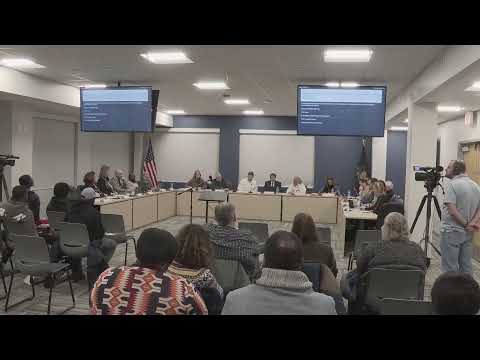
The Board of Directors of the School District of the City of Erie voted 6–3 on Jan. 15, 2025, to adopt a new district policy establishing a Community School Model after more than an hour of discussion and a public comment raising questions about United Way’s role.
Board President Dr. Jay Brennaman called for the vote after a failed motion to table the item. The adoption motion was moved by Mr. Nichols and seconded by Miss Amatangelo. The final roll-call vote was: Miss Amatangelo — yes; Miss Cooley — no; Miss Devlin — no; Miss Gillespie — yes; Miss Graff — yes; Mr. Harkins — yes; Mr. Nichols — yes; Mr. Sharif — no; Dr. Jay Brennaman — yes.
The policy formalizes the district’s use of a community-school approach that coordinates partnerships to deliver nonacademic supports in school buildings. Supporters said the model brings outside funding and services into schools; opponents said timing was poor while the board conducts a superintendent search and that the district needs clearer outcome data.
During public comment, resident Gary Horton asked the board for more transparency and outcome data about the community schools effort and specifically raised concerns about United Way’s relationship with minority organizations and an unspecified recent settlement. “What are the factual accomplishments or results or achievements of the community schools bridal that the United Way is doing?” Horton asked during the public-comment period. He urged the board to engage the community before finalizing the policy.
Board members split along familiar lines. Miss Cooley and Miss Devlin both said the district is in the middle of a superintendent search and that the incoming superintendent should have an opportunity to review major partnerships and initiatives before the board formalizes policy. “I don’t feel we should have a new person, whomever, come in as their hands are tied,” Miss Cooley said during debate.
Supporters, including Mr. Nichols and Miss Graff, argued the policy formalizes an existing set of services and preserves external funding streams. “They are not, from what I have learned of their operation… providing a nurturing environment,” Mr. Nichols said, describing community school directors’ day-to-day role and saying United Way’s funding helped expand services into schools that otherwise lacked resources.
Superintendent Mr. Pulido clarified aspects of the district’s relationship with United Way: the original community schools work was funded by United Way; the district provided “bridge funding” to expand the model while sites found sustainable partners; and hiring for community school directors includes district representation. “We have negotiated into our memorandum of agreement that we will have a say in the hiring process,” Pulido told the board. He also said personnel actions, including firings, remain personnel matters handled separately from the memorandum.
Board members and staff cited that the policy had been reviewed publicly in the Policy Committee and Committee of the Whole over the prior months. Supporters noted the memorandum of agreement can be reviewed over time and that partnerships provide services—such as clothes closets, food support and student outreach—that the district currently lacks capacity to fund directly.
The board’s adoption follows a failed procedural motion to table the item. Mr. Sharif moved to table the policy; Miss Cooley seconded the motion to table. That motion failed on a roll call in which a majority voted no.
The board president and other members said the policy can be revisited and amended if needed. The policy’s adoption places the Community School Model into district policy; implementation details, reporting timelines and metrics for measuring outcomes were discussed but not finalized at the meeting.