Get Full Government Meeting Transcripts, Videos, & Alerts Forever!
Get email alerts on the Tax Exemption Syracuse University topic
No spam. Unsubscribe anytime.
Syracuse University’s Shine Student Center exemption disputed in ongoing litigation before Board of Assessment Review
Summary
Attorneys for Syracuse University told the Syracuse City Board of Assessment Review that the Shine Student Center remains in litigation over a partial tax-exemption decision tied to food-court and campus store operations; the university says most activity serves the Syracuse community and remains exempt.
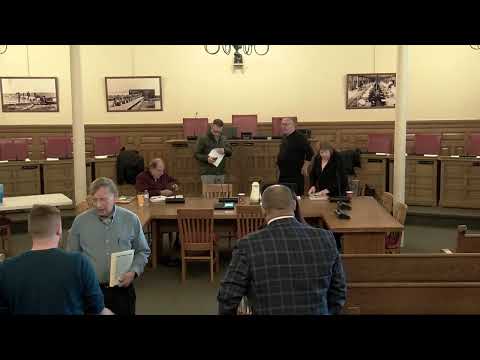
Attorneys for Syracuse University appeared before the Syracuse City Board of Assessment Review on Feb. 24 to respond to a grievance over the tax status of the Schein (Shine) Student Center, which the city challenged after a major renovation.
The university’s representative, Mark McNamara of Barclay Damon, said the property’s tentative assessed value is $18,900,000 with a land value of $1,140,000 and that litigation covers roll years 2022, 2023 and 2024 before Judge Neri. McNamara said a 2019–2021 renovation totaled roughly 104,000 square feet and that the assessor’s office this year determined about 8% of the property was not tax-exempt, citing the food court and part of the campus store.
McNamara told the board the university disputes the city’s finding and maintains that the food court and campus store operations are integral to Syracuse University’s nonprofit educational purposes and are “entirely student driven for the Syracuse University community, faculty, staff, etc.” He said the university operates the food stations and campus store as the franchisee or licensee; employees are Syracuse University employees and the university owns all improvements and personal property in the building.
Board members pressed for clarification about public access and use. Joe Seia, speaking for the board, observed that the Shine Student Center is “open to the public” but asked whether parents or other nonuniversity patrons would change the exemption analysis. McNamara and Joe Feder (identified in the record as Syracuse University real estate) said that while anyone can enter the building, patronage is overwhelmingly Syracuse-related and that surveys submitted in the litigation show non‑Syracuse patronage is “de minimis.”
The parties also discussed a recent conversion of about 4,100 square feet of campus store space into an esports and gaming center (opened in December) with an owner’s-cost line item recorded as “0.4” in filings, which McNamara confirmed represented $400,000. The university said that conversion was performed and that Barnes & Noble is operating the campus store space under an operational arrangement but without an ownership change to the underlying real property.
Board members and university counsel noted a settlement and confidentiality posture in the ongoing court proceeding; McNamara said competing summary‑judgment papers have been submitted and are under the court’s review. Board representatives said they would review documents the university offered — including a patron‑traffic survey and renovation drawings — and follow up as needed. The board recorded that it will issue notices in April as part of its grievance calendar. No board decision on the exemption was made at the hearing.
Why it matters: The dispute centers on how municipal assessors apply tax‑exemption rules to campus facilities that mix student‑focused services and public access retail. The outcome will affect the city’s tax base and how other university facilities are assessed going forward.
Speakers quoted above are recorded in the meeting transcript and appeared during the agenda item on the Schein/Shine Student Center.