Get Full Government Meeting Transcripts, Videos, & Alerts Forever!
Get email alerts on the Landfill Waste Fees topic
No spam. Unsubscribe anytime.
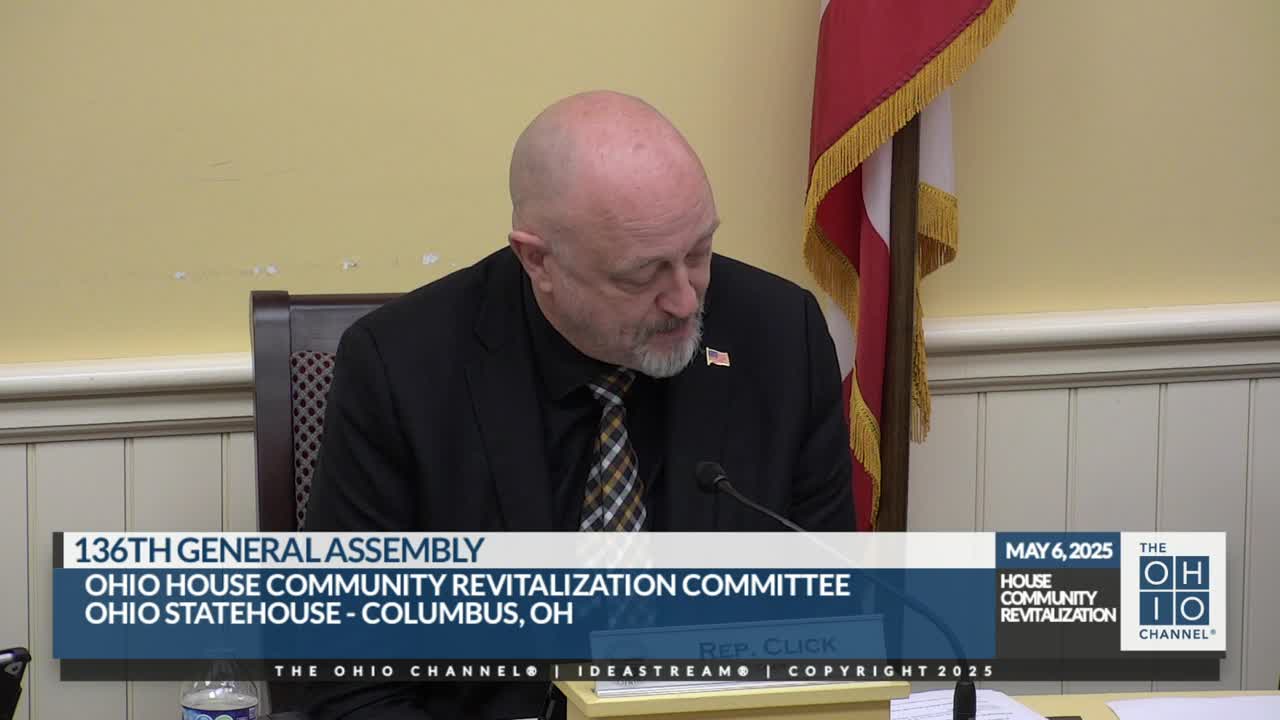
Ohio lawmakers hear testimony on bills to let counties impose permissive fees, withdraw from regional solid waste districts
Summary
Senate Bill 147 and companion House Bill 222 drew hours of testimony focused on the Sunnyfarms/Wind Waste landfill near Fostoria and on allowing counties more local control and permissive fees for construction‑and‑demolition debris.
Senate Bill 147 and companion House Bill 222 drew hours of testimony focused on the Sunnyfarms/Wind Waste landfill near Fostoria and on allowing counties more local control and permissive fees for construction-and-demolition debris.
Sponsor testimony opened the discussion. "So let's talk trash," Senator Bill Reineke said, describing constituent concerns about out‑of‑state waste arriving by rail and the growth in disposal at the Seneca County site. He and local officials told the House Community Revitalization Committee that current state fee structures and district governance limit local authorities’ ability to respond to health and quality‑of‑life impacts.
Why it matters: proponents say the bills would allow counties that host disproportionately large landfills to adopt a permissive per‑ton disposal fee for construction and demolition debris (C&D) and to withdraw from multi‑county solid waste districts, directing more funds to local health and oversight. Opponents raised concerns about competitiveness and the potential for uneven application across counties but no formal opponent testimony was provided in the hearing record.
Details from testimony and documents
Sponsor and county officials described how Ohio’s fee structure has evolved and the mechanics at issue. The transcript shows a long explanation of existing fees and distributions: a $4.75 per‑ton fee on solid waste is split among state programs (including small cents‑per‑ton allocations to several Ohio EPA functions and to soil and water conservation), and a separate $1.60 per‑ton fee applies specifically to construction and demolition debris (C&D), with portions directed to recycling and soil-and-water programs and a smaller portion retained by licensing authorities. Julie Richards, Seneca County health commissioner, and Commissioner Anthony Paradiso said the county receives 40¢ per ton from the C&D-specific fee for health department oversight, which they say is insufficient given the landfill’s scale and recent incidents.
Local witnesses quantified the scale and impacts cited repeatedly in testimony and a short video shown to the committee: Wind Waste (Sunnyfarms) has been described in testimony and the accompanying video as handling thousands of tons per day. Testimony used figures of roughly 7,500 tons per day (video) and noted a subsequent permit expansion to 9,500 tons per day; witnesses said roughly 90–98% of that material is C&D and that the majority arrives from out of state by rail. Commissioner Paradiso said, "We want to provide oversight. Our people need to be comfortable and understand that they're doing what they're supposed to be doing within the law." Health commissioner Richards told members her agency currently has one person responding to emergencies tied to the landfill and has hired consultants and raised salaries to attract qualified landfill inspectors.
Local officials cited recent incidents that required health department response, including leachate releases (one described as roughly 53,000 gallons) and soil transported to the landfill after a nearby derailment; Richards said the health district faces costs for consultant fees, special testing, monitoring equipment, and staff time.
What the bills would do (as described in testimony)
- Permit counties (via their commissioners) or solid waste districts to adopt a permissive per‑ton disposal fee applied to construction and demolition debris that mirrors the existing district disposal-fee framework for solid waste (i.e., a local option rather than a mandatory statewide increase). - Allow a county to withdraw from a multi‑county solid waste district by county resolution. Testimony argued that some counties hosting large landfills have limited say within multi‑county districts and that local control would let affected counties target funds for oversight and mitigation.
Questions from committee members
House members asked sponsors and witnesses about public health outcomes, the adequacy of local fee revenue, comparisons to other states’ fees, and the mechanics of district withdrawal. Representative Gross asked whether specific disease or health‑care costs have been documented; sponsor testimony deferred detailed epidemiological claims to local health officers. Members asked whether the bills would create new fees; sponsors and witnesses stressed the proposal is permissive and not a mandatory statewide fee increase. Representative Tesco asked for the share of C&D vs. solid waste in the landfill; witnesses said 96–98% of the material at the Seneca County site was C&D.
Next procedural steps
The hearing record shows the committee received testimony and that Senate Bill 147 was recorded as having its first hearing while House Bill 222 was called for a second hearing; the committee did not take a final vote during the session.
Local context and views
Multiple local officials and residents testified in support of greater local authority and funding for oversight, saying that Seneca County bears the primary impacts while receiving a smaller share of the fees and limited decisionmaking power inside its three‑county solid waste district. Residents and county commissioners described ongoing community concerns about dust, odors, train car staging, expansion permits, and the long‑term footprint of the landfill.
The bills prompted technical questions about Ohio’s fee allocations and how added local fees would be distributed; committee members asked for comparative fee information from other states and for more precise breakdowns of county receipts. Witnesses offered to provide additional data.
Ending note: the committee took testimony but did not advance either bill to a vote. Proponents asked for follow‑up information on fee comparisons and on health and environmental study needs.