Get Full Government Meeting Transcripts, Videos, & Alerts Forever!
Appropriations Committee advances property-tax relief, child nutrition funding and election disclosure measures; several bills pass on party-line votes
Summary
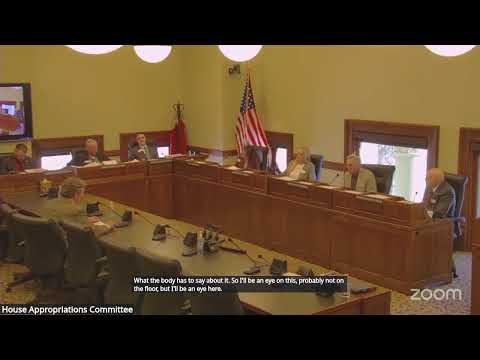
The House Appropriations Committee on May 20 recommended passage of multiple bills addressing property-tax relief, bond question wording, a summer nutrition EBT pilot and election disclosure measures, while rejecting a proposal to create a Monument to America oversight task force.
The House Appropriations Committee on May 20 recommended passage of multiple bills addressing property-tax relief, bond ballot language, a summer nutrition pilot, parental waiver acknowledgments, foreign funding disclosures for ballot measures, and a streamlined annexation building-permit rule. The committee also debated a separate measure to create a Monument to America oversight task force and associated expenditure; that proposal failed on a committee roll call.
The committee, chaired by Representative Bair, handled three re-referrals and four regular bills under expedited testimony rules and took recorded roll-call votes on each bill. Most measures were advanced to the House floor, with several passing by 6–1 or unanimously. The monument/task-force bill drew extended discussion and was defeated in committee 2–5 after amendments cut the requested appropriation.
Why it matters: The bills carry direct budgetary or procedural effects — from estimated tens of millions for the property-tax relief plan to a $2.28 million startup request for a summer nutrition electronic benefit transfer (EBT) pilot — and include new disclosure and enforcement language for ballot measures that could alter how local bond questions are worded and policed.
House Bill 130 — property-tax relief (recommended do pass) Chairman Bair presented House Bill 130 as a property-tax relief measure brought by the majority floor leader that would provide a homeowner exemption using energy matching funds identified in the fiscal note. Under the committee amendment, the exemption in the first year would apply broadly to residential homes and, in the second year, would be limited to primary residences once the Department can confirm residency status. The bill includes a $400,000 per-residence cap as presented in committee and a fiscal estimate shown in the committee materials.
Committee members discussed the bill’s fiscal note. Chairman Bair summarized the committee amendment and the fiscal impacts: “the cost of the bill is 83,000,000 per year in ’26 and ’27” and the amendment changes the first-year cost to about $110,000,000 while leaving the second-year cost at $83,000,000, the chairman said. The committee voted on a roll-call motion to recommend the bill do pass; Representative Aleman moved and Representative Smith seconded. The recorded roll call was: Aleman — Aye; Angelos — Aye; Harrelson — Aye; Pendergraft — Aye; Sherwood — No;…
Already have an account? Log in
Subscribe to keep reading
Unlock the rest of this article — and every article on Citizen Portal.
- Unlimited articles
- AI-powered breakdowns of topics, speakers, decisions, and budgets
- Instant alerts when your location has a new meeting
- Follow topics and more locations
- 1,000 AI Insights / month, plus AI Chat