Get Full Government Meeting Transcripts, Videos, & Alerts Forever!
Get email alerts on the Public Health Sanitation topic
No spam. Unsubscribe anytime.
Councilors press administration over feces-cleanup program, contractor use and PPE after disputed video
Summary
Councilors questioned city staff about the implementation of a council resolution directing cleanup of human feces in public spaces, use of an on-call contractor, staff training and PPE after councilors reviewed video and neighborhood complaints.
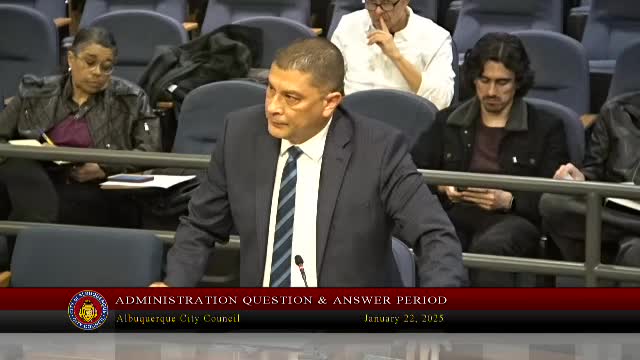
Councilors pressed city administration on Jan. 22 over how the city is implementing a council resolution to clean human feces in public spaces, why an on-call contractor on contract through May 2025 was not always used, and whether city crews had adequate personal protective equipment (PPE) and training.
Councilor Renee Rogers (District 6) said constituents submitted photographs and video showing cleanup operations and questioned whether the city’s on-call contractor — identified inconsistently in the transcript as “SGS/CGS” — was performing the work. Administration staff said the on-call contractor remained under contract through the end of May 2025 and that the Solid Waste Department uses its own crews for routine pickups, calling the contractor in for overflow or additional capacity.
“Council president and councilor Rogers, we use our team, and the on call is if we need additional support,” said a Solid Waste representative, who also said city crews are trained and have followed the procedures required by the city’s resolution. Councilor Rogers and others raised safety concerns after viewing a short video in which a person crouched near feces and another person wiped their face; Rogers said the PPE shown in the video did not meet the standard for blood-borne pathogen handling and requested a session where councilors could observe the new protocols and training.
Administration officials said the city spent $100,000 in fiscal year 2024 on a pilot with a contractor and then evaluated costs. The administration said it determined that an in-house approach was more fiscally feasible while retaining an on-call contract for overflow. Division leaders said the department follows a “dry pickup” method when weather conditions make wetting hazardous and that the suction equipment used is emptied at the wastewater plant.
Councilors asked for counts of calls handled by the contractor in recent months; the administration said it would provide those figures. Councilor Sanchez, who had spoken with the contractor privately, said she had been told the contractor was not being used despite being on contract. Administration leaders replied that they had training documentation and were willing to brief councilors on protocol and training materials.
Why it matters: The council’s resolution directed the city to develop a program for collection and safe disposal of human feces believed to be from humans, including engaging and supervising a specialized contractor. Councilors cited public-health risk and compliance with the resolution and asked for documentation showing the city’s protocols meet OSHA and other standards.
What’s next: Administration agreed to provide contractors-call data, training materials and to schedule a demonstration of the city’s cleanup protocols for councilors (subject to open-meeting rules).