Lifetime Citizen Portal Access — AI Briefings, Alerts & Unlimited Follows
Council oversight hearing: OAH reports record filings and staffing shortfalls as database goes live
Loading...
Summary
The Committee on Public Works and Operations held a Feb. 6 oversight hearing where OAH officials and legal advocates described record case filings, staffing shortfalls and early steps to publish OAH decisions online.
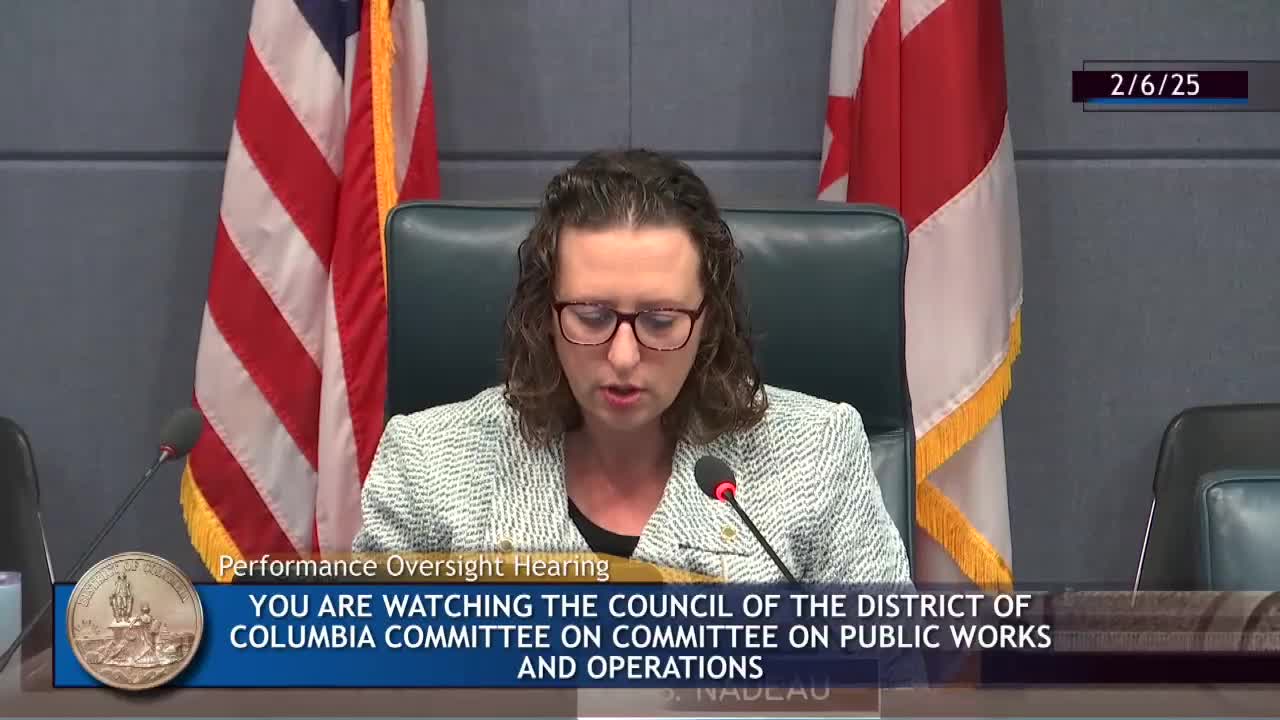
The Committee on Public Works and Operations held a performance oversight hearing on Feb. 6, 2025, for the District's Office of Administrative Hearings. Chair Ward 1 Councilmember Brianne Nadeau convened the meeting in Room 412 of the Wilson Building and by Zoom. Witnesses from legal aid groups, access-to-justice organizations and OAH detailed a record increase in filings, persistent staffing vacancies and early steps to improve public access to OAH decisions.
Advocates described long delays for residents who appeal government decisions that affect benefits, housing and daily necessities. Rebecca Steele, an attorney with Legal Aid DC, said publicly filed cases surged in fiscal year 2024 and that many clients are still waiting for initial scheduling orders months after filing. "The benefits district residents are seeking when they go to OAH simply cannot wait," Steele said, describing clients who waited months for status conferences and who lost possessions or access to critical services while appeals were pending.
Why it matters: OAH is the neutral administrative forum where residents appeal decisions by District agencies, including the Department of Human Services and enforcement actions from agencies such as the Department of Public Works. Delays in adjudication can extend or deny access to SNAP, Medicaid, cash assistance and other time-sensitive benefits.
Record filings and service impacts
Chief Administrative Law Judge Colleen L. J. Curry told the committee OAH received 33,745 new cases in fiscal year 2024, a 28% increase over FY23, and that filings in the first quarter of FY25 rose 46% compared with the prior year. Curry said if the filing rate continues, OAH could see more than 50,000 cases in FY25. She provided a breakdown of key filers: the Department of Public Works (11,459 cases, about 34% of filings), the Department of Buildings (9,557 cases, about 28%), WMATA (3,478 cases, about 10%) and appeals from Department of Human Services decisions (3,791 cases, about 11%).
Several witnesses and the chief judge described how those volumes have translated into backlog and statutory concerns. Legal services witnesses said public‑benefits appeals frequently exceed federal timelines: advocates cited an average of 83 days from SNAP appeal filing to the initial event in FY24, exceeding the federal 60‑day fair‑hearing guideline. Steele and other advocates urged the council to use oversight and budget tools to address vacancies and upstream agency errors that generate avoidable appeals.
Staffing, budgets and hiring constraints
OAH said it currently employs 109 people including 36 administrative law judges plus the chief judge (37 ALJs total). Curry said the agency engaged B. McNamee Consulting (BMC) for a weighted‑caseload staffing study that estimated OAH needs about 50 ALJs and roughly 85 clerk's‑office staff to handle the FY24 caseload; Curry and witnesses said current staffing falls well short of that benchmark.
Curry described a mid‑year staffing picture in which OAH had reduced some vacancies but faced new departures and anticipated retirements; she said some locally funded positions could not be filled immediately because of a projected FY25 budget shortfall. A budget officer who identified herself as Judith told the committee the positions are budgeted but that a projection of salary and fringe costs showed a potential deficit in the first quarter, which constrained an immediate hiring plan. The committee heard that the clerk's office had the largest share of non‑ALJ vacancies (about 11) and that two ALJ vacancies existed at the time of the hearing, with two more retirements forthcoming.
Advocates and the judge linked staffing shortfalls to operational strain. Fritz Mollhauser of the DC Open Government Coalition urged OAH and the council to pursue competitive classification and retention strategies for legal and IT staff, noting that short tenures for recently hired IT staff limited progress on modernization.
Problems with filings from other agencies
OAH and witnesses described patterns in the filings it receives that increase workload without producing adjudicable disputes. Curry said many WMATA notices of violation (NOVs) were legally deficient — for example, illegible forms or NOV templates that included incorrect instructions about where to file an appeal — which in OAH practice can require dismissal and additional administrative work. Curry said OAH has communicated these problems to WMATA but that the deficient filings continue.
Advocates also urged closer oversight of agencies such as DHS, which they said often do not resolve straightforward errors through intake or internal escalation channels. Legal Aid witness Steele said some DHS problems are corrected only after a hearing is filed, effectively shifting oversight of recurring agency errors to OAH.
Final‑order database and technology
Curry announced that on Sept. 30 OAH published a public portal giving access to final orders, and she described that as a major transparency milestone. Advocates applauded the launch but urged improvements: Washington Council of Lawyers and others noted the portal currently lacks full text keyword searchability and includes only decisions posted after Oct. 1, 2024. Fritz Mollhauser and Christina Jackson urged the committee to press for enhancements, including better metadata and search tools; Mollhauser suggested automated redaction tools to reduce the backlog of unpublished opinions.
Curry said OAH is exploiting new workflows in its case management system and is evaluating an "elastic" or Boolean search capability internally, but she warned that public‑facing search upgrades will require additional funding. The committee discussed vendor procurement, vendor responsiveness and whether OCTO or other partners had been engaged in system design.
Resource center, data governance and task forces
OAH said it fully staffed a resource center and launched an AWS‑based call system to improve intake, track referrals and measure language‑access needs and service volume. Curry said resource center staff increased in‑person availability, standardized forms for plain language, and added direct contact information on orders.
OAH has formed a public‑benefits task force to review physical and IT workflows for benefit appeals and convened a Data Governance Committee to standardize collection, analysis and publication of case data. Advocates called for better data about which agencies generate appeals and the rate at which claims are substantiated, saying such information would support upstream corrective action.
Committee follow‑ups and next steps
During questioning, Chair Nadeau and committee members asked about options to address delays — including oversight of MOUs, examination of DHS administrative review timing, and timely hiring or reclassifications to improve recruitment. Mollhauser agreed to provide the committee the Court of Appeals decision he had referenced regarding broader relief authority for administrative judges. Chair Nadeau closed the hearing by reminding potential witnesses about the written testimony deadline and noting more performance oversight hearings would follow.
No formal votes or binding actions were taken at the hearing; members requested follow‑up documentation and budget details for FY26 consideration.