Get Full Government Meeting Transcripts, Videos, & Alerts Forever!
Get email alerts on the Public Sector Union Amendments topic
No spam. Unsubscribe anytime.
Utah Senate advances bill limiting public-sector collective bargaining; third-reading set after heated debate
Summary
The Utah Senate on Friday voted 18-10 (1 absent) to read first substitute House Bill 267 a third time after hours of debate over removing the state mandate for public-sector collective bargaining and adding new reporting and limits on payroll-deducted union dues.
The Utah Senate on Friday debated first substitute House Bill 267, a proposal that would end the statutory mandate for collective bargaining by public-employee labor organizations and impose new disclosure and limits on use of payroll-deducted dues.
Sponsor Senator Cullimore said the bill "does not abolish public sector unions. Rather, it currently removes the mandate for collective bargaining in public employee settings" and described a planned substitute that would allow collective bargaining only if a majority of an employee class votes to be represented. Cullimore also said the measure would bar use of public funds and facilities for union political activity and require more transparency when dues are collected through payroll deduction.
Supporters argued HB 267 restores accountability and prevents elected officials from being constrained by union-negotiated contracts. Senator Johnson said the bill is "not anti-worker" but rather "pro efficiency and pro fairness," arguing collective bargaining can limit flexibility for rewarding performance and responding to fiscal realities.
Opponents warned the bill would weaken protections and representation for teachers, firefighters, police and other public employees. Senator Escamilla called it "a very direct attack on unions. Period." Senator Eby and several others urged colleagues to withhold final action until a public substitute text is published and stakeholders — including local fire, police and education unions — can review changes. Multiple senators cited studies or constituent testimony asserting collective-bargaining rights correlate with safety outcomes for first responders.
During the floor debate sponsors and critics discussed several specific provisions: restrictions on use of public facilities for union activity, a cap described in floor discussion on payroll-deduction rates (characterized as a 3% ceiling by the sponsor), and language affecting who may be appointed to panels such as retirement boards. Senators asked how the bill would interact with existing laws that already separate union political funds from member-service funds; the sponsor described the new reporting requirement as "belt and suspenders" transparency.
Senators also discussed process: the sponsor said he expected to file a substitute the next day that would allow collective bargaining if a majority of the employee class votes to be represented. Several senators who oppose the current text said they would withhold a final vote until that substitute is made public.
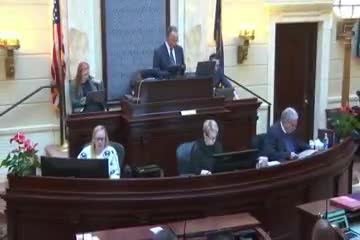
The Senate voted 18-10, with one absence, to read first substitute House Bill 267 a third time. That action advances the measure toward final consideration but is not final passage of the bill. Senate President Adams announced the result on the floor: "First substitute House Bill 267, having received 18 yay votes, 10 nay votes, 1 being absent, shall be read a third time." The sponsor indicated a substitute would be anticipated for the next legislative day.