Get Full Government Meeting Transcripts, Videos, & Alerts Forever!
Get email alerts on the Opioid Treatment Access topic
No spam. Unsubscribe anytime.
Panel approves ban on prior authorization for opioid-use-disorder medications with two-year review
Summary
The committee unanimously approved an amended bill to remove prior authorization for FDA-approved medications to treat opioid use disorder; the amendment limits coverage to medications FDA-approved by Jan. 1, 2025, and adds a two-year sunset and reporting/guardrails.
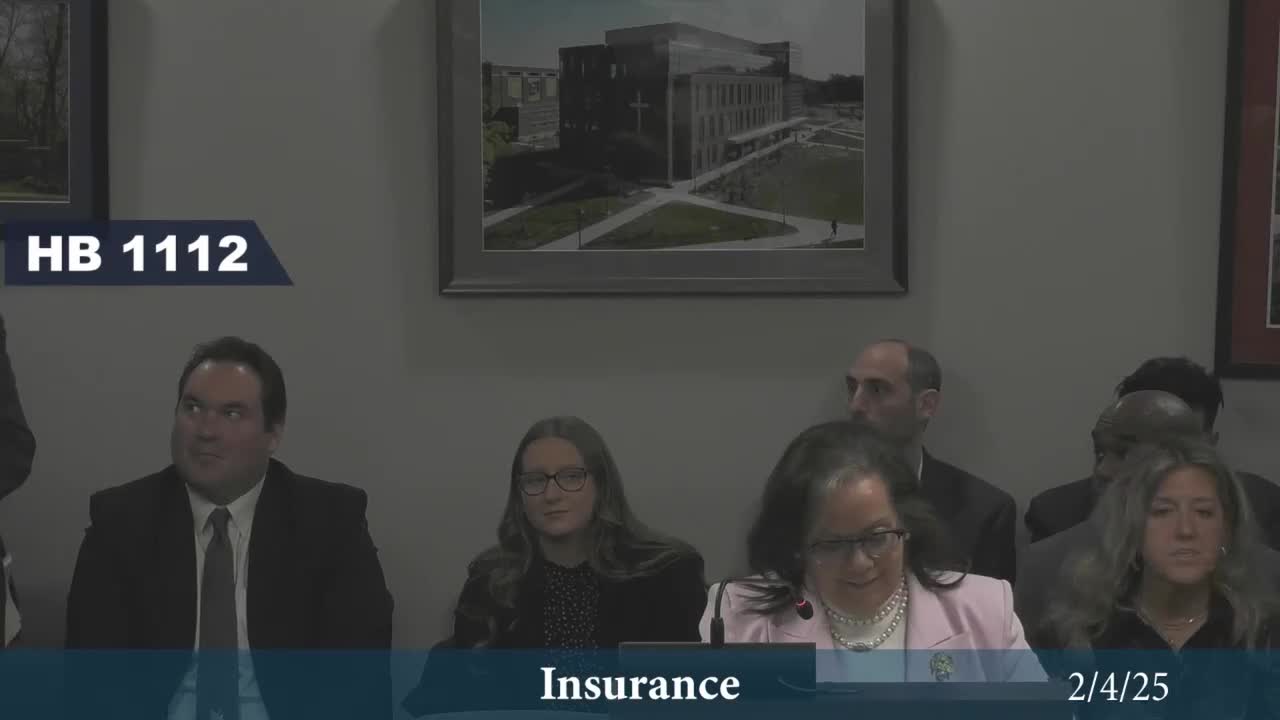
Representative King presented House Bill 11-12, which would remove prior authorization requirements for medications used to treat opioid use disorder (OUD). King said the change aims to stop treatment delays that lead to relapses, reincarcerations and fatal overdoses, and offered an amendment to add guardrails: the bill applies only to medications that were FDA-approved by Jan. 1, 2025, and includes a two-year sunset to allow evaluation of costs and outcomes.
Joey Fox, representing the Pharmaceutical Care Management Association and the Indiana Association of Health Plans, asked that any prior-authorization ban be limited to generic medicines to avoid higher costs for brand-name drugs. "Our suggestion for this bill is that the prior-authorization ban on these drugs be limited to generic medications, and not to brand name medications," Fox said.
Dr. Aaron Whiteman, a board-certified addiction psychiatrist, testified in support and described clinical concerns about delays. "PAs just make my life harder, and they don't help the patients," Whiteman said, arguing that removing prior authorization would reduce treatment delays and downstream emergency and criminal justice costs. Committee members questioned the distinction between oral generics and longer-acting brand-name injectables; Whiteman explained that many current prior-authorizations are for newer long-acting injectables and that immediate access to those medicines can be lifesaving for some patients.
Representative King and committee members said the amendment's sunset would allow the state to review clinical and cost impacts after two years. After testimony and questions the committee voted to report the measure as amended; the chair announced the bill passed the committee 11-0.
The vote advances the amended bill to the next legislative stage. Sponsors and supporters stressed the measure's aim to reduce delays for a clinically vulnerable population; insurers urged attention to cost controls and distinguishing generics from brand-name injectables.