Get Full Government Meeting Transcripts, Videos, & Alerts Forever!
Get email alerts on the County Finance Reserves topic
No spam. Unsubscribe anytime.
Committee hears hours of testimony on curbing county reserves; bill tabled for further study
Summary
House Bill 262, which would limit county reserves and require refunds of excess funds, drew extensive testimony from county officials, associations and local officials and was tabled for further work after committee members raised constitutional, administrative and practical concerns.
Representative Dan Johnson presented House Bill 262, which would restrict the amount counties may hold in reserve and require counties to calculate an "annual spending amount" and notify residents if an excess fund is expected. Johnson said reserves in some counties exceed what he considers reasonable; using Laramie County as an example he described reserves that he and supporters consider excessive and said excess revenue should be returned to taxpayers, including revenue from mineral production.
The bill drew lengthy opposition from the Wyoming County Commissioners Association, which said returning general county reserves to taxpayers could raise constitutional concerns. Jeremiah Grama, executive director of the association, cited Article 16, Section 6 of the state constitution prohibiting gifts or donations by political subdivisions and warned the proposed refund mechanism could conflict with that provision. Grama and county commissioners testified that reserves are often earmarked for specific capital projects, long-term maintenance, depreciation funds, or to stabilize revenue that is volatile because it depends on mineral production and other variable sources.
County commissioners outlined practical reasons for maintaining multi-year reserves: revenues tied to minerals can spike and then fall, counties sometimes receive large one-time receipts (for example, a hospital sale), and the shift to monthly ad valorem collections left counties with a need to set aside funds for the "true up" process. Commissioner Robert Short of Converse County and Commissioner Bill Novotny of Johnson County described multi-year planning for roads, equipment and known future liabilities; Novotny said special-purpose reserves and long-term project funds are critical for counties with changing valuation bases.
Local officials and special district representatives also testified in opposition. Joel Schell, treasurer of Converse County representing the Wyoming County Treasurer's Association, raised administrative problems in the bill's language, noting the draft would include fiduciary and restricted funds held for other taxing entities or special districts unless language was clarified. He warned the notification and refund mechanics would be administratively burdensome and potentially costly. Mayor Kelly Krakow of Albin described landfill and fire-district reserves that are meant for future capital and closure costs; airport representatives said federal grant and revenue restrictions limit how municipal airport funds may be used and that the bill could conflict with federal obligations.
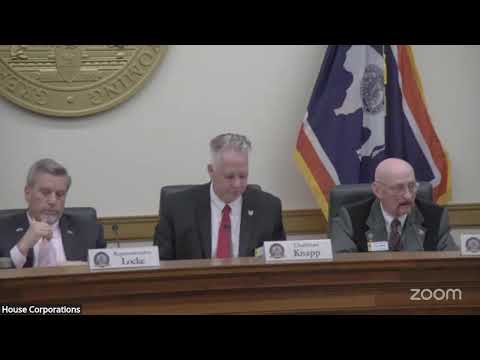
During committee discussion members asked whether the bill would trigger end-of-year spending sprees, how small counties with limited tax bases would be protected for emergencies, and whether refunds should be implemented differently (for example, adjusting mill levies). Representatives and witnesses highlighted existing statutory mechanisms that limit municipal reserves and the need to distinguish between restricted enterprise/capital funds and general operating reserves.
After hours of testimony and questions the committee took no motion to advance the bill and officially tabled it for further study. Committee members said the measure requires substantial work on statutory language, constitutional consequences and the fiscal note. Representative Weber and others suggested the issue be considered as an interim topic with additional stakeholder input before any final legislation.