Get Full Government Meeting Transcripts, Videos, & Alerts Forever!
Get email alerts on the Elections Canvassing topic
No spam. Unsubscribe anytime.
Committee advances bill to require party-appointed members on county canvassing boards
Summary
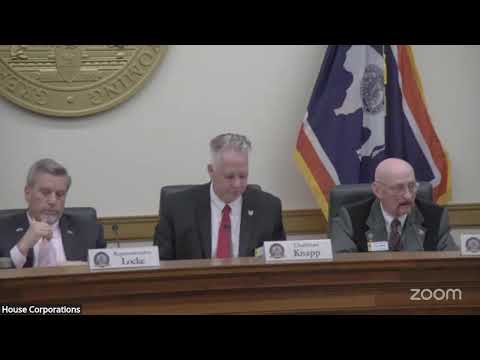
House Bill 144, which would change how county canvassing boards are constituted, passed the Corporations, Elections & Political Subdivisions Committee after amendments clarifying how the two largest parties are determined and preserving a three-member board.
House Bill 144, which would change how county canvassing boards are constituted, passed the Corporations, Elections & Political Subdivisions Committee after amendments clarifying how the two largest parties are determined and preserving a three-member board.
Speaker Tom Nyman, sponsor of House Bill 144, told the committee the measure was suggested by a sheriff in his district to "provide accountability and transparency and more oversight into our election process." Nyman said the bill would replace one of the clerk-appointed canvassing board members with an elector selected by the county central committee of each of the two largest political parties.
The bill drew detailed testimony from the County Clerks Association and public comment. Malcolm Irvin, president of the County Clerks Association and Platte County clerk, urged clarifications before the bill moved forward, including a firm appointment deadline for party designees, a definition of "largest" parties at the county level, and a requirement that parties be notified of their obligation to appoint members. "The county canvassing board really is an analytical board," Irvin said, describing its function as reviewing poll books, reconciliations and oaths and warning against composition that could become "political in nature." Irvin offered three alternatives: expand the board to five members, have parties submit multiple nominees for county commission selection, or make the county commission the canvassing board with the clerk as an ex officio member.
Several committee members and members of the public raised concerns about potential politicization and about counties where one or both major parties are not organized. Gail Simmons of Sheridan County, testifying in opposition, asked whether the bill was a reaction to a single contested count in another county and argued that selecting precinct committee members to replace a countywide-elected official "doesn't make a lot of sense." She said an expansion to five members would be a reasonable compromise.
Representative Weber asked whether party leadership and clerks had been consulted; Nyman said he had spoken with both and was willing to work with the clerks association on amendments. During debate the committee adopted an amendment defining "largest political party" as "the party with the most registered voters within the county on the January of a general election year" and clarified the bill language accordingly. The committee also adopted language pulling the remainder of the statute text into the bill for clarity.
The committee voted to move the bill out of committee. Representative Weber made the motion to move the bill; Representative Brown seconded. A roll-call vote recorded eight ayes and one no (Representative Yin submitted an absentee vote of no). The clerk recorded the tally as 8 ayes, 1 no; the bill was reported favorably from committee.
Next steps: House Bill 144 will proceed with the committee amendments and be available for further consideration on the floor and in subsequent committee work if additional changes are proposed.