Get Full Government Meeting Transcripts, Videos, & Alerts Forever!
Get email alerts on the Educational Equity topic
No spam. Unsubscribe anytime.
Springfield Township presents Year‑3 equity action plan report, seeks outside assessment for next cycle
Summary
District leaders told the School Board that the district met several Year‑3 equity goals — including expanded student voice, disaggregated data use and increased access to extracurriculars — and said the Mid‑Atlantic Equity Consortium will conduct a no‑cost assessment to inform the 2025–28 plan.
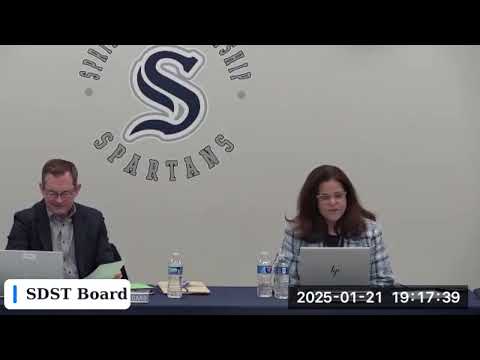
The School District of Springfield Township presented its Year‑3 equity action plan report to the board on the evening of the district's first regular 2025 meeting, summarizing three years of work on access, representation and measurable outcomes.
District leaders said the work focused on using disaggregated data to drive decisions, expanding student voice and participation, and increasing access to extracurricular programs for younger students. Superintendent Dr. Anacone said the district has “instituted an annual data presentation about our academic achievement and performance every fall” and established data review protocols for principals and leadership teams.
The equity action plan was created under board policy 08/32, Educational Equity, adopted in 2022. District administrators said the plan used multiple indicators of success beyond standardized test scores — attendance, student belonging, discipline records, extracurricular participation and graduation rates — and emphasized measuring outcomes for subgroups, particularly students from lower socioeconomic backgrounds.
Dr. Lutz, who led portions of the report, highlighted several accomplishments: expanded student advisory and affinity groups, pilot testing of new Chromebooks with middle‑ and high‑school students, new K‑12 course guides on the district website, broader equity training for all staff (including food service and transportation workers), and improved communications with language accessibility. Lutz said students in grades 3–12 reported a 95% sense of belonging in the district survey, and administrators noted the district’s free‑and‑reduced‑price-lunch rate at about 23% as a key disaggregated subgroup of interest.
The presentation described partnerships the district used to support students’ noninstructional needs, including Stevens Rise and Grind (outside counseling referrals), Shane’s Kindness (holiday and activity support) and other community organizations that helped cover field trips, school photos and athletics fees. Dr. Lutz described a new streamlined welcome process for new families, including a principal’s welcoming letter and a consolidated newcomer newsletter posted on the district website.
On next steps, the board heard that the Mid‑Atlantic Equity Consortium (MAEC) will conduct a district equity assessment — described in the meeting as a federally funded program that will cost the district nothing — beginning with virtual consensus‑group meetings and culminating in spring break recommendations. Superintendent Anacone said the district hopes to publish a second equity action plan for 2025–2028 before the spring break, pending the MAEC’s assessment timeline.
Board members praised the incorporation of student voice and the broadening of activities for younger students. Several board questions focused on closing gaps between parent perceptions and student reports on belonging and ensuring continued outreach to families.
The presentation materials and the equity action plan slides will be posted on the district website for community review, and administrators invited board members to follow the MAEC process and forthcoming recommendations.