Get Full Government Meeting Transcripts, Videos, & Alerts Forever!
Get email alerts on the Zoning Code Update topic
No spam. Unsubscribe anytime.
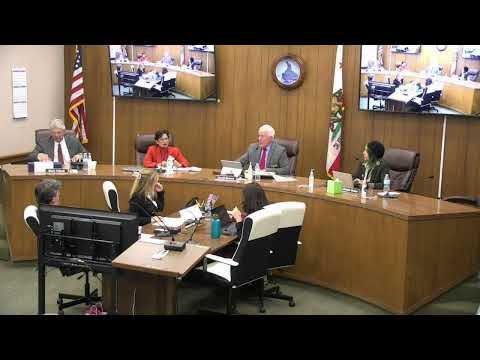
Solvang council adopts broad zoning-code update, directs staff to revisit village design rules
Summary
After hours of debate and public comment, the Solvang City Council approved three linked ordinances to update the city—s zoning code and map to meet state housing requirements, while directing staff to work with the council and community on changes to village-area design standards.
The Solvang City Council on Dec. 9 adopted three linked ordinances that revise the city—s zoning map and replace large portions of Title 11 of the Solvang Municipal Code to align the city—s zoning with its housing-element obligations and state requirements.
The ordinances approved at second reading rezone downtown and public parcels, create a new Village Design District overlay (Ordinance 24377), reclassify two recreation parcels as open space (Ordinance 24376) and repeal-and-replace the bulk of Title 11 zoning regulations (Ordinance 24378). Council votes for the three measures were recorded as: 24377 — passed 3-0 (two members recused/absent), 24376 — passed 4-0, and 24378 — passed 5-0.
Taken together, the changes are intended to enable the city to report progress on housing-element implementation to the state Department of Housing and Community Development (HCD) and to address several implementation measures required by HCD in the city—s conditional housing-element determination. Staff repeatedly told the council that HCD has been pressing jurisdictions for demonstrable action and that failure to show progress could put the city—s substantial-compliance status at risk.
Staff member Rafael, who presented the planning report, summarized the compliance stakes: "It's possible that they would revoke our substantial compliance determination for our housing element," he said, adding that such a move would expose the city to builder—s-remedy risks and other state enforcement steps.
The most contested topic in council debate was a set of objective village-design standards and the inclusion of certain R-3 parcels inside the new Village Design District (DD-1). Council members, staff and public speakers discussed two main policy options: keep the R-3 parcels inside DD-1 and adopt objective standards that would apply to mixed-use projects, or move those R-3 lots out of the overlay so they would not be subject to the new objective design rules.
Staff outlined an alternative that the council ultimately adopted in principle: approve the ordinances at second reading to meet HCD reporting deadlines, and direct staff to return within 60 days with a community workshop and specific amendments if the council so chooses. The "alternative 1" package included (1) removing the R-3 lots from the DD-1 boundary if the council wished, (2) repealing the DD-1 objective standards as they currently appear (to be redrafted), and (3) amending the VMU (village mixed-use) table to limit residential gross floor area to no more than 49% to avoid triggering some provisions of the Housing Accountability Act in certain cases.
Council members expressed differing views on speed versus thoroughness. Multiple public commenters, including Stephen Martin and Ed Skitt, urged the council to slow down and allow more time for review of the roughly 370-page code package and supporting reports. Martin said, "If you're going to make a big change ... do it as right as you can, and take as much time as you need to fully understand it." Al Cortese, speaking during public comment on an unrelated development issue, also urged the council to address property-title problems before processing applications, saying, "the development application is void according to the California code," a legal claim he said the public should not have to keep raising.
Council members also disclosed recusals tied to property or business conflicts. Two council members stepped away from votes on the first two ordinances, and quorum adjustments were noted on the record.
Staff and council repeatedly framed the vote as an effort to balance the city—s design and brand priorities with state-mandated housing requirements. As staff put it, the ordinances and the directed follow-up work are intended to be "living" code that can and should be refined with community input.
Votes at a glance
- Ordinance 24377 (Village Design District overlay; rezones including TRC to VMU; rezones certain public parcels): Motion to adopt approved — roll call tally recorded as 3 yes, 0 no, (two members recused/absent). Outcome: approved. Notes: Council directed staff to convene a community workshop within 60 days and to return with proposed edits, including removing R-3 lots from DD-1 or revising objective standards as directed.
- Ordinance 24376 (rezoning specified parcels from Recreational REC to Open Space OS): Motion to adopt approved — roll call tally recorded as 4 yes, 0 no. Outcome: approved.
- Ordinance 24378 (comprehensive replacement of Title 11 zoning regulations and official zoning map): Motion to adopt approved — roll call tally recorded as 5 yes, 0 no. Outcome: approved.
What happens next
Council—s direction asks staff to hold a public workshop within roughly 60 days to consider the DD-1 changes identified in the staff alternative, to refine objective design standards and to propose code amendments. Staff and council emphasized that the ordinances adopted tonight are part of a larger, continuing process: they implement elements of the housing element and establish a baseline that staff and the council can amend following the directed community process.
Why it matters
Solvang is largely built out, and staff said many of the sites the city can use to meet its regional housing needs allocation (RHNA) are in mixed-use and downtown areas. Council members said timely zoning updates are necessary to permit conversion and infill projects; at the same time residents and public speakers warned of unintended consequences and urged more time for review. The council—s decision attempts to thread both objectives: meet state reporting and keep the door open for local design controls to be reworked through further public engagement.
Ending note
Council members and staff emphasized the decision was not final policymaking but an interim step to preserve administrative flexibility and state compliance while the city holds focused design workshops and returns with ordinance refinements for council consideration.