Get Full Government Meeting Transcripts, Videos, & Alerts Forever!
Get email alerts on the Homelessness Counts topic
No spam. Unsubscribe anytime.
Miami-Dade point-in-time count shows 17% drop in unsheltered homelessness; cold‑weather activations brought people into shelters
Summary
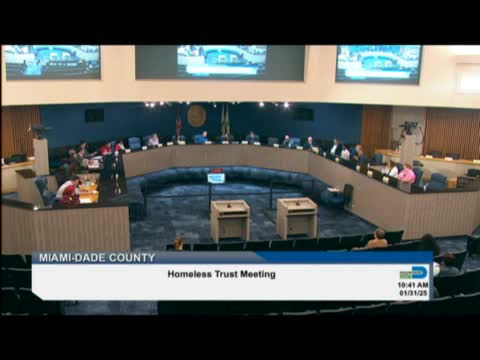
At a Trust meeting, officials reported the county'wide point-in-time count found a 17% decline in unsheltered homelessness, with modest increases in sheltered numbers tied to cold-weather activations. Staff described retention rates from two activations and cautioned HUD reporting lags.
Annie Millett, a member of the Miami-Dade County Homeless Trust board, reported that the county'conducted its annual point-in-time count on Jan. 23 and recorded a 17% decrease in unsheltered homelessness compared with the prior count, the lowest unsheltered level since January 2014.
The reduction in unsheltered homelessness came as sheltered counts rose slightly amid cold-weather activations. Millett said the Trust recorded a 4% increase in people sheltered during the count period and that the net combined sheltered and unsheltered homelessness declined by 2% overall. "We saw reductions of 2% in chronic homelessness, and we saw a 14% reduction in family homelessness," Millett told the board.
The Trust clarified that HUD'defines the one-day point-in-time methodology: communities choose one of the last 10 days in January and count where people were the night of the count. Millett warned that HUD also lags in releasing national results — noting Miami-Dade did not receive its January 2023 comparison data until December 2024 — and stressed local counts are a snapshot at a fixed moment.
Trust staff described two cold-weather activations in January. According to staff, the first activation (Jan. 7'Jan. 10) brought in 194 people with a retention rate of 35%; the second activation (Jan. 23'Jan. 25) brought in 157 people with a retention rate of 36%. Millett and other Trust speakers said some placements came from proactive outreach during severe cold spells and that retention varied by event and timing. "On the cold spell 3 and a half weeks ago, I believe we retained 36% of those that came in," Millett said.
Board members and staff warned that emergency placements made during severe weather can temporarily increase the sheltered count and that longer-term retention figures will be reported at the next Trust meeting. Millett said staff will provide a fuller retention report to the board in the next packet.
The Trust also noted patterns among specific cohorts: parenting youth households were up (39 additional households of parents aged 18'24), while overall family homelessness fell 14%. Trustees emphasized that emergency shelter and outreach efforts are ongoing and that retention and exit-to-housing rates remain key performance metrics.
The board heard the update and recessed to additional agenda items.