Get Full Government Meeting Transcripts, Videos, & Alerts Forever!
Get email alerts on the Administrative Rules Regulatory Oversight topic
No spam. Unsubscribe anytime.
Committee advances REINS-style bill requiring legislative OK for major agency rules with amendment
Summary
Senate File 127, a REINS-style measure to require legislative approval for agency rules deemed to have significant private-sector economic impact, was advanced by the Senate Agriculture committee after amendments that allow rules to take immediate effect while preserving later legislative ratification and timeline adjustments.
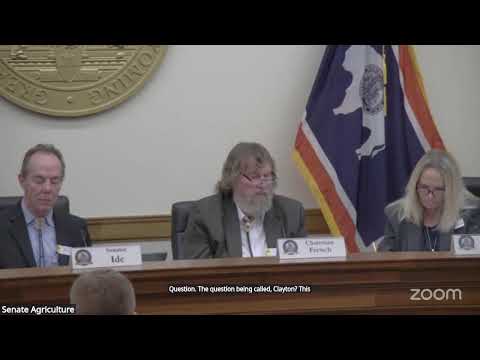
The Senate Agriculture, State & Public Lands & Water Resources Committee voted to advance Senate File 127, a bill that would require legislative approval before major executive-branch administrative rules become permanently effective. Proponents described it as a check on regulatory growth; the governor's office and agency representatives warned it could delay critical rules and increase administrative costs.
Senator Brian Bonner, who introduced the measure and said it is commonly known as a REINS act, told the committee the bill would require legislative ratification of any agency rule that meets a financial-impact threshold or otherwise "has a significant impact" on commerce, investment or employment. The draft sets a $100,000 annual private-sector economic-impact threshold for what constitutes a "major agency rule," and calls for the Legislative Service Office (LSO) to provide economic analysis and for a management council review before rules go into effect permanently.
Supporters said the bill would raise transparency and restore a separation-of-powers check on the executive. "By being able to hold your legislative representatives accountable for regulations that do impact them, that's a real benefit to the people of Wyoming," Tyler Lindholm of Americans for Prosperity told the committee, describing citizen interest in more legislative oversight.
The bill as introduced included a mechanism that would have prevented major rules from taking effect until ratified; sponsors and the committee ultimately agreed to an amendment that allows rules to go into effect immediately but preserves the legislature's ability to later ratify or nullify them when lawmakers reconvene. Senator Bonner described the amendment as a cautious approach to avoid making the legislature a full-time body while preserving oversight.
Committee discussion and testimony also addressed operational details. The bill would create two LSO positions (a chief economist and a staff economist) to prepare regulatory impact analyses, a one-time appropriation of $400,000 was included in the draft for start-up costs, and an implementation date of July 1, 2026 was proposed to give staff time to organize. Senator Bonner said LSO staff would produce reports that are public and available to each legislator no later than 15 days after submission; the committee adopted an amendment, at the suggestion of the secretary of state's office, to shorten certain LSO deadlines from 60 days to 50 days to avoid a timing conflict with existing adoption windows.
The governor's office submitted written and oral concerns. Kiel Wetland, a counsel for the governor's office, told the committee the bill could lengthen timelines for rules that protect public health and the environment, put Wyoming at risk of losing primacy in some federally delegated programs, and would add administrative layers and speculative economic analyses that could be difficult to prepare with available data.
The committee also heard from Joe Rubino of the secretary of state's office about technical changes needed to the Wyoming Administrative Rules System to flag and process "major" rule packets; the office estimated modest IT work to support the new packet types. Agency witnesses and trade groups offered a mix of support and caution; several senators emphasized that the bill's threshold and emergency exceptions were key to balancing oversight with the need for timely rulemaking.
After amendments were debated and adopted, the committee approved the measure on a roll-call vote and sent it forward; the chair said the bill will receive further debate on the Senate floor.
Votes at committee: Senate File 127 passed committee as amended; the chair reported five ayes and no recorded nays on the final committee vote.