Get Full Government Meeting Transcripts, Videos, & Alerts Forever!
Get email alerts on the Land Use Cell Towers topic
No spam. Unsubscribe anytime.
Council denies cell-tower zoning and special-use permit after neighborhood opposition
Summary
The council voted Jan. 20, 2025, to deny zoning and a special-use permit for a proposed cell tower on church property near Lakeview West, following testimony from a developer urging approval and neighborhood speakers raising property-value and safety concerns.
The Grand Prairie City Council on Jan. 20, 2025, voted to deny a zoning change and a neighborhood design/special-use permit (NDSUP) for a proposed cell tower on Rust Creek Church property near Lakeview West after residents and the homeowners association voiced opposition.
Councilmember Johnson moved to deny items 16 and 17, a motion the council approved. The council also later tabled item 18 to allow for a staff site visit and additional review.
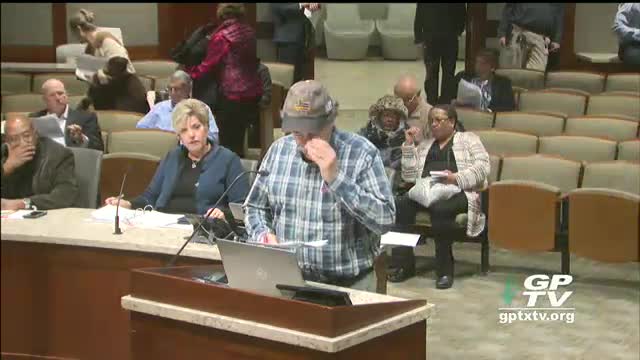
Developer Alec Broadus of Broadus Services, who said his firm had worked with major carriers for 25 years and that Verizon was the launch customer for the site, argued that the area “stinks” for coverage and that approving the tower would likely produce service within six to nine months. Broadus said previous efforts to find a suitable site had been unsuccessful, that the church had agreed to the location and that the Planning and Zoning Commission had voted unanimously in favor.
Opponents, including Mike Grissom and homeowners who said they represent the Lakeview West neighborhood and its homeowners association, said the tower would be too close to houses, could depress property values and posed perceived safety risks. Grissom told the council he had “very few words to say” but then described three areas of opposition: that improved service was not needed, that the project could affect property values and that nearby residents had not heard direct answers from the proposed carrier about coverage and need. Grissom said Verizon already has antennas on a nearby 250-foot tower less than 1.5 miles away and questioned why another tall tower was necessary.
Grissom also raised concerns, as voiced by neighbors, about possible radio-frequency exposure from new 5G antennas within a quarter- to half-mile radius and said the neighborhood association opposed the installation. Broadus responded that 17 neighbors had expressed opposition at a canvass he referenced and said he was unclear how the broader neighborhood felt; he urged council members to consider future coverage needs as new homes are built.
A staff presenter displayed a site plan and an elevation rendering of the proposed structure, which staff said would be constructed by a third-party installer (identified in public comment as Rodus) with Verizon as the initial carrier. During council discussion, members referenced neighborhood canvassing and said they were voting in response to residents’ expressed concerns.
After the denial of items 16 and 17, the council moved to table item 18 to allow for a staff site visit to the location; the motion to table carried.