Get Full Government Meeting Transcripts, Videos, & Alerts Forever!
Get email alerts on the School Policy topic
No spam. Unsubscribe anytime.
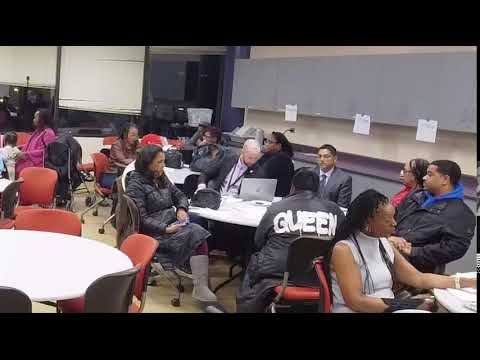
Proviso Township HSD 209 policy committee holds first reading on ethics, safety and complaint-manager revisions
Summary
Proviso Township High School District 209’s policy committee conducted a first reading of multiple proposed policy changes at a recent committee meeting, reviewing updates to ethics and gift restrictions, Open Meetings Act training for newly elected board members, safety and reunification planning, and the district’s designated complaint managers for employment-related grievances.
Proviso Township High School District 209’s policy committee conducted a first reading of multiple proposed policy changes at a recent committee meeting, reviewing updates to ethics and gift restrictions, Open Meetings Act training for newly elected board members, safety and reunification planning, and the district’s designated complaint managers for employment-related grievances.
The committee chair (name not specified) opened discussion by asking attendees to turn to “press policy 2.105,” the district’s ethics and gift policy, and highlighted proposed language that would bar political activity during compensated work time. “No employees shall perform any political activity during compensated time,” the chair read from the draft policy. Committee members discussed whether the restriction applies only to compensated time or also to district premises during non-compensated hours.
The changes under review were presented as a first reading and not a final vote. The policy director, Nicholas Valman (policy director), and Superintendent (Miss Martin) discussed next steps: committee review, consultation with the policy director, and return to the full board. “Once we go over and discuss it and come back and you say, well, I don’t want that in here, I want this in here, we go back to the policy director, talk to him about it, bring it back to you, then bring it to the board,” the committee chair said.
Why it matters: The policies flagged for revision affect employee conduct, board training requirements, student safety procedures and the district’s procedures for handling employment complaints. Several of the proposed additions were described by committee members as required by law (highlighted in green in the packet), while other suggested edits were presented as committee or district recommendations (highlighted in red in the packet).
Key items discussed
Ethics and gift ban (Policy 2.105): Committee discussion focused on the scope of a proposed prohibition on political activity by employees during “compensated time.” Committee members asked whether activity on district premises outside compensated hours would also be covered; the committee chair and others confirmed the draft language specifically referenced compensated time, and that the committee would consider clarifying language before the next step.
Open Meetings Act training (Policy 2.120 and related references): The committee reviewed a provision requiring newly elected board members to complete Open Meetings Act training “no later than 90 days after taking the oath of office.” The chair emphasized that the district will track completion and that certifications are routed through the superintendent and the district attorney.
Safety and emergency preparedness (Policy 4.170 and related safety policies): The superintendent described recent participation in active-shooter and multi-component safety exercises and emphasized planning for a reunification center. “It is not a matter of if it’s gonna happen. It is a matter of when it’s gonna happen,” the superintendent said, urging attention to where parents will receive information and how reunification would be managed. The committee also discussed automated external defibrillators (AEDs) already located “throughout the building,” an emergency procedures manual that will map AED locations and maintenance, and staff training scheduled later in the week.
Employment discrimination/EEO and complaint managers (Policies 5.10 / 5110 and related): Committee members raised concerns about how employment complaints would be handled under the draft policy. The packet names two complaint managers; the committee discussed that one listed contact is the district’s HR/personnel leader (referred to in discussion as Mr. Gravone) and another is Dr. Diana Thomas (described as a night-school manager). Several attendees expressed discomfort with routing employee complaints to an HR director who advises district management, noting a potential conflict of interest. The chair clarified that employees can choose either listed complaint manager and that, if required, complaints may escalate to regional education authorities such as the ROE/West 40 office.
Community engagement and board conduct (Policies 8.10 and related): Committee members debated expectations for board-member visibility and community engagement. The chair urged the next board president to “work collaboratively with every mayor in the Proviso Township district and work closely with the superintendent,” while other members cautioned against board members becoming involved in day-to-day school operations. One committee member summarized: being visible and informed is expected, but “you should not be involved in the day-to-day operations of a school.”
Process and next steps: Committee members repeatedly described the session as a first reading. The chair and staff said they will meet to refine language and return the packet to the committee before forwarding recommended changes to the full board. “If you have any questions or comments, please raise this; the next policy meeting we will get together before we get this to the board, and we’ll work on it,” the chair said.
No formal motions, votes or final adoptions took place during the meeting; the committee recorded the items as first reading and advisory review.
Provenance: The committee’s request to review “policy 2.105” opened the substantive policy discussion; the committee’s closing direction to work on revisions before bringing them to the board concluded the item.