Get Full Government Meeting Transcripts, Videos, & Alerts Forever!
Get email alerts on the School Funding topic
No spam. Unsubscribe anytime.
New Hampshire School Funding Fairness Project briefs Timberlane board on SWEPT, adequacy formula and pending lawsuits
Summary
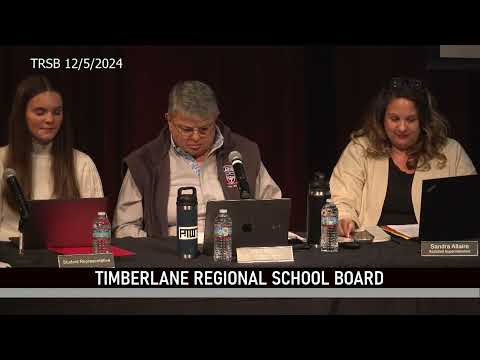
Zach Sheehan, executive director of the New Hampshire School Funding Fairness Project, presented an overview of how the state's school funding formula works and the effects of the statewide education property tax (SWEP) to the Timberlane Regional School District school board.
Zach Sheehan, executive director of the New Hampshire School Funding Fairness Project, presented an overview of how the state's school funding formula works and the effects of the statewide education property tax (SWEP) during a presentation to the Timberlane Regional School District school board and community.
Sheehan described the structure the project calls the “adequacy” formula: a base per‑pupil amount plus supplements for students eligible for free and reduced‑price meals, students receiving special education services and English learners. He said the state’s published base adequacy figure is $41,100 per pupil and that recent court litigation has challenged whether that number is sufficient to provide what New Hampshire courts described as a constitutionally “adequate” education.
“[The plaintiffs] argued $41,100 is not enough,” Sheehan said during the presentation, outlining both the ConVal/Conval lawsuit and a separate taxpayer suit often described as the Rand case. He told board members that a superior‑court judge in one case set what Sheehan described in the presentation as a higher “floor” for base adequacy and criticized the state for presenting “no evidence” that the current amount is sufficient.
Sheehan reviewed how SWEP was created after earlier Claremont litigation to shift some education funding toward the state level, but said the tax now functions effectively as a local property tax because the revenue is raised and retained in each municipality. He explained that the program of retaining those dollars locally -- and related practices such as so‑called negative local education tax rates in some municipalities -- is itself a focus of litigation now before the courts.
Using statewide examples, Sheehan highlighted disparities the project attributes to reliance on local property taxes: differences in test scores, graduation rates, teacher pay and tax bills between higher‑property‑value and lower‑property‑value communities. He showed a paired example comparing two districts’ tax burdens on a $350,000 home and cited special education as a particular driver of costs that state aid does not fully cover.
Sheehan walked the board through possible policy responses legislators and advocates discuss, including restoring SWEP to a state‑retained tax, expanding targeted property tax relief programs, revising the adequacy formula and considering revenue adjustments such as changes to the interest/dividends tax or business tax structure. He emphasized that each option has tradeoffs and that design choices affect who pays and who receives relief.
The presentation was followed by a moderated question‑and‑answer session of roughly an hour in which board members and members of the public asked about: (1) how SWEP is calculated and why the current dollar amount used in the formula has been effectively frozen; (2) whether federal funding reductions would shift costs locally; (3) comparisons to other states' funding systems; and (4) how communities could engage with the legislative process. Sheehan said the project conducts educational workshops for citizens and candidates and that its funding comes from private foundations and individual donors; he said the organization does not take funding from state agencies or school districts.
The presentation materials and a school funding classroom exercise the project has piloted were made available to the board and to the public, and Sheehan encouraged residents to contact their state representatives if they want lawmakers to consider changes to the funding structure.
Why it matters: pending court decisions and legislative responses could alter how much funding comes from state vs. local sources and, if adopted, would change the distribution of property tax burdens across New Hampshire communities.
Sources: remarks and slides presented by Zach Sheehan, executive director, New Hampshire School Funding Fairness Project; introduction by Casey Neill, director of outreach and engagement; presentation hosted by the Timberlane Regional School District school board (remarks recorded in the board meeting transcript).