
ACLU and educators urge rejection of bill that would highlight positive impacts of Christianity in K–12 classrooms
Get AI-powered insights, summaries, and transcripts
Sign Up Free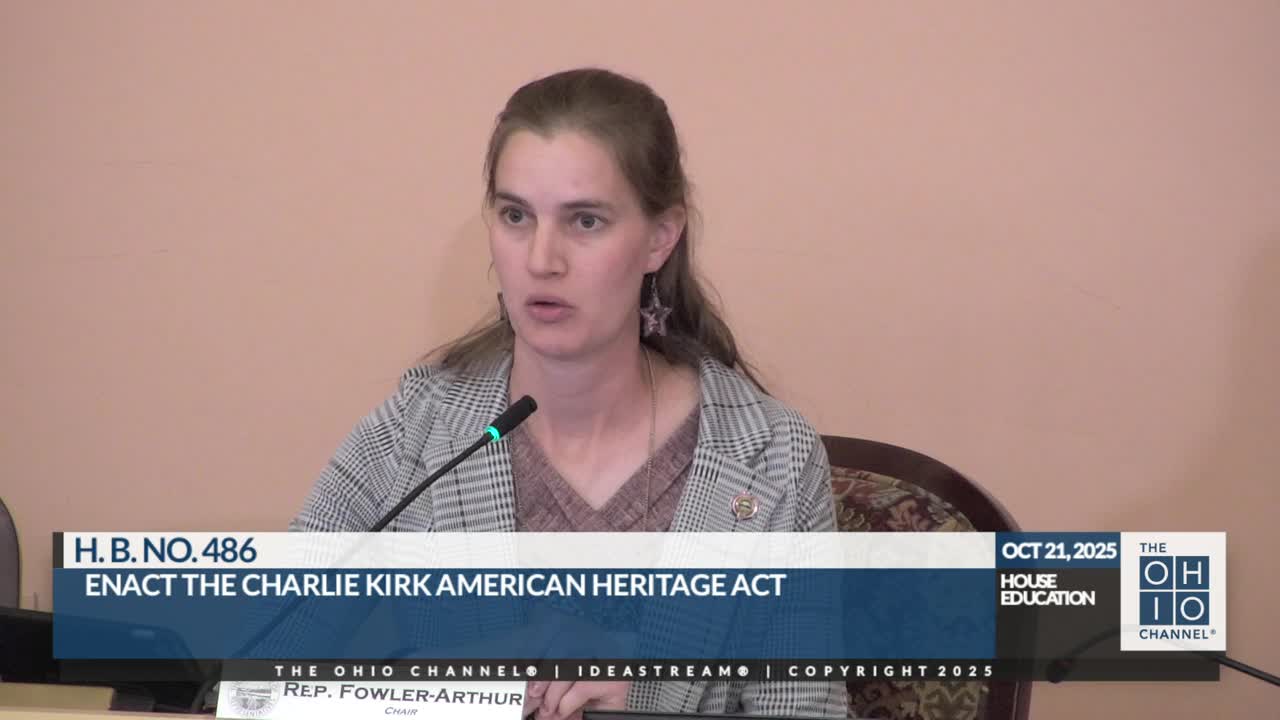
Summary
Opponents told the House Education Committee that House Bill 486 is unnecessary, duplicates existing standards, and risks endorsing a one-sided view of religion in public school instruction. Multiple education groups recommended guidance and professional development instead of statutory prescription.
Opponents of House Bill 486 told the House Education Committee that the measure—s plan to insert a legislatively selected list of "positive impacts" of religion into statute is unnecessary and likely to create confusion, legal risk and a one-sided classroom narrative.
Gary Daniels, representing the ACLU of Ohio, told the committee the First Amendment and the Ohio Constitution already permit instruction about religion "if teachers and faculty are confused about where some of those lines are drawn, plenty of resources exist" for professional guidance. He urged the committee to reject the bill, arguing it "would paint Christianity in the most positive light while deliberately avoiding the negative," and that embedding a long, sponsor-provided exemplar list and findings in code risks government preference for particular religious viewpoints.
Why it matters: Opponents said the bill goes beyond merely clarifying existing law by using framing language and a lengthy exemplar list that centers Christianity in a positive way, which they warned could be read as a state-endorsed narrative rather than neutral classroom instruction.
Education groups and teachers: Dr. Sarah Caca, president of the Ohio Council for the Social Studies (OCSS), said OCSS "urges you to oppose House Bill 486 because it is unnecessary," noting Ohio's learning standards and the model curriculum already require teaching religion—s historical roles using evidence and multiple perspectives. "If there are isolated misunderstandings at the district level, the fix is guidance, not statute that prefers a positive frame for one tradition," she told the panel.
Multiple classroom teachers, school leaders and social-studies advocates agreed. Lucas George, an eighth-grade social-studies teacher and legislative liaison for OCSS, told the committee the bill is "redundant to what we already teach and poorly written in ways that will harm instruction," and urged the legislature to use the existing standards process and stakeholder-driven curriculum review instead of embedding a laundry list into the Ohio Revised Code.
Several witnesses urged more investment in humanities and civics instruction rather than a statutory list. Nick Bates of the Hunger Network in Ohio said teaching about world religions and the humanities fosters empathy and resilience in students; Duane Moore, a curriculum specialist and long-time teacher, proposed that the legislature instead support electives such as "Religion in American Political Thought" to allow deeper study without imposing a one-sided, mandatory narrative.
Legal and procedural concerns: Witnesses highlighted possible legal exposure and implementation issues. Daniels of the ACLU noted the establishment clause requires government neutrality: "Government can neither advance nor inhibit religion," and warned that statutory findings emphasizing Christianity—s positive role invite viewpoint disputes and potential complaints. OCSS warned that statutory framing could be read as state preference and would destabilize scope and sequence and invite local disputes even if the bill's language is permissive.
Committee questions and sponsors' option: Committee members pressed witnesses about whether targeted amendments could address concerns. Gary Daniels said removing the sponsor-provided exemplar list and findings and limiting the bill to neutral clarification would make ACLU of Ohio more likely to be an interested party rather than an opponent. OCSS recommended replacing the list with neutral language requiring instruction about religion's roles using multiple perspectives and credible sources consistent with Ohio standards.
Votes and next steps: The committee concluded the second hearing on House Bill 486 after opponent testimony. Committee members signaled the usual process will continue: additional hearings, submitted written testimony and opportunities for sponsors and stakeholders to propose amendments.
Ending: Witnesses emphasized that Ohio—s standards already provide authority to teach religion—s historical roles and urged professional development and model lessons rather than statute to resolve any local uncertainty.