Get Full Government Meeting Transcripts, Videos, & Alerts Forever!
Get email alerts on the Benefit Bridge topic
No spam. Unsubscribe anytime.
County officials describe benefit‑bridge pilot, SNAP‑E&T and local supports used to stabilize families and connect them to work
Summary
Marion County and other county job and family services officials described the Benefit Bridge pilot, county PRC plans, SNAP Employment & Training efforts and employer success coaches used to stabilize families, reduce barriers and support workforce entry during the House Committee hearing.
County Job and Family Services officials told the House Children and Human Services Committee that local programs and a state pilot called the Benefit Bridge are being used to stabilize families losing benefits and to connect recipients to employment.
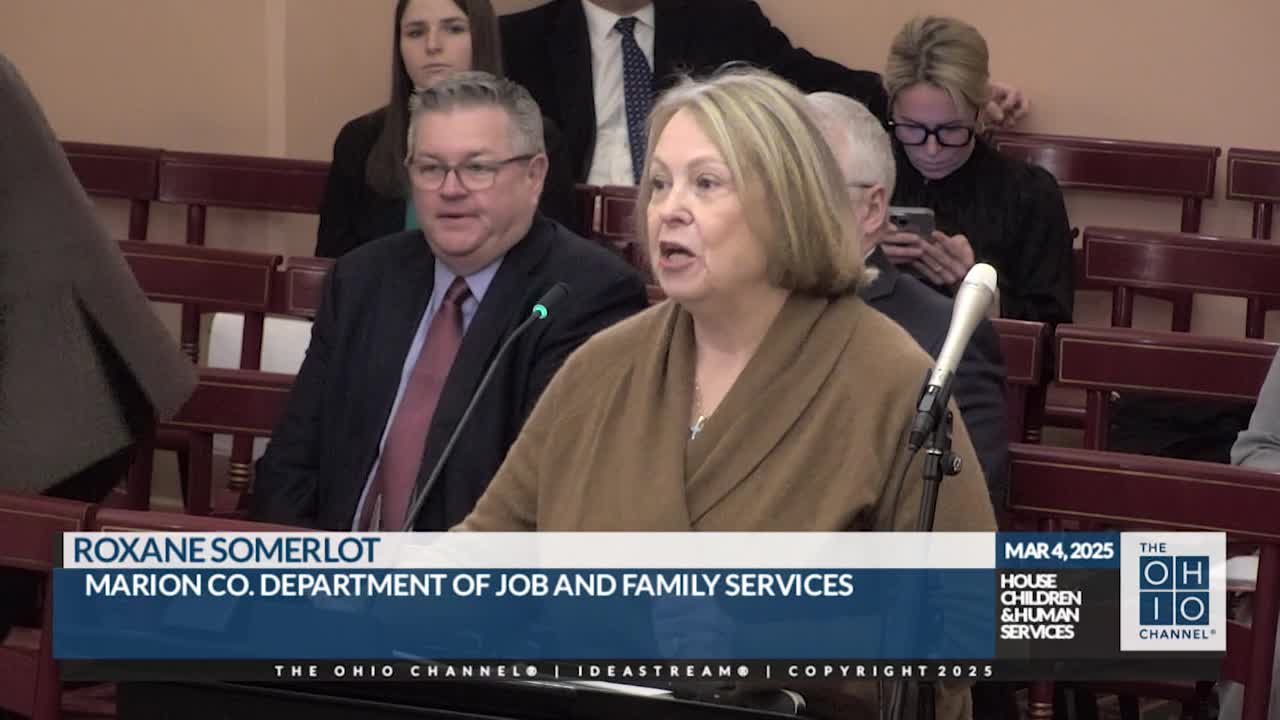
Roxanne Summerlot, director of Marion County Job and Family Services, testified for the Ohio Job and Family Services Directors Association and outlined county uses of TANF/PRC funds, OhioMeansJobs employer services and contracts with local nonprofits for financial literacy and stabilization. She said Marion County recently joined the Benefit Bridge pilot and was completing its on‑ramp, with staff ready to enroll participants.
Summerlot described specific program mechanics during committee questioning: counties receive monthly reports identifying individuals who lost or had food assistance reduced due to increased earned income within the prior month; that loss of or reduction in food assistance triggers outreach and potential Benefit Bridge eligibility. Summerlot said the pilot typically lasts about 12 months, includes a well‑being assessment that measures employment, education and health, and provides both earned incentives and supportive payments. Participants can earn up to $8,000 in incentives over 12 months for milestones such as establishing savings, completing training or getting a promotion, and counties can provide targeted one‑time payments for needs such as car repairs or utilities to soften transitions.
Summerlot said Lucas County’s implementation had about 45 engaged participants; Marion County was just starting and had enrolled roughly five. She said the pilot is in 11 counties and that counties use PRC (Prevention, Retention and Contingency) plans to tailor supports like short‑term training, work equipment, housing and transportation assistance. Summerlot also described employer‑facing services: employer resource networks that include success coaches who work on‑site to help new hires troubleshoot barriers that otherwise lead to turnover.
Committee members asked for statewide participation figures and more detail on eligibility; Summerlot said statewide numbers could be retrieved and offered to follow up. Committee members also discussed how SNAP‑E&T, PRC and county investments can leverage federal match and assist with any future federal changes to Medicaid work requirements.
Ending: No formal action was taken; county officials offered to provide follow‑up materials and statewide participation counts to the committee upon request.