Get Full Government Meeting Transcripts, Videos, & Alerts Forever!
Get email alerts on the Contracts Procurement topic
No spam. Unsubscribe anytime.
Winter Springs commission approves landscape maintenance contract after debate over outsourcing vs. in-house
Summary
Commissioners debated whether to outsource landscape maintenance or bring it in-house before approving a consolidated landscape maintenance contract on the consent agenda. Concerns included single-vendor risk, a large price discrepancy on pond maintenance, equipment and staffing needs, and the long-term capital cost of in-house operations.
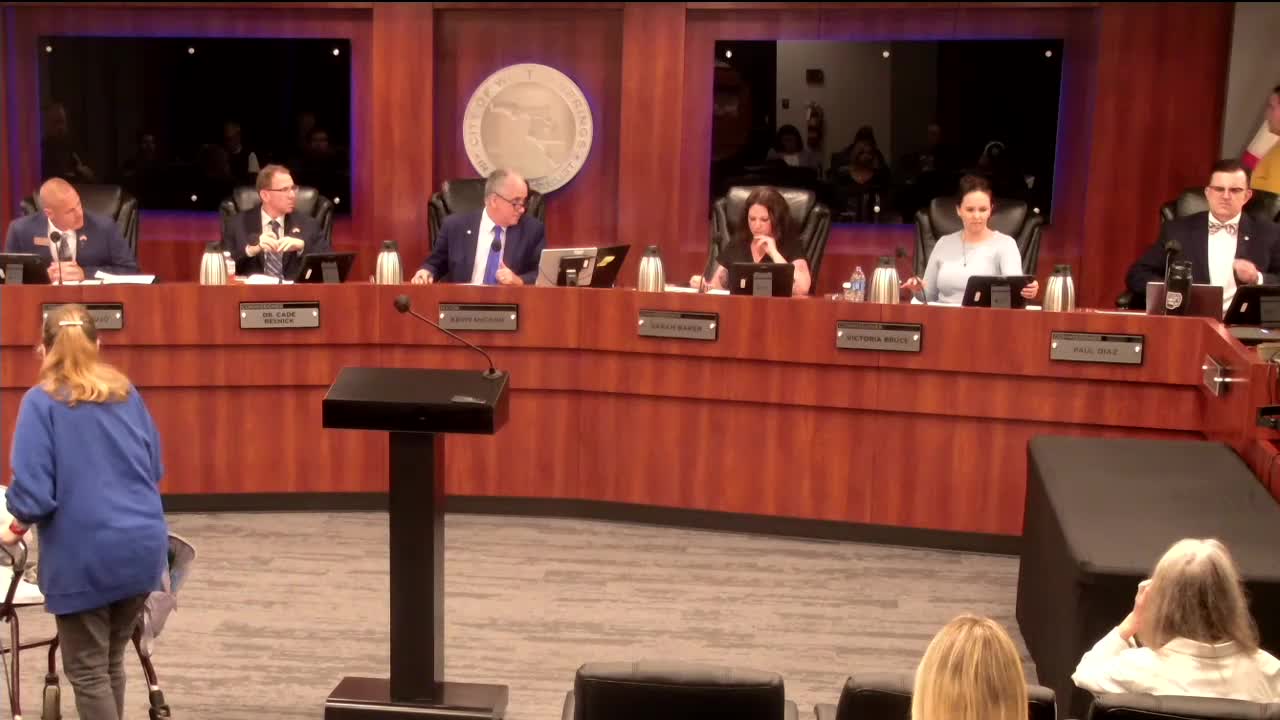
The Winter Springs City Commission on Feb. 24 approved a consolidated landscape maintenance services contract as part of the consent agenda, after a lengthy discussion about whether the city should outsource the work or resume in‑house operations.
Commissioner Mark Caruso raised the strongest objections to outsourcing, saying the city once performed landscaping internally and should reconsider bringing crews back under city employment. “I’m tired of outsourcing,” Caruso told colleagues, arguing in-house crews could produce savings long term and allow more control over quality. Caruso estimated initial capital costs to start an in‑house operation at “anywhere from $400,000 to $600,000” and referenced an annual contract figure of about $700,000 discussed in the meeting.
City Manager Kevin Sweet told the commission that the consolidated contract would provide three full-time dedicated crews for city maintenance and that consolidation reduces current costs by roughly $135,000 compared with the city’s current multi‑vendor arrangement. Sweet cautioned, however, that bringing landscaping in‑house would require significant capital investment, equipment acquisition and ongoing staffing, and that landscape crews historically face high turnover and workers’ compensation risk.
Commissioners also questioned bid details. Commissioner Caruso and others pressed a representative at the meeting about a wide price gap in “Area 4” (ponds and roadways) where one bidder priced the work substantially lower than other proposers. Kevin Maddox, who identified himself as a landscape representative, said some firms use larger folding-deck “0‑turn” mowers and different equipment that can reduce labor hours and therefore bid lower on certain line items. Staff said the apparent low bidder already maintains some city properties and would be held to performance standards.
Motion and vote: Deputy Mayor Cade Resnick moved to approve the consent agenda, including the landscape contract; Commissioner Sarah Baker seconded. The motion passed 3–2 with Resnick, Commissioner Victoria Bruce and Commissioner Baker voting aye; Commissioners Mark Caruso and Paul Diaz voted no. The contract award itself was included in that consent item; the staff packet and bid documents in the meeting record identify the contract lines but the meeting transcript did not name a single winning vendor on the public record.
Follow-up and direction: Commissioners asked staff to prepare a formal analysis comparing the long-term costs and risks of continuing the outsourced contract versus bringing landscaping operations in-house. The suggested study would include life‑cycle equipment costs, staffing projections, benefits and liabilities, maintenance costs, and comparisons with peer municipalities. Several commissioners expressed support for a measured study before committing to any structural change.
Ending: The commission approved the consolidated contract for now, and directed staff to return with a detailed cost‑benefit and operational analysis to inform any future move to in‑house services.