Get Full Government Meeting Transcripts, Videos, & Alerts Forever!
Get email alerts on the Public Health Tobacco Regulation topic
No spam. Unsubscribe anytime.
Council committee hears businesses oppose Board of Health cigar minimum-pricing rule; solicitor asked for legal opinion, item tabled
Summary
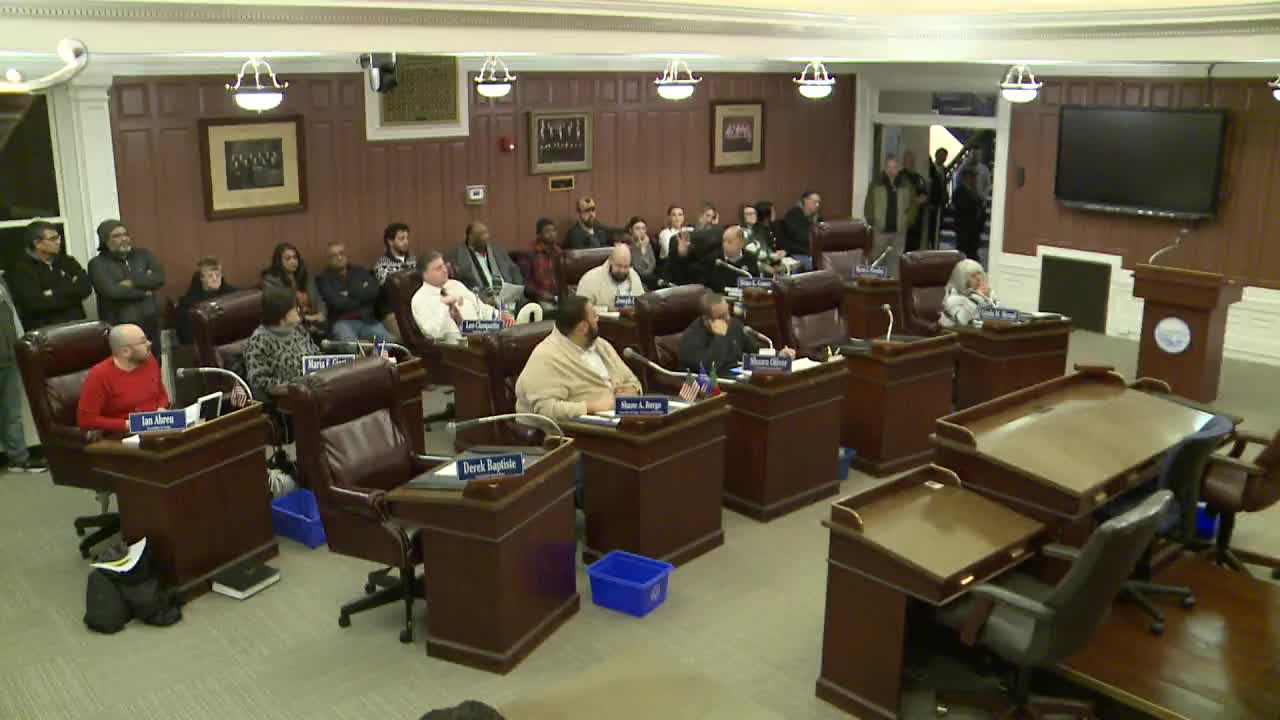
The Committee on Appointments and Briefings on Feb. 18 heard hours of testimony from health officials and local retailers about a New Bedford Board of Health regulation that sets a minimum price for single cigars, then voted to ask the city solicitor to review whether the rule is a reasonable health regulation and tabled further action.
The Committee on Appointments and Briefings on Feb. 18 heard hours of testimony from health officials and local retailers about a New Bedford Board of Health regulation that sets a minimum price for single cigars, then voted to ask the city solicitor to review whether the rule is a reasonable health regulation and tabled further action.
The regulation, adopted by the Board of Health and effective Jan. 1, 2025, was presented to the committee by health department staffer Stephanie Sloan. Sloan said the board relied on state guidance in updating city tobacco rules to reduce youth initiation, and she cited recent compliance-sting results: “In 2022, we had 21 sales to minors. And of those 21 sales, 16 were little cigars. In 2023, there were 24 sales to minors. 5 of those were cigars. In 2024, we had 9 sales to minors, and 3 of them were cigars.”
Councilor Brian Gomes, who brought the item forward for discussion, and several other councilors pressed the health department about outreach and the enforcement record. Sloan said the department hand-delivered the model regulation and a cover letter to retailers and published notice in the Standard-Times; she told the committee that the in-person hearing drew roughly a dozen attendees and another eight to 10 participants on Zoom.
Business owners and industry representatives told the committee the minimum-pricing measure will drive customers to nearby communities and harm small retailers. Peter Brennan, executive director of the New England Convenience Store and Energy Marketers Association, told the committee: “If you can't get the product that you're seeking at one of our stores, you're going to go somewhere else. It's not just the nicotine, the tobacco sales that are impacted by these policies, but it's the entire basket of goods.”
Several convenience-store and liquor-store owners gave concrete examples of lost sales. Shija Prajapati of 807 Ashley Boulevard said many regular customers are now traveling to neighboring towns: “They stopped coming to the store, and we have lost a lot of sales. Customers just have to drive, like, two minutes to go to neighboring cities to get everything.” Expos Duarte, an area retailer and advisor, said he had reviewed his stores’ sales and reported a thousands-of-dollars decline in cigar-related revenue at a single location after Jan. 1.
Councilors and the committee also heard procedural concerns from retailers who said they had not realized the hearings would result in a pricing rule, and some said they did not receive timely notice that the regulation was under consideration. Sloan said the department had offered both virtual and in-person hearings, interpretation services, and a written comment period, and that sanitarians personally delivered the proposed regulation to retail locations.
After questioning from councilors, the committee voted to request a written opinion from the city solicitor on whether the Board of Health’s cigar minimum-pricing regulation qualifies as a reasonable health regulation. The motion to seek the opinion was made and seconded on the record and carried. The committee then voted to table the item for further consideration; the chair said the motion leaves the matter active in the committee while soliciting legal review and additional information.
What happens next: the committee asked the city solicitor to review the legal basis and submit an opinion; the matter remains on the committee’s docket pending that report and any additional materials the health department or retailers provide.