Lifetime Citizen Portal Access — AI Briefings, Alerts & Unlimited Follows
City attorney reviews Brown Act, bias and financial conflict rules at Perris Planning Commission meeting
Loading...
Summary
Assistant City Attorney Benjamin R. Jones gave a refresher on the Brown Act, common-law bias and the Political Reform Act during the Perris Planning Commission meeting on Feb. 5, 2025, outlining recusal rules, social-media limits and the 500-foot financial-proximity presumption for property conflicts.
Assistant City Attorney Benjamin R. Jones told the Perris Planning Commission on Feb. 5 that the Brown Act is the statelaw requiring legislative bodies to meet in public and to publish agendas in advance.
"The Brown Act is an open meeting law or sunshine law," Jones said. He told commissioners the law defines a "meeting" broadly to include a congregation of a majority of the members at the same time and location to hear, discuss, deliberate or take action on matters within the commission's jurisdiction.
Jones reviewed common issues that can lead to legal challenges, including serial communications among a majority of commissioners, use of social media to discuss specific commission business and the remedies available to the public if the city does not cure a Brown Act violation.
He also summarized common-law bias standards that apply to quasi-judicial land-use decisions, advising commissioners to avoid public advocacy on applications that later come before them. Jones cited case law examples in which prior public statements by an official required a rehearing when that official later participated in a decision.
On financial conflicts of interest under the Political Reform Act of 1974, Jones told the commission that disclosure and disqualification are the key safeguards. He described the Form 700 filing requirements and explained the familiar proximity presumption used by the Fair Political Practices Commission: when a commissioner owns property within 500 feet of a project subject to a commission decision, the financial effect is presumed material and recusal is generally required.
Jones cautioned that recusal requires more than not voting: a disqualified commissioner should publicly identify the financial interest on the record and physically leave the room for the duration of the hearing, he said. He noted that the FPPC can assess civil fines and that knowing and willful violations can be misdemeanors.
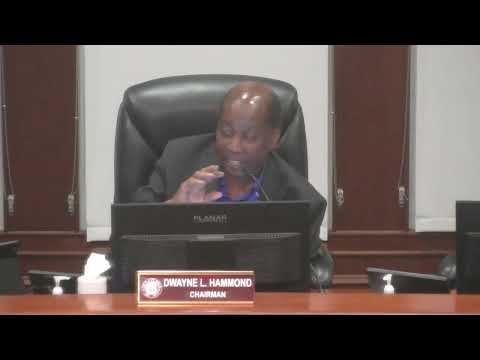
Chair Hammond and several commissioners thanked Jones for the concise refresher. Jones also reminded new commissioner Jillian Manes to complete AB 1234 ethics training and to file a Form 700, as required by state law for local officials.
The presentation was offered as a staff refresher rather than the full two-hour AB 1234 training required by statute; Jones said staff will provide materials and contact information for further questions.