Get Full Government Meeting Transcripts, Videos, & Alerts Forever!
Get email alerts on the Transportation topic
No spam. Unsubscribe anytime.
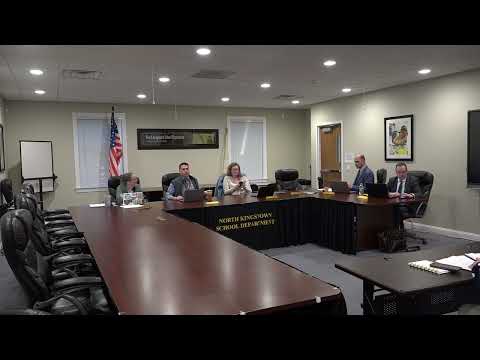
North Kingstown committee reviews draft student transportation policy, flags changes for administration
Summary
The North Kingstown Policy Advisory Committee on Jan. 6 reviewed a cleaned draft of the district's Student Transportation Services policy and asked administrators to refine definitions and procedures before sending the document to building administrators and drivers for operational review.
The North Kingstown Policy Advisory Committee on Jan. 6 reviewed a redraft of the district's Student Transportation Services policy and asked district staff to refine several operational details before the committee forwards a final version to the school committee.
Committee members and transportation staff prioritized clarity on definitions, opt-out procedures, rules for alternate (day-care and before/after-school) stops, emergency transfers and how parents should submit and receive confirmation of requests.
The draft presented by a staff member, Erin, included a clean copy of the policy labeled "Student Transportation Services" with recent edits highlighted. Erin said the document consolidated earlier edits and added draft language in places where the administration had not finished work. Assistant Superintendent Rob and Michelle from transportation joined committee members in line-by-line review.
Committee members pressed for clear definitions. "Bus route" was proposed as "a designated path that a school bus follows to safely transport students from their homes to school and back with scheduled stops for students of all grade levels," and "bus trip" was proposed to cover field trips, late buses and athletic trips. Members asked staff to refine that language so operational staff and families share the same expectations.
Members also discussed an opt-out procedure for families who choose not to use bus services for the school year. Erin and Michelle described current practice: families sometimes inform the district informally, and high schoolers were asked this year; the committee suggested sending an opt-out form in July or August and adding the procedure as a short sentence in the policy while keeping most implementation steps in administrative procedure.
The committee spent substantial time on requests to change a child's assigned bus route or stop for before- and after-school care. Transportation staff said the district currently uses a Google form for consistent daycare-related changes and that emergency one-day changes are handled by written notes or parental email, with school clerks and principals involved in confirming approvals. Members recommended adding a category for ongoing before/after-school changes (variously described in the meeting as "ongoing," "extended" or "long-term") and a separate short-term/emergency category for one-day or exceptional requests.
On transfers and emergency changes, the group agreed the written request should be routed to building staff and transportation so approvals can be confirmed to parents in writing or by email. Committee members emphasized that relying exclusively on a parent's handwritten note handed to a bus driver creates risk: "I want the note to go to Michelle. I want Michelle to tell the bus driver," one member said, characterizing the need for a documented approval path.
Safety standards for placement of bus stops were revised from a prescriptive requirement that stops avoid busy streets to phrasing that allows operational judgment: when feasible or when practical, bus stops should be located in the safest available areas and provide waiting areas free from obstructions or hazards.
The draft also included items that staff flagged for administrative review rather than policy-level rules: requirements drawn from external standards, such as vehicle inspection and driver safety drills, and details on video surveillance on buses. The committee asked staff to cite the Federal Motor Carrier Safety Administration regulation where appropriate (transportation staff noted the relevant regulation is in 49 CFR 390) and to cross-reference the district's separate surveillance policy.
Next steps: staff were asked to tidy redlined material, incorporate the committee's wording suggestions on opt-outs, emergency versus ongoing daycare requests, and the bus-stop safety language, and to circulate the revised draft to building administrators and transportation staff (including bus drivers) for operational feedback before returning to the committee. No formal vote on the policy was taken at the meeting.
Details and context: committee members repeatedly recommended separating what belongs in a district policy from what should appear in operational procedures or web forms, so that forms can change without requiring a policy revision.