Get Full Government Meeting Transcripts, Videos, & Alerts Forever!
Get email alerts on the Literacy Instruction topic
No spam. Unsubscribe anytime.
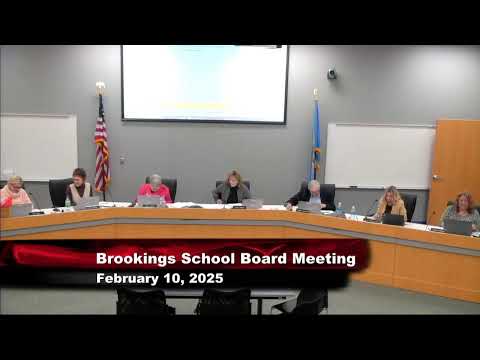
Brookings district lays out multi-year literacy overhaul, vows no student left behind
Summary
Superintendent Dr. Schultz and district literacy leaders described a district-wide push to align instruction with the science of reading, expand staff training and use assessment data to target classroom instruction. Board members pressed for regular updates as the program continues.
Brookings School District Superintendent Dr. Schultz told the school board on Wednesday that the district is undertaking a multi-year, research-based effort to improve reading instruction and outcomes for all students.
"Every child in our district deserves a teacher who is able to teach them how to read," Dr. Schultz said, and added that "every teacher deserves to know how to teach children to read." The superintendent said the district is aligning curriculum and professional learning to the South Dakota literacy framework and to “the science of reading.”
District literacy coordinator Corey Davis and Dakota Prairie Elementary Principal Sarah Wavercick presented details of the work that has been under way since last May. Davis said the district created a structured plan "bridled by the South Dakota literacy framework" that emphasizes systematic, explicit instruction across pre-K through grade 12. "To ensure success for every student, we must implement evidence-based methods that support strong reading instruction," he said.
The presentation said the district has focused first on tier 1 instruction — the core literacy teaching that every student receives — to eliminate inconsistencies between classrooms. The district is aligning routines, vocabulary and curriculum across grade levels, including the district's 13 kindergarten classrooms, and is using weekly early-release time for teacher collaboration and problem solving.
Davis and Wavercick described supports that include monthly teacher meetings with MTSS coaches, progress monitoring using NWEA assessments and professional development such as AIMS pathways coursework, DSU book study on effective reading instruction, LETTERS training and coaching from Compass learning specialists funded through an MTSS grant.
Board members asked for regular updates on rollout and implementation. One board member asked, "What percent of our staff have taken the ... pathways course?" Davis replied, "I would say almost all. Not a %, but almost all in each of the buildings. In the elementary for sure."
Dr. Schultz framed the district's timeline and sense of urgency: she noted research suggesting a slow pace of improvement when implementation is partial and said the district does not have a multi-decade horizon. She thanked administrators and teachers for committing to sustained professional learning and said the board should expect continued reporting on progress and needs.
The board did not take formal action on the literacy presentation; the district will continue implementation and provide updates in future meetings.
The district identified the South Dakota literacy framework and the state funding and training opportunities as central to the work. Board members encouraged continued communication so the board can support staffing, scheduling and resource needs as the initiative moves forward.