Get Full Government Meeting Transcripts, Videos, & Alerts Forever!
Get email alerts on the Eastern Drc Security topic
No spam. Unsubscribe anytime.
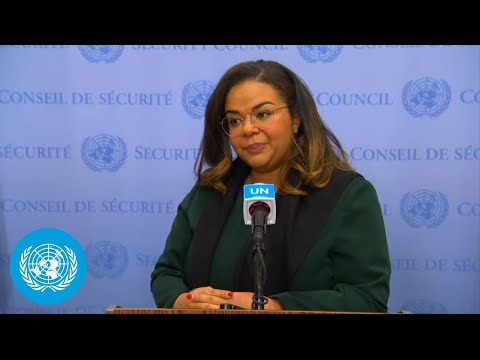
DRC foreign minister urges Security Council to press Rwanda, says M23 outguns peacekeepers
Summary
The Democratic Republic of Congo's foreign minister told the UN Security Council that M23 rebels backed by Rwanda are advancing in eastern DRC, that UN and SADC peacekeepers are outgunned, and urged immediate international action including sanctions and accountability measures.
Her Excellency the Democratic Republic of Congo's Minister of Foreign Affairs, International Cooperation and La Francophonie told the United Nations Security Council that M23 rebels backed by Rwanda have advanced in eastern DRC and are outgunning UN peacekeepers, and she urged the council to take robust action — including sanctions — to prevent further human suffering.
The comment came during a question-and-answer segment after the minister addressed the council. A journalist asked why the government in Kinshasa has not been able to control the Kivu region despite decades of UN peacekeeping, noting that “the UN peacekeepers have been in Congo for 25, going on 30 years.” The minister replied that the instability in eastern DRC is rooted in historic vulnerabilities and long-standing underinvestment in and lack of reform of the national army.
"It is linked to decades of not investing necessarily in the army, not equipping the army sufficiently, and investing also in its reform," the minister said, adding that President Félix Tshisekedi has undertaken reforms since taking office in 2019 but that such changes will not produce dramatic results in a short time.
The minister told the council that eastern DRC faces compounded problems: weakened state authority, humanitarian access constraints, and what she described as interference by neighboring states. She said that UN peacekeepers and those from the Southern African Development Community (SADC) are at a tactical disadvantage against the M23 because the rebel group has been supplied with significantly greater firepower. "We see the constant advance of the M23," she said, and cited recent human-rights reporting: "We see executions of children as reported by the OHCHR yesterday."
Asked what should happen if a military solution cannot succeed, the minister emphasized a political approach. "The commitment to a political solution is one that is unwavering, first of all, for the DRC," she said, and she urged the Security Council and the international community to demand withdrawal of Rwandan troops and to impose consequences for actions on the ground. She said accountability mechanisms such as the International Criminal Court and U.N. human-rights processes could play a role "down the line," and that the council should act now to prevent further war.
The minister also addressed concerns that attention to other crises could overshadow the DRC, saying she and her country's permanent mission are engaging member states and that "we will never allow our country to be left behind." No formal Security Council action or vote was recorded in the session excerpt.
The exchange combined immediate security concerns — advances by M23, claims of outside support, and UN peacekeepers' reported incapacity to match rebel firepower — with calls for political diplomacy and international accountability. The minister framed the situation as requiring sustained, long-term investment in Congolese security institutions alongside immediate diplomatic pressure on outside actors.
The session included at least one questioner and the minister's responses; the transcript provided no formal motions, votes, or Security Council determinations in the excerpt.