Get Full Government Meeting Transcripts, Videos, & Alerts Forever!
Get email alerts on the Parking Camping Code Revision topic
No spam. Unsubscribe anytime.
Council adopts red‑line changes to traffic and parking code; overnight camping on public rights-of‑way restricted
Summary
The council approved a red‑line version of 2025 motor vehicle and traffic code revisions, removing references to a "blue" parking designation, adopting staff language to match state traffic terms and changing time limits for long‑term street parking enforcement.
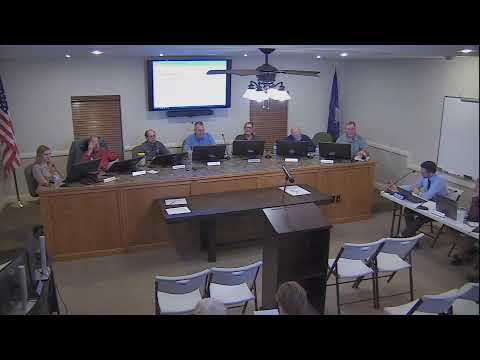
The Toquerville City Council on Feb. 5 approved red‑line revisions to the city's 2025 motor vehicle and traffic code, adopting staff edits to align local definitions with state traffic code, removing references to a "blue" parking designation and changing the time limit for prolonged street parking enforcement.
Council members and staff debated definitions, enforcement mechanics and overnight camping in vehicles on public rights‑of‑way. Staff advised that enforcement of long‑term parking relies on a complaint‑based process and sheriff's office tagging of vehicles; the ordinance language approved narrows ambiguities by using terms already defined in the traffic code.
Among the changes the council approved: language that ties prohibited vehicle categories to definitions in the traffic code rather than using standalone local terms; striking the word "consecutive" from a 96‑hour standard and replacing it with a time‑period formulation; and removal of a local "blue" curb/parking designation that staff said is unused locally. The council directed staff to incorporate red‑line edits (versions 2 and 3 in the meeting packet) and to adjust the time threshold for prolonged parking enforcement to a shorter period (the council set a revised limit: 72 hours within an 80‑hour period) as part of adoption.
Staff explained enforcement practice: a resident or other complainant must call code enforcement or the sheriff; an officer would tag the vehicle and then observe it for the ordinance period before further enforcement steps such as fines or tow eligibility occur. Staff noted that for larger construction sites and grading activities, the city has separate dust and nuisance controls; the traffic code changes focus on parked/abandoned and inoperable vehicles on public rights‑of‑way.
Council discussion also covered a separate camping prohibition: under the adopted language, sleeping or establishing a campsite on streets, alleys or public property remains prohibited unless specifically authorized in writing by the city. Council members debated whether to allow a resident to give permission for a visitor to sleep in a vehicle in front of private property; staff recommended that, for clarity and to avoid potential abuse, the default remain that camping/sleeping on public rights‑of‑way is prohibited unless the city grants written authorization.
Councilmembers noted other clean‑up tasks for staff, including resolving several scrivener's errors, matching chapter references, clarifying the penalty schedule for certain offenses (staff pointed out that some penalties currently in code are low by modern standards) and considering whether to raise fines for violations such as parking in a fire lane. Staff said fines are budgetary and policy decisions that could be returned to council for separate action.
The motion to approve the red‑line amendments (versions 2 and 3 in the packet) with staff changes, to remove references to the "blue" parking designation, and to set the revised prolonged‑parking threshold to 72 hours within an 80‑hour period passed on an affirmative council vote.
Ending: Staff will return with a final ordinance document that incorporates the red‑line edits and the agreed changes, corrects typographical errors, and provides clean penalty language; council members asked staff to coordinate enforcement details with county sheriff's deputies.