Get Full Government Meeting Transcripts, Videos, & Alerts Forever!
Get email alerts on the Budget Fy2026 topic
No spam. Unsubscribe anytime.
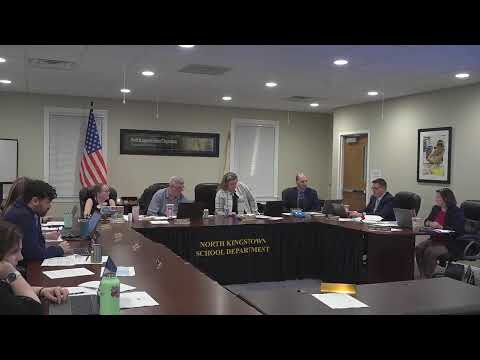
North Kingstown superintendent presents FY 2026 budget proposing $60.39 million town appropriation, 4.1% increase
Summary
School district leaders presented a first-draft FY 2026 budget that asks the town for about $60,392,515 — an increase of roughly $2.51 million (about 4.1%) — while recommending reappropriating $500,000 from an audited fund balance and projecting $400,000 in investment earnings.
Superintendent-led staff presented the North Kingstown School Committee with a first-draft fiscal year 2026 budget on Jan. 28 that seeks a town appropriation of about $60,392,515, an increase of roughly $2,512,506, or about 4.1 percent from the prior year.
The superintendent’s office said district revenue projections include a net positive audited fund-balance change of $987,000 and proposed reappropriating $500,000 into the FY 2026 budget to cover larger one-time needs. State aid was described as “in flux” and staff reported an initial reduction in state aid of $3,200,337 largely tied to high‑cost special‑education aid, with final figures expected in March and June.
Why it matters: the district’s revenue outlook, including investment earnings and the reappropriation recommendation, directly affect the size of the town appropriation request and the committee’s discussions about services and staffing. School leaders stressed that many budget figures remain preliminary and subject to final state aid and town-level decisions.
Key revenue and expenditure points
- Town appropriation ask: about $60,392,515, an increase of roughly $2,512,506 (4.1 percent). That figure is “based on the budget as you’re seeing it,” staff said. - State aid: staff reported a current reduction of $3,200,337, mostly in high‑cost special education; final state aid numbers will be available in March and again in June. - Fund balance and reappropriation: the audit showed a net positive fund‑balance change of $987,000 for FY 2024; staff recommended reappropriating $500,000 back into the FY 2026 budget for larger projects. - Investment earnings: administration proposed increasing the budgeted investment‑earnings estimate from $280,000 (FY 2025 budget) to $400,000 for FY 2026, saying year‑to‑date performance supports the higher estimate but noting market risk. - Net additional revenue: staff estimated about $1 million in additional revenue available for FY 2026 tied to audited results, tuition increases from outside LEAs (CTE students) and other sources.
Expenditures and drivers
Staff described a projected overall increase in expenditures driven largely by salary and benefit costs and a set of non‑pay operating pressures:
- Salary and benefits: staff said salaries are expected to rise and identified roughly $1.3 million in baseline salary increases (step increases and a 3 percent contractual increase for teachers and administrators), and an anticipated benefits increase (including a projected 5 percent health/dental increase and pension‑rate changes). The budget documents cite an approximate $568,682 increase on the benefits side. Administrators noted that some contractual and negotiated items remain unresolved and could change these totals. - Operating increases: the budget highlights concentrated operating increases in information technology, building maintenance, student transportation and substitute costs. For example, statewide transportation projections have jumped; staff said they budgeted using a higher current projection of about $530,000 after a prior estimate of $430,000.
Staff cautioned the committee that many numbers will change before final adoption. “These numbers will change. We will get the final numbers when budget is approved,” a member of the budget team told the committee.
What the committee directed and next steps
Committee members asked staff for more line‑item detail on several high‑cost lines (transportation, substitutes, and information technology) and requested clearer labeling of encumbrances versus year‑to‑date actuals. Staff agreed to provide additional breakout schedules and the audit package in advance of the next meeting.
The committee agreed to hold further budget work sessions to refine assumptions and prepare the formal appropriation request to the town council. No formal votes on the FY‑2026 appropriation were taken at the session.
Ending note
Administrators characterized the draft as a working document and asked the committee to consider the figures as subject to change as final state aid and contract outcomes become known. “We will get new numbers again at the end of March, and then we’ll get the final numbers at the end of June,” budget staff said.