Get Full Government Meeting Transcripts, Videos, & Alerts Forever!
Get email alerts on the George Snyder Trail topic
No spam. Unsubscribe anytime.
Residents urge Fairfax City Council to realign George Snyder Trail to avoid mature woods
Summary
Multiple residents urged the Fairfax City Council to realign the proposed George Snyder Trail and other connectors to avoid cutting mature oak-hickory forest, citing environmental and accessibility concerns and urging use of existing infrastructure.
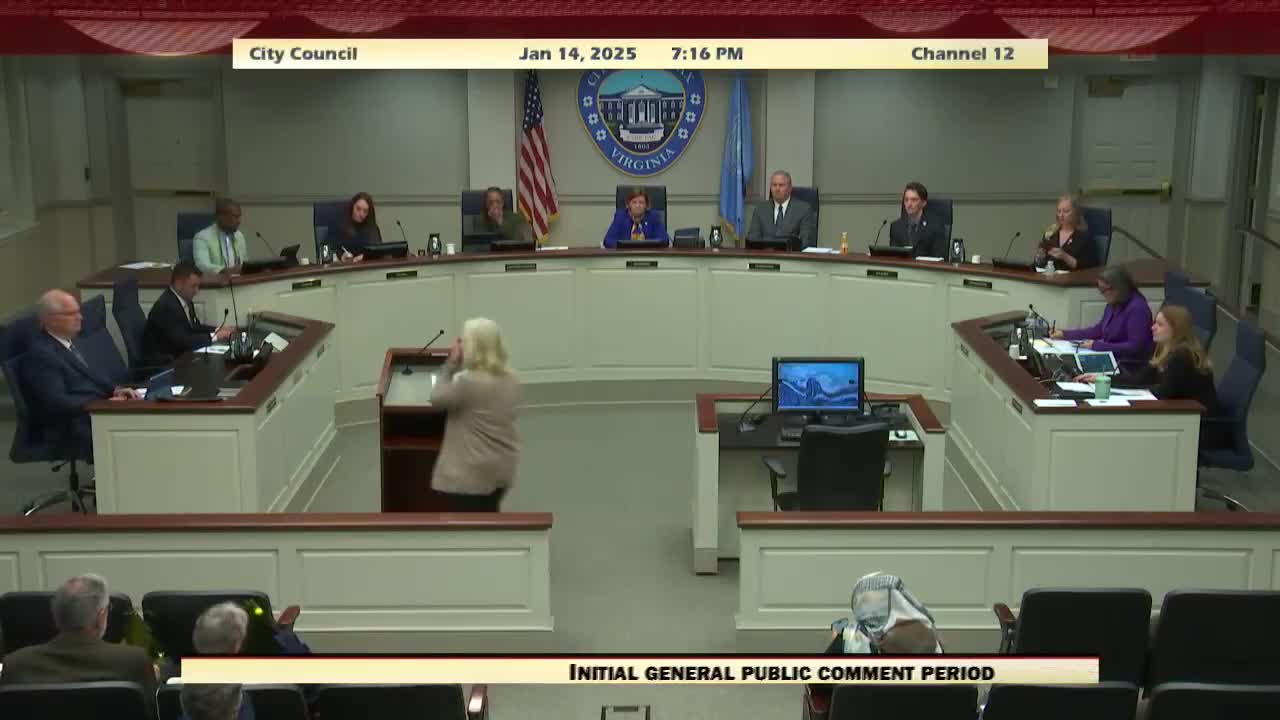
Dozens of Fairfax City residents urged the City Council on Jan. 14 to change the proposed alignment of the George Snyder Trail to protect mature woodlands and wildlife habitat.
Speakers said the trail as proposed would remove hundreds of mature trees and damage ecosystems in a forested corridor used daily by residents, including people with disabilities who said the woods are important for physical and mental health.
Public-commenters pressed council members to consider alternatives that would place bike routes on adjacent paved streets or sidewalks rather than carving a multi-use paved trail through the eastern portion of the woods. Several speakers repeated a request to cancel the Country Club Hills Connector and to move the Pickett Road connector out of the woods.
"Please realign the George Snyder Trail," Katie Johnson told the council, noting a petition of 2,729 signatures asking officials to "stop the destruction of the woodlands in our city for bike roads." Johnson said the trail is 1.78 miles and was originally approved as a $200,000 stone-dust trail; the currently proposed alignment would replace that with a paved multi-use trail that she said would cut into a mature oak-hickory forest.
Other speakers offered similar appeals. Judy Frazier asked the council to "promptly find a way to use those funds to improve multimodal access between 123 and the Wilcoxon Trail," while Mary Milner and Trevor Milner described the woods as daily refuges that should be preserved and suggested lower-impact alignments using existing roads.
Several speakers also noted numbers cited in prior staff testimony and reports: the city's urban forester has said the eastern portion is at capacity, and speakers said the stream-restoration work and the trail could remove roughly 491 mature trees for stream work plus about 600 for the George Snyder Trail (figures cited by participants in public comment). One speaker warned that combining bicycles and pedestrians in close quarters can make trails less accessible for older adults and people using mobility devices.
Not all comments were limited to the trail: speakers also raised related issues including the Willow Woods open space (10270 Fairfax Boulevard), the Country Club Hills Connector and Pickett Road connector alignments, and general concerns about community engagement in long-running projects.
City staff told the council that staff can present the George Snyder Trail topic at a future work session; staff later said the presentation could be scheduled for the March 4 work session so the council can hear project timing and more technical information.
The council did not take a vote or adopt any new policy on the trail during the Jan. 14 meeting; the remarks were part of the meeting's public-comment periods and the item will return for further study and a staff presentation.
Residents and advocates who spoke provided requests and alternatives for staff and the council to consider as the city continues design and outreach on the trail project.