Get Full Government Meeting Transcripts, Videos, & Alerts Forever!
DeSoto town hall urges coexistence with wildlife; officials warn against rodenticide and explain protections for rookeries
Summary
City of DeSoto animal-control officers and outside experts briefed residents on nuisance rookeries, protected migratory birds, and coexistence strategies for coyotes, bobcats and other urban wildlife. Presenters warned that rodent poisons cause secondary wildlife deaths and outlined nonlethal deterrents and habitat steps local residents can take.
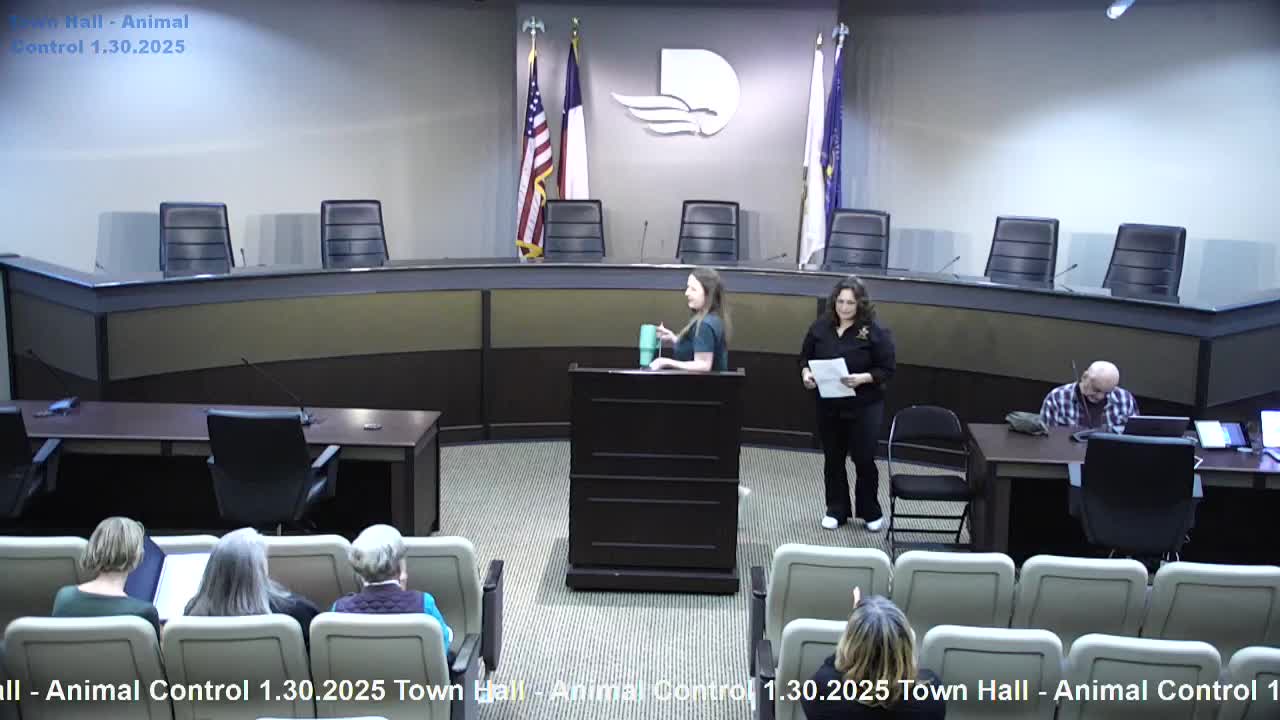
DeSoto — City of DeSoto animal-control staff and visiting wildlife experts told a packed town-hall audience that coexistence and early, nonlethal measures are the best ways to reduce conflicts with birds and mammals and that some commonly used control methods carry legal or ecological limits.
Michelle Romualdo Ibanez, one of DeSoto’s two full‑time animal control officers, opened the program by describing the unit’s mission as “care, control, community, and compassion” and said officers respond to injured, sick, stray and aggressive animals and help with trap‑neuter‑release for community cats.
The meeting’s first featured presentation, from Rachel Richter of Texas Parks and Wildlife, explained why rookeries — colonial nesting sites of egrets and herons — can become severe nuisances when large numbers of birds settle in neighborhood trees and why legal protections limit responses. “It is illegal to harm, kill, injure, harass, native bird species, and anything that might result in the loss of, death or abandonment of eggs or hatchlings,” Richter said, citing the Migratory Bird Treaty Act and state protections under Chapter 64 of the Texas Parks and Wildlife Code.
Why it matters: once nesting begins, harassment and many deterrents are unlawful because they can cause abandonment of eggs or dependent hatchlings. Richter and DeSoto staff urged early detection…
Already have an account? Log in
Subscribe to keep reading
Unlock the rest of this article — and every article on Citizen Portal.
- Unlimited articles
- AI-powered breakdowns of topics, speakers, decisions, and budgets
- Instant alerts when your location has a new meeting
- Follow topics and more locations
- 1,000 AI Insights / month, plus AI Chat