Get Full Government Meeting Transcripts, Videos, & Alerts Forever!
Get email alerts on the Historic Preservation topic
No spam. Unsubscribe anytime.
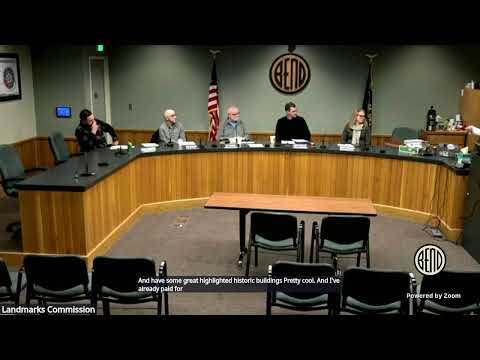
Bend Landmarks Commission receives legal refresher, elects officers and approves minutes
Summary
At its February 2025 meeting the Bend Landmarks Commission heard a training from the city attorney on quasi‑judicial duties, public records and ethics; approved draft November 2024 minutes and elected Andy Coughlin chair and Jim Figurski vice chair.
The Bend Landmarks Commission on Feb. 2025 heard a refresher from City Attorney Ian Lighthizer on the commission's quasi‑judicial role, public‑records obligations and ethics rules, then approved draft November 2024 minutes and re‑elected Andy Coughlin as chair and Jim Figurski as vice chair.
Lighthizer told commissioners the body operates under the Bend Municipal Code and holds certified local government responsibilities tied to the State Historic Preservation Office. "When you're sitting in that quasi judicial capacity ... you need to think a little bit like a judge that has a case coming before you," Lighthizer said, describing the distinction between legislative rule‑making and property‑specific (quasi‑judicial) decisions.
The training emphasized process safeguards for quasi‑judicial matters: decisions must be grounded in code criteria, ex parte contacts should be avoided or disclosed, and written materials must be placed in the public record. Lighthizer warned that Oregon public‑records law has a broad definition of record and is focused on disclosure: "Anything and everything that qualifies as a public record ... would be subject to disclosure if somebody asked for it," he said, noting that informal notes tied to commission business can be subject to retention and release.
Lighthizer also explained ethics and conflict rules under Oregon law, noting conflicts focus on financial gain or avoidance of financial detriment. "Conflicts of interest in Oregon only have to do with financial gain or the avoidance of financial detriment," he said, and urged members to declare potential conflicts and ask staff when unsure.
On enforcement, Lighthizer said historic‑resource and other city code violations are civil infractions handled by code enforcement. He cited the penalty framework in the code, saying violations are processed as civil infractions and a class A infraction can carry fines up to $750 and, in some cases, daily penalties.
Following the training, the commission handled routine business. Commissioners voted to approve the November 2024 draft minutes. The minutes motion was made by Commissioner Tom Schmidt and seconded (second not specified in the record). One commissioner stated they would abstain because they were not present at the November meeting; the chair announced the minutes were approved.
The commission then nominated and voted to keep Andy Coughlin as chair; Coughlin accepted the nomination. The body nominated Jim Figurski to continue as vice chair and approved that nomination. Commissioners then heard communications and reports, including disclosures about potential conflicts and updates on grant‑funded code‑update work and plans for National Historic Preservation Month events.
The meeting concluded with no additional formal actions recorded.
The commission is scheduled to review a consultant draft of proposed historic‑resources code updates; staff said that draft is under review by project leads and the state. The chair and staff indicated future meetings and public hearings will include specific code amendment items for review and comment.