Get email alerts on the Inner Belt Planning topic
No spam. Unsubscribe anytime.
Speakers urge Akron to use $10 million planning grant to avoid repeating Inner Belt displacement
Summary
At City Council public comment, a former planning director and residents urged the city to spend a new $10 million planning grant with empathy for displaced neighborhoods, and requested targeted investment for Ward 3.
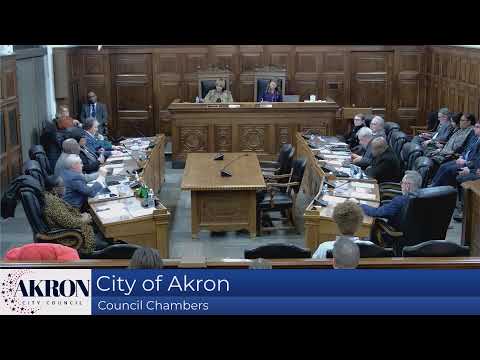
Thomas Statham, a retired city planning director and former Akron planning staffer, urged Akron City Council on Jan. 13 to spend a recently announced $10 million planning grant cautiously and with attention to communities historically harmed by past highway projects.
Statham contrasted the new planning money with the decades-long harm caused when the Inner Belt and related highway projects displaced more than 1,300 families in the 1960s and 1970s. He warned that “90 seconds” saved in driving time was not a sufficient public benefit to justify repeated displacement and argued for accountability for outside consultants and empathy in planning.
“We got $10,000,000. Now, you spend about $100,000,000 for the renovation of the route 59,” Statham said, and then added an historical cost comparison: “In real time money right now, you're talking 1,500,000,000.” He urged council to “add some empathy when you work on these plans and hold these groups accountable that you're bringing in.”
Harrington Hargrove, a Ward 3 resident, urged targeted investment for his neighborhood, asking council to allocate funds directly into Ward 3 rather than allowing development dollars to flow to downtown and to outside developers. “Ward 3 is probably been the most underserved community in this city,” Hargrove said, and asked for a formula to “uplift our community.”
Why this matters: Speakers tied a new planning grant to the city’s long history of highway-driven displacement and asked council to prioritize neighborhood investment rather than enabling outside development that could price out existing residents. The comments framed the grant as an opportunity to repair past harms.
Council response and next steps: No formal vote or committee action on the planning grant was recorded at the Jan. 13 meeting; Statham’s remarks were delivered during the public comment period and Hargrove’s remarks followed. Planning and economic-development committees were listed on the council’s committee schedule; any funding or project decisions will come through the council’s committee process or future legislation.
AI generated
The text on this page is AI generated. Summaries, highlights, analysis, and video transcripts are all produced from the original source material.
AI can make mistakes, so if you spot one, and we will fix it for everyone.
Note: the source content is unaltered by us. Any content source we link to, be it a video, an audio recording, or a document, is presented exactly as its publisher released it. That publisher is usually a government body, sometimes an individual official or another organisation.