Get Full Government Meeting Transcripts, Videos, & Alerts Forever!
Get email alerts on the Cigar Lounges topic
No spam. Unsubscribe anytime.
Legislators split over bill to formalize cigar lounges, with public-health groups urging delay
Summary
A proposal to create a regulated cigar‑lounge license — grandfathering existing shops and authorizing limited new licenses with a 60/40 tobacco–alcohol sales ratio — drew support from lounge owners and opposition from public‑health groups and restaurant interests.
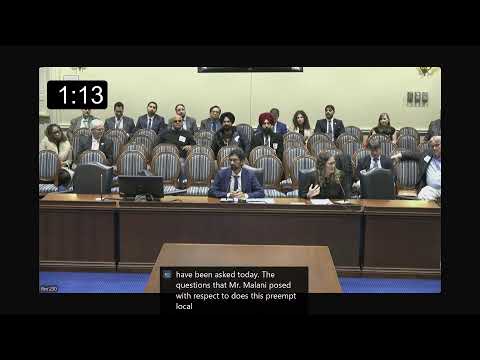
Annapolis, Md. — Delegate Aisha Johnson’s bill to create a regulated cigar‑lounge license (House Bill 13-18) generated a quick, polarized hearing as advocates argued the change would stabilize an existing industry while public‑health officials and restaurant groups warned of renewed indoor‑smoking exposure.
The bill would grandfather locally licensed tobacconists that allow on‑site smoking, create a new state license for premium cigar lounges, and allow licensed lounges to sell alcohol up to a stated limit (the sponsor and proponents described a 60% tobacco / 40% alcohol sales framing during the hearing). "This bill gives small businesses stability, flexibility, and protections that they need to thrive," Delegate Aisha Johnson told the subcommittee.
Owners and trade representatives said a regulated licensing scheme would keep dollars in Maryland and provide clarity to businesses that now operate under mixed local rulings. Penny Hellmuth, president of the Premium Cigar Retailers Association of Maryland and owner of The Humidor in Cockeysville, said existing shops need authority to operate sustainably. Raj Singh, owner of The Box in Waldorf, told members his lounge has held a liquor license since 2013 and that the license has helped the business “keep my customers at my shop longer, spend more, and also gain tax revenue for the state.”
Matt Foley, representing the Premium Cigar Retailers Association, described core provisions: grandfathering existing licensed lounges, limiting new statewide expansion (one lounge per roughly 150,000 residents or one per less populated county under the bill’s framework), a required tobacco‑to‑alcohol sales ratio and air‑filtration standards, and employee notifications acknowledging exposure to smoke.
Opposition was broad. The Maryland Department of Health, the American Heart Association, and the American Cancer Society’s advocacy arm all urged an unfavorable report. Laura Hale of the American Heart Association described undone public‑health progress from the Clean Indoor Air Act and said expansion of venues with indoor smoking would undercut prior gains. “This is not an issue where we should be expanding the number of places that allow smoking,” she said.
The Restaurant Association of Maryland opposed the measure on fairness grounds, saying the industry adapted to no‑smoking rules and should not face competitive distortions from newly licensed indoor‑smoking venues. Melvin Thompson, the association’s representative, said restaurants and bars made significant adjustments after the 2008 statewide ban.
State public‑health officials urged the committee to await a legislatively mandated work group’s recommendations. Dr. Nilesh Kalyanaraman, the deputy public‑health secretary, pointed out the ongoing study of tobacco‑related retail questions and recommended allowing that process to finish before changing statewide law.
Committee members focused on technical issues: whether the bill would allow other tobacco or vaping products (opponents noted ambiguous language), whether new state licenses would preempt local quotas or lease terms, and how to set uniform ventilation and signage standards. The sponsor and proponents said they would work with the committee to refine language — Foley said the proposal was intended to “hold harmless existing licensees” while allowing limited, regulated expansion.
Why it matters: The measure would reintegrate indoor cigar smoking and alcohol service into Maryland regulatory law. Proponents call it economic and legal clarity for a niche industry; opponents say it risks reversing public‑health progress and creating uneven competition for restaurants and bars.
What’s next: No committee action was taken. The Department of Health and public‑health advocates asked the committee to wait for the pending work‑group report, but sponsors signaled openness to technical amendments.