Get Full Government Meeting Transcripts, Videos, & Alerts Forever!
Get email alerts on the Alcohol Retail Modernization topic
No spam. Unsubscribe anytime.
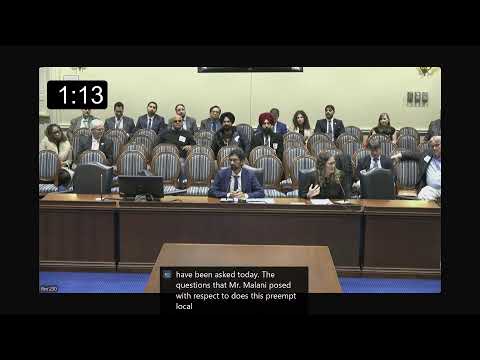
Heated debate in Annapolis as lawmakers consider statewide grocery sales of beer and wine
Summary
Delegate Marlon Ampre’s proposal to let certain retail stores sell beer and wine drew strong support from retailers and economists and sharp opposition from package-store owners, public-health groups and small business advocates who warned the change could hurt local shops and public health.
Annapolis, Md. — Delegate Marlon Ampri introduced the Alcoholic Beverages Modernization Act (House Bill 13-79) to the Economic Matters Committee’s alcohol subcommittee on Wednesday, arguing the bill would “modernize our outdated licensing system” and allow certain retail businesses to sell beer and wine in Maryland.
Supporters said the change would bring consumer convenience in line with neighboring states and open new retail channels for Maryland breweries and wineries. “We are 1 of 4 states that does not currently have beer and wine available in some of our retail establishments,” Delegate Marlon Ampri said. He told the committee the proposal includes guardrails — training for employees, security requirements and limits on how much shelf space alcohol can occupy — and amendments to steer part of any added revenue toward grocery access programs for underserved communities.
Retail and grocery industry lobbyists testified in favor. Kaylee Locklear of the Maryland Retailers Alliance told the committee her group oversees consumer outreach in support of the change and cited polling showing broad public backing. “Many of these consumers have contacted you all to change the law as they ultimately want choice and convenience,” she said. Michael Adams, also with the Retailers Alliance, urged the committee to use amendments to tailor the bill to Maryland’s market.
An academic study and expert testimony prompted a more technical side of the debate. Nathan Pilardi, an agricultural economist and professor, summarized his work on Colorado’s experience after that state expanded grocery alcohol retailing and said liquor-store counts remained “virtually flat,” while brewery impacts were mixed: larger brands adapted more easily, smaller craft brewers faced barriers, but overall production for small breweries did not necessarily shrink.
Opponents stressed potential economic harm to family-owned package stores, public-health risks and market concentration. Jack Malani of the Baltimore County Licensed Beverage Association and a line of mom-and-pop store owners warned of closing shops and job losses if large chains use volume buying, loss leaders or lease leverage. “If you have a pie and I cut it eight ways, we all get an eighth. If I cut it 16 ways, we get a sixteenth,” Jack Malani told members. Several small retailers described multi‑generation investments and personal guarantees on loans that would be endangered if off-premise alcohol sales expanded to supermarkets and convenience chains.
Public-health groups and state public-health officials urged caution. The American Heart Association and the American Cancer Society Cancer Action Network asked for an unfavorable report, citing documented health harms from increased alcohol availability and concerns about youth exposure and normalization. Dr. Nilesh Kalyanaraman, deputy secretary for public health at the Maryland Department of Health, reminded the panel that a legislatively ordered work group is studying tobacco and related retail exemptions and urged the committee to wait for that report.
Several amendments were offered on the record by Ampri and proponents that would: impose an additional percentage fee (proposed at 5%) on beer and wine sold through the new retail channel, with revenues directed to support grocery access in underserved neighborhoods; require local liquor boards to limit licenses in defined geographic areas to prevent saturation; and cap the amount of store square footage devoted to alcohol to preserve the retail focus of grocery outlets. Proponents said those provisions were intended to protect independent stores and direct convenience-related revenue to food access programs.
The hearing drew dozens of witnesses on both sides and wide public attention. No committee vote was taken Wednesday.
Why it matters: The bill tackles the biggest change to Maryland’s alcohol retail landscape in decades. Proponents frame it as consumer convenience and economic opportunity for producers; opponents warn of concentrated corporate market power and fallout for family-owned retailers and for public health. The committee faces tradeoffs between protecting small local businesses and updating rules many shoppers and some producers say are out of step with neighboring states.
What’s next: The sponsor and advocates signaled a willingness to negotiate amendments. Members repeatedly cited the ongoing work-group process and asked for additional analysis of market, tax and health impacts before advancing the measure.