Get Full Government Meeting Transcripts, Videos, & Alerts Forever!
Get email alerts on the Higher Education Transfer topic
No spam. Unsubscribe anytime.
Committee backs bill to create statewide 60-credit transfer pathways for high‑demand bachelor’s programs
Summary
The committee recommended House Bill 427, which would require the Council on Postsecondary Education to create statewide 60-credit-hour transfer pathways for selected high‑demand baccalaureate programs, with implementation starting July 1, 2026 if the bill remains unchanged.
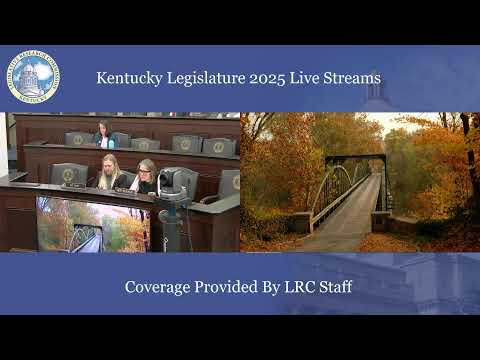
The House Postsecondary Education Committee recommended House Bill 427 after Representative Vanessa Grossel and Council on Postsecondary Education officials described a plan to guarantee that the first 60 credit hours students earn will transfer toward certain high‑demand bachelor’s degrees.
Representative Vanessa Grossel presented HB 427 and said the bill “creates statewide transfer pathways of 60 credit hours to be overseen by the Council on Postsecondary Education for Kentucky’s most in high demand baccalaureate degree programs.” She used nursing as an example: a student who completes second‑year biology at a two‑year institution may find that the 200‑level course does not satisfy a 4‑year institution’s BSN major requirement; HB 427 would prevent that outcome for designated pathways.
Travis Powell, senior vice president and general counsel for the Council on Postsecondary Education, told the committee the implementation would begin with the identification of high‑demand programs and collaborative mapping of curricula across community colleges (KCTCS) and four‑year institutions. Powell said the process would involve faculty from both KCTCS campuses and four‑year campuses to align rigor and course content, including dual credit.
Powell acknowledged concerns about the July 1, 2026, start date and told members the council could start small—selecting a few programs to complete by the deadline—and expand thereafter. He said the council’s initial criteria for selecting programs would include both workforce demand and student enrollment/demand, and that institutions typically track the alignment between curricula and workforce needs.
Committee members raised questions about quality control for dual credit and whether credits conferred in high schools meet the same level of rigor as on‑campus college courses. Powell responded that dual credit courses are college courses and that credit conferred by a public institution in Kentucky “ought to be at that same level,” adding that institutions would provide local oversight of rigor.
Michael Frazier of the Kentucky Student Rights Coalition testified in support of the bill, telling the committee the coalition supported Representative Grossel and CPE “coming together to ensure that students have the best path forward to be able to transfer and be able to ensure that the credits that they take, do count for meaningful aspects of their degree and to get them out sooner.”
After discussion and public comment, the chair announced that HB 427 received 14 aye votes and 0 no votes and passed the committee with a favorable recommendation to the House floor.
The bill text does not specify the initial number of pathways to be created; Powell said the council would “start off with some of those programs that are high demand” and map curricula across institutions. The committee did not adopt floor amendments in the transcript excerpt; members suggested a potential floor amendment to address timeline concerns.
No appropriation or funding source for implementation was specified in the committee record provided; Powell described the work as faculty‑driven curriculum mapping conducted by existing institutional actors and CPE oversight.