Get Full Government Meeting Transcripts, Videos, & Alerts Forever!
Get email alerts on the Land Use Development topic
No spam. Unsubscribe anytime.
Advisory board asks for clearer brief on River Oaks/Radisson PDD overlay, urges hamlet-style streetscape and small businesses on Whitehaven
Summary
Grand IslandEconomic Development Advisory Board members reviewed a developerproposal for the long-running River Oaks/Radisson project and agreed to draft a formal input asking for clearer objectives, more streetscape and hamlet-oriented features along Whitehaven, and preservation of buffers and drainage protections.
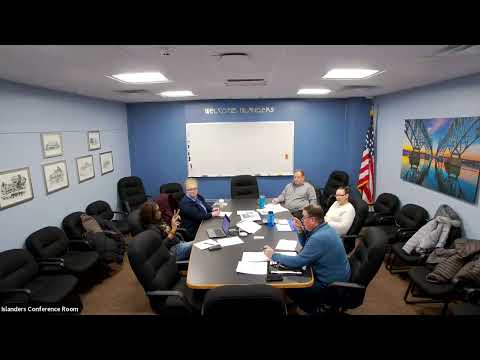
Members of the Grand Island Economic Development Advisory Board spent the bulk of their meeting on a developerproposal tied to a long-running, multi-phase River Oaks/Radisson area project that includes a roughly 14-acre parcel currently zoned B-1 along Whitehaven.
The board heard that the developer seeks a Planned Development District (PDD) overlay for the property, which would allow a mix of residential types and temporarily modify underlying zoning while an approval window remains in effect. If the overlay lapses, the parcel would revert to its prior zoning, board members were told.
Board members said they had not been given a clear, specific request and asked for more detail about what the town wants from the developer. They agreed to draft and submit formal input to the town board and planning staff outlining priorities including stronger treatment of Whitehaven (streetscape and first-floor retail-ready design), retention of open-space buffers and drainage protections, and consideration of small, neighborhood-serving commercial uses rather than purely internal residential development.
Discussion focused on three recurring concerns: the 14-acre parceldesignation and its role in the townplan as a hamlet or neighborhood center; the adequacy of open-space and ravine buffers that the developer proposes as separation from existing Timberlake properties; and infrastructure issues (drainage and access). The board noted that previous planning and long-range committees, drainage reviewers and engineers had given differing views, and that the request the board received contained only a brief letter asking for input.
Board members discussed density counts described by planning participants (the developerconcept could introduce hundreds of residents in the interior townhome/patio-home areas) and questioned how those residents would be served by retail and services on Whitehaven. Several members urged that the town use the moment to press for "retail-ready" first floors or a small percentage of true commercial uses rather than permitting the entire 14-acre frontage to convert to internal residential.
Members also highlighted a longer-running planning issue: the townhas multiple master plans (1998 and 2018 were discussed in the meeting) that contain differing language and recommendations, while the zoning map has not been fully updated to align with newer plan language. That mismatch, members said, complicates how the town frames expectations for large projects.
Next steps the board approved in principle: prepare draft comment language for submission to planning staff (Rhonda/Pete were identified as staff contacts), circulate the draft to the advisory board for edits, and aim to submit the boardinput promptly so it can be considered before upcoming planning board review. Planning staff noted the application could be on a planning board agenda as early as the next month, so the advisory board asked for a quick turnaround on the draft.
Votes at a glance: the advisory board did not take a formal vote to adopt a final letter in the meeting; members agreed to work by email to finalize language and requested staff confirm the planning-board schedule so the advisory input reaches decision-makers before the project advances.