Get Full Government Meeting Transcripts, Videos, & Alerts Forever!
Get email alerts on the School Climate Personnel topic
No spam. Unsubscribe anytime.
Parents and residents confront Belleville board over teachers' shirts; board counsel says personnel matter handled internally
Summary
Several parents and community members said teachers wore "Gulf Of America" shirts that alarmed Latino families and students; the board attorney and district officials said the matter is a private personnel issue and would be handled internally, and no public disciplinary action was announced at the Feb. 24 meeting.
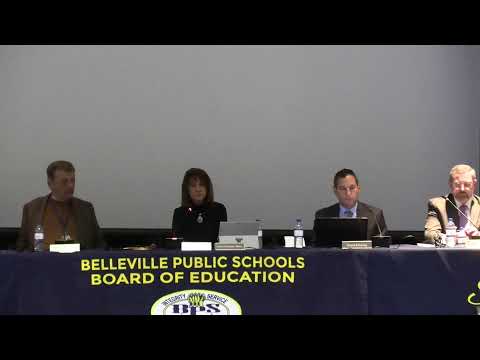
At the Belleville Board of Education meeting on Feb. 24, multiple residents and parents spoke during the public-comment period about an incident in which several district teachers wore shirts bearing the words "Gulf Of America." Speakers said the shirts were a political and divisive statement that frightened some students and families, and they urged the board to disclose how it would respond.
"History teachers who wore those t shirts saying Gulf Of America... it's divisive," Pastor Jennifer De Los Angeles told the board during public comment. She and other speakers said they were concerned for students in a district they described as racially and ethnically diverse; the meeting record shows a speaker noting the high school student body is about 73% Latino.
Apostle Kelvin de Los Angeles, speaking as a parent, said teachers' actions had emboldened others and created fear among students and families: "When I saw that shirt, all I saw was the root of America, which is racism and hatred... There are plenty of kids and parents that wanted to show up, but were afraid. And I want to pose this question. . . . Where is the accountability?"
Not all public speakers agreed. Joe Bell Nome, who identified himself as a resident, defended the teachers and said the phrase is not inherently offensive: "There's nothing offensive about the words Gulf Of America. The name was officially changed by an executive order, and platforms like Google Maps have already updated their US services to reflect it," he said.
Board attorney Jonathan Bush responded to the public comments and said the board was treating the matter as a personnel issue that could not be discussed publicly. "It's a private personnel issue. We're dealing with it," Bush said, adding the board was required to preserve staff rights and could not share sensitive personnel details.
Multiple speakers urged the board to release the names of staff involved or otherwise provide public accountability. Board members and the attorney repeatedly said they could not comment on personnel matters in public session, and no formal disciplinary action or vote was announced at the meeting. The board's attorney said the district was aware of the occurrence and was handling it internally.
Community reaction at the meeting was strongly divided. Some residents said teachers' actions amounted to intimidation and were inappropriate in classrooms where children of immigrant and Latino families are present. Other speakers described the situation as overreaction and defended staff free-speech rights.
Trustees acknowledged the public comments but, following the attorney's guidance, limited public discussion of personnel matters. The board said it would follow its internal personnel processes; the meeting record does not show any public vote, suspension, or other remedial action taken at the Feb. 24 session.
The episode prompted multiple callers and petitioners to ask the board staff to examine district policies governing staff conduct and the process for public communication; board members said several policies were under first reading and that the policy committee would review relevant rules. The board's attorney, however, reiterated that legal constraints on personnel confidentiality prevent the board from publicly describing ongoing investigative or disciplinary steps.
The debate continued in public comment through the meeting, with residents from multiple backgrounds describing fear, frustration and differing views on civic speech and school climate.