Get Full Government Meeting Transcripts, Videos, & Alerts Forever!
Get email alerts on the Housing Development topic
No spam. Unsubscribe anytime.
Developers seek site-plan reapproval for Gateway Center adaptive reuse in Jamestown
Summary
Project sponsor SEL told the Jamestown Planning Commission the long‑approved Gateway Center redevelopment is ready to move forward if site-plan and zoning approvals are in place; the plan would convert the existing Gateway Center into supportive and affordable housing and add public green space along the river.
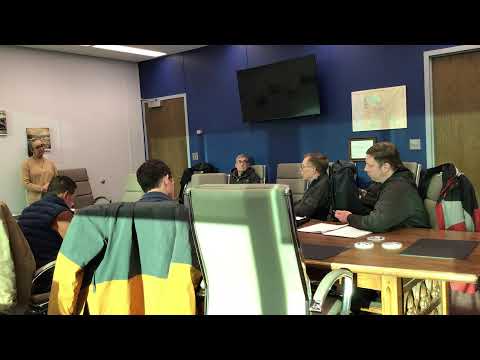
Representatives for the project sponsor SEL asked the Jamestown Planning Commission at a work session to consider reapproval of a previously approved site plan for the Gateway Center adaptive‑reuse project.
Lindsay Hovnerick, an attorney with Phillips Lytle representing the sponsor, told commissioners the project previously completed a multi‑year review with the city and that “we are getting close, though. That's why we're back here before you,” citing financing delays caused by COVID and a lapsed site‑plan extension (Lindsay Hovnerick, attorney with Phillips Lytle). She said the sponsor is pursuing funding from the New York State Housing Finance Agency, the Chautauqua County Industrial Development Agency, the New York State Empire State Development agency and a Federal Home Loan Bank program that uses an annual application round.
Why it matters: the applicant told the commission that a funding application round in March is a critical deadline for one of the secondary funders; without final local approvals for that round the applicant said it would need to wait another year to reapply.
Project scope and design details presented: the team said the redevelopment will adaptively reuse the existing Gateway Center building rather than demolish it. The sponsor described a total of 110 residential units, of which 56 units would be supported by the Empire State supportive housing initiative and 54 would be targeted to low‑ to moderate‑income residents. The site plan shows demolition of some ancillary on‑site structures, removal of two residential structures at 53 and 54 Water Street, expanded green space, a playground and pedestrian improvements along the river, and a 48‑space parking area using the existing Water Street driveway connection (presentation from project team).
Supportive services: the project team said on‑site social supports are planned, including care management, employment services and counseling; current site tenants that provide services to people experiencing homelessness and people with mental‑health needs were described as likely to remain on site though one operator was said to hold only an option on a separate property and therefore was not guaranteed to remain.
Zoning, environmental review and next steps: the sponsor said the redevelopment requires two area variances; the team expects to appear before the county planning agency and stated it has not yet completed a planning‑staff review. City staff told the commission the application has been treated as a Type I action that requires coordinated environmental review; staff said they will provide definitive answers about SEQR coordination and whether previous determinations need amendment before any final vote. The applicant asked commissioners for feedback now so staff and the applicant can incorporate comments and return with a refined package for a subsequent meeting.
Commission discussion highlighted several dependencies and risks: commissioners and staff asked about the March funding window, the status of state and federal environmental approvals (the transcript referenced an approved BCP work plan and an environmental easement), and whether prior informal agreements—discussed during earlier reviews—about off‑site remediation funding should be memorialized in writing. One commissioner asked whether a roughly $200,000 commitment discussed in earlier negotiations remains part of the project record; the applicant said prior exchanges exist in writing but no executed agreement had been located by the sponsor's representatives.
No formal decision was reached at the work session. Staff and the applicant agreed to continue the review: planning staff will review the full site‑plan and zoning variance application, the sponsor will continue negotiating financing and regulatory reviews, and the commission discussed scheduling a follow‑up meeting after staff comment.