Get Full Government Meeting Transcripts, Videos, & Alerts Forever!
Get email alerts on the Towing And Parking Enforcement topic
No spam. Unsubscribe anytime.
Committee hears resident towing briefing; members raise costs, notification and documentation concerns
Summary
Dallas staff briefed the Quality of Life Committee on emergency and non-consent towing procedures, notification timelines set by state law, and steps staff may take to improve documentation and explore booting; members flagged resident cost burdens and asked for tow-data and complaint processes.
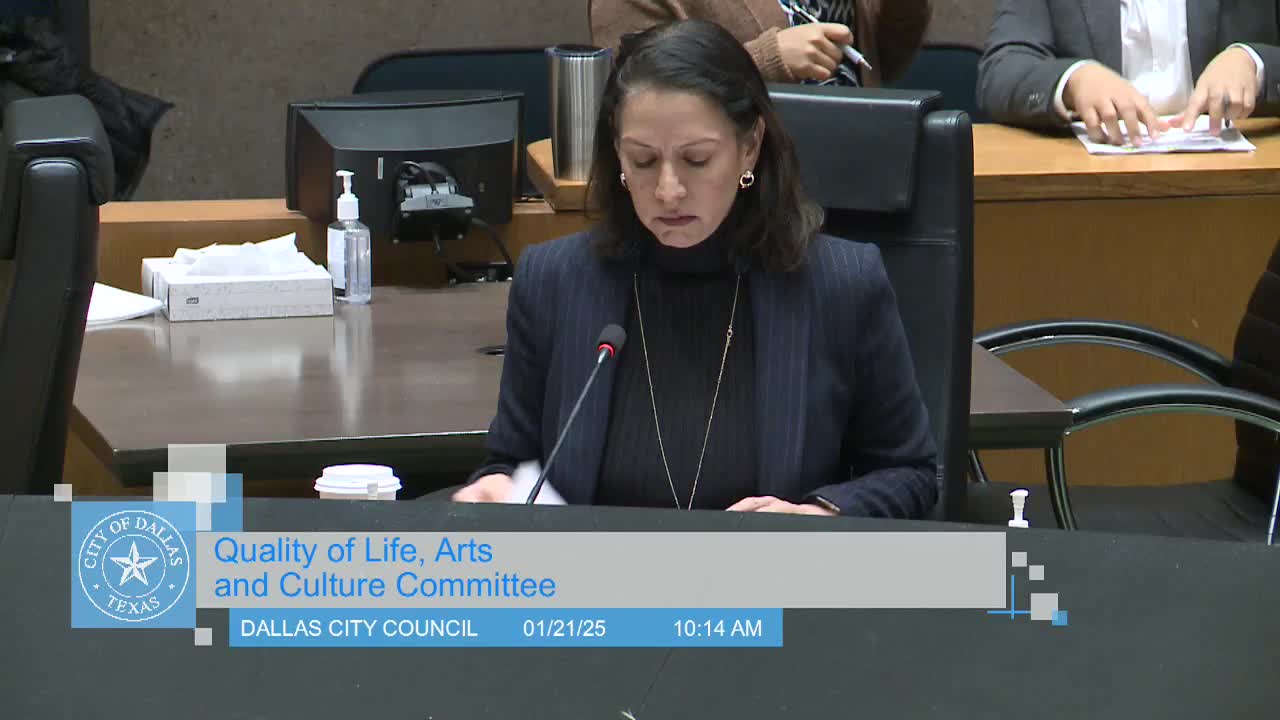
Scott Walton, assistant director for the Department of Transportation and Public Works, briefed the Quality of Life Committee on Jan. 21 about towing types and reclamation procedures and answered council questions about resident impacts and possible program changes.
Why it matters: Council members said non-consent tows and storage fees can impose significant financial burdens on residents who often learn of an impound only after fees have accrued. Committee members asked staff for tow counts, enforcement data and clearer complaint and damage‑reporting procedures.
Walton described two towing categories. Emergency tows are typically ordered by Dallas Police Department (or other public-safety agencies) for crashes or recovered-crime vehicles and are handled under city contracts; non-consent tows remove vehicles from private property under licensed private operators and are not controlled by city contract. He said, "One of the important parts of our ordinance is regardless of who tows, they have to contact, the Dallas Police Department within an hour of the vehicle being towed." That step, he said, allows the police department to direct owners to the correct tow yard.
Staff also noted certain notification timelines are set by Texas state law: tow yards must mail notice to a registered owner no sooner than 24 hours after towing and no more than five days after towing. Committee members criticized that window as creating an incentive for yards to delay notification and leave owners facing escalating storage fees before they are aware of the impound.
Members described resident impacts and pressed staff for data. Councilwoman Willis said fees can be crippling for low-income residents and described instances where storage, notification and administrative fees combine to produce hundreds of dollars before owners are informed. The city recommended the state regulatory complaint route (Texas Department of Licensing and Regulation) for tow-yard complaints; Walton said the department is exploring stronger pre/post-tow documentation and the feasibility of remote-unlock boot technology as alternatives to immediate towing.
The committee also discussed private-property tows (apartment complexes, private lots) and repeat complaints from residents who say they were legally parked yet towed. Walton said those situations typically involve a private property operator or an approved tow vendor and that the department can provide information and help residents pursue state-level complaints.
Ending: Council members asked staff to return with tow counts for 2024, details about tows from public rights of way vs. private property, and proposed language or pilot options (photo documentation, booting options, expanded notice methods) to reduce resident harm.