Get Full Government Meeting Transcripts, Videos, & Alerts Forever!
Get email alerts on the K 12 Education Budget topic
No spam. Unsubscribe anytime.
Cromwell School District proposes $40.5 million 2025–26 budget; board delays vote amid funding uncertainty
Summary
Superintendent and finance staff presented a proposed $40,516,219 budget — a 5.81% increase — driven by salaries, benefits and special education costs. Board members asked for follow-up on reimbursement rates, grant risk and several program changes and agreed to postpone a final vote until next week.
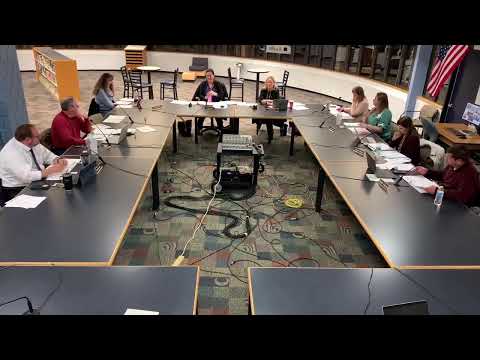
Cromwell School District officials presented a proposed 2025–26 budget of $40,516,219 — an increase of $2,225,975 (5.81%) — at a special school board meeting focused solely on the budget. Board members and administrators spent more than two hours reviewing line-item changes, program additions and revenue assumptions before agreeing to postpone a vote until the board’s next meeting.
The superintendent and finance staff said salaries and benefits are the primary drivers of the increase, together making up about 75% of the district’s spending. Finance presenters cited roughly $1.2 million in contractual salary increases and an approximately $330,000 increase for benefits as major cost components. “Our mission hasn’t changed. We wanna place our students first,” said Dr. Macri during the presentation, framing staffing and services as central to the proposal.
Why it matters: administrators warned that state and federal funding changes — particularly a drop in special-education reimbursement and a recent pause in federal grant disbursements referenced in the meeting — could materially alter the district’s outlook before the budget is finalized. Officials said they had budgeted conservatively for reimbursement and were continuing to monitor the Department of Education guidance and pending litigation referenced during the meeting.
Key numbers and drivers - Total proposed budget: $40,516,219; increase $2,225,975 (5.81%). - Salaries and benefits: about 75% of the total budget; contractual salary increases estimated at roughly $1,200,000. - Benefits: administrators reported a recent lock-in with the town and insurer Cigna at a 7% increase (revising an earlier projection near 17%), a change officials said freed up roughly $426,000 in the proposed budget.
Special education and reimbursements Officials said special-education costs remain the most volatile budget component. Administrators described a multi-year effort to budget more accurately by moving some costs between object codes and closely tracking student placements and reimbursements. They reported a current projected net balance in special-education budgeting of about $206,000, but warned that the state reimbursement rate is lower than in recent years and could fall further.
“If we get to below 59%, everyone’s gonna be in trouble,” an administrator said about the reimbursement threshold the district modeled; board members acknowledged the district’s current position depends on a sequence of favorable factors this year.
Program changes, additions and cuts - ESS (expanded school-based services): the superintendent said she restored $150,000 to support the middle-school ESS program after insurance savings; the district is still applying for grants to sustain that work. - Cooperative work-education position at the high school: the board heard a proposal to fund a full-time coordinator to build internships and formalize career pathways; cost in the slides shown to the board was listed as “8282” (presentation text) and was not clarified in the meeting materials as a finalized salary figure. - Credit-recovery tutor: a new 3-hour-per-day tutor position to run an in-house credit-recovery program intended to reduce outsourcing and preserve counseling/therapeutic continuity. - Central-office assistant for HR/reception: administrators proposed adding a noncertified assistant to support the human-resources director and school front office and security functions. - One certified teaching position: administrators plan to cut one certified teaching position through attrition because of low enrollment; they said no layoffs are expected.
Transportation and homeless students Administrators reported a large drop in homeless-related transportation costs compared with the prior year. To date the district said it had about six students identified as homeless and was spending about $10,000 on their transportation; last year the district reported roughly 20 students and about $177,000 in related costs (including one case that cost roughly $80,000). Officials cautioned those numbers can change quickly.
Contracts and outsourced services - Athletic trainer: the district proposed increasing the contracted athletic-trainer budget from about $50,000 to $70,000 to retain a trainer amid statewide wage pressure and a shortage of athletic trainers. Administrators said some neighboring districts are paying $72,000–$80,000 or offering benefits to trainers, creating retention pressure for Cromwell. - Technology services: the district intends to stop taking new equipment loans and instead use reserves and existing inventory to reduce long-term interest costs. Officials estimated avoiding loans will save the district interest previously totaling roughly $80,000 over the last four years; the 2025–26 technology allocations were presented as transitional (about $90,000) with larger planned budgets in subsequent years as prior loan payments drop off.
Communications and instructional materials Administrators proposed replacing several niche communication tools with ParentSquare, budgeting roughly $14,000 for the service and noting offsetting reductions where existing subscriptions will be discontinued (examples cited: Blooms and Intrado add-ons to PowerSchool). The presentation included changes in curriculum and instructional-material purchases tied to the district’s K–5 reading work and middle-school STEAM planning.
Budget presentation and next steps Presenters repeatedly urged the board that the proposed budget represented an attempt to balance instructional priorities with fiscal caution. Administrators said they used a conservative 60% estimate for special-education state reimbursement in building the budget and that they would continue to refine the figures before adoption.
Board action and process The board approved procedural items at the start of the meeting (agenda and prior minutes) but did not take a final vote on the 2025–26 budget. After extended discussion and requests for follow-up detail, board members agreed to postpone the adoption vote and reconvene the discussion at the board’s next meeting so members could review the materials and receive additional information from staff.
The board asked staff to circulate Department of Education updates, to continue pursuing grants to support ESS and related programming, and to work with legal counsel on federal-grant and compliance issues noted during the meeting. Administrators also said they would supply a written summary of the changes that were inserted into the board binders after the binders were printed (noting a cover sheet with those changes was distributed during the meeting).
The board’s delay leaves the proposed budget technically active but not adopted; administrators said they will return with any updated figures and answers before the board finalizes a vote.