Get Full Government Meeting Transcripts, Videos, & Alerts Forever!
Get email alerts on the Nfip Esa topic
No spam. Unsubscribe anytime.
Planners warn of federal NFIP–ESA changes that could reshape floodplain approvals in Yamhill
Summary
Staff told the commission that new federal guidance tied to the National Flood Insurance Program and Endangered Species Act will require local measures to avoid "net loss" of fish habitat; the commission discussed options including adopting a model ordinance, case-by-case review, or prohibiting development in flood hazard areas.
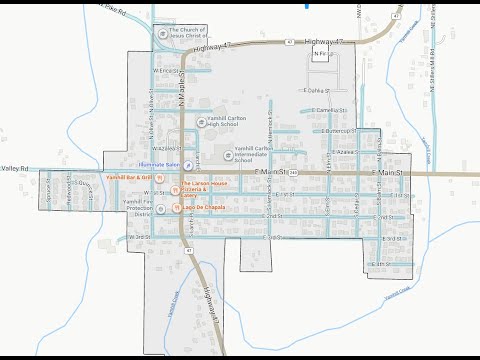
Planning staff briefed the Yamhill Planning Commission on impending changes to how floodplain development must account for threatened and endangered species under a coordinated FEMA / ESA process.
Staff said the change grew from litigation and a subsequent biological opinion by the National Marine Fisheries Service finding FEMA floodplain rules can harm fish habitat. The result is a push to require "no net loss" of fish habitat when development occurs in flood hazard overlay zones. Staff described three broad local options: adopt the FEMA model ordinance, conduct case-by-case analyses to demonstrate no-net-loss, or prohibit new development in flood hazard areas. Yamhill was described as one of roughly 230 jurisdictions across 31 Oregon counties affected by the federal action.
Staff warned that the model ordinance remains in development and that the city lacks immediate code authority to perform ESA-style case-by-case reviews. One near-term administrative option under discussion is a council action (resolution or application requirement) that would place on applicants the burden to show compliance with NFIP–ESA rules while the city establishes implementing code language. Staff said the practical short-term approach is to secure authority to review applications case by case, then follow with ordinance changes once model language and guidance are finalized.
Staff noted the conflict between the emerging ESA-based requirements and Oregon's clear-and-objective standards for housing, which could complicate applications for housing in flood hazard zones. The governor and congressional delegation had urged FEMA to allow more local process and time; FEMA acknowledged the request but indicated pressure from litigation requires progress on a shorter timetable. Staff said the deadline for a local decision about how to proceed was Dec. 1 and that the model code adoption timeline pushed into mid‑2025 (staff referenced a June 30, 2025 adoption milestone in the federal timeline).
Staff described practical elements of implementation: measures to reduce impervious area, vegetation preservation and replacement ratios (for example replacing large trees with multiple saplings), and contouring or other site measures to maintain fish passage after floods. Staff cautioned that while the city will need to implement changes to remain in the National Flood Insurance Program, large-scale immediate impacts to local development were expected to be limited because few parcels in Yamhill's UGA are available and practical for new floodplain development.
No formal code change was adopted at the meeting; staff said they would coordinate with the city attorney and council on an approach to secure short-term administrative authority and to prepare code amendments.