Get Full Government Meeting Transcripts, Videos, & Alerts Forever!
Get email alerts on the Code Enforcement topic
No spam. Unsubscribe anytime.
Council advances code enforcement ordinance changes and landlord‑tenant codification after yearlong review
Summary
Council members voted to report nuisance ordinance amendments (including graffiti treatment and a reduced penalty window) and to codify state landlord‑tenant protections in local code after a year of town halls, surveys and department changes; the committee also heard a departmental update on training, staffing and procedural reforms.
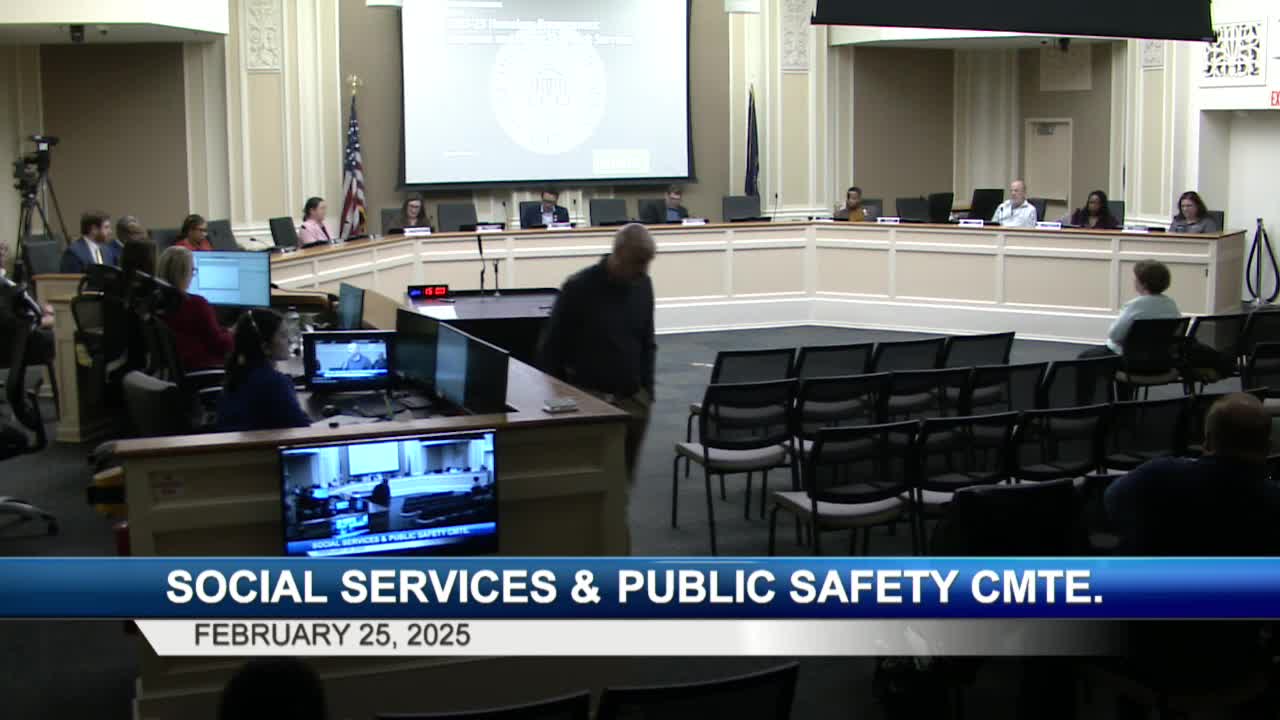
Councilmember Gray presented a yearlong review of code enforcement that included town halls, a resident survey, procedural reforms and proposed ordinance changes; the committee voted to report two ordinance amendments out to the full council for consideration.
Gray said the effort began in response to recommendations in the mayor’s racial justice report and included outreach events across multiple districts, a resident survey and close work with staff in the Division of Code Enforcement. “One person cannot do this alone,” she said, thanking legislative aides and city staff for participating in the effort.
The committee heard resident concerns about lack of follow‑up after complaints, inconsistent map displays of complaints and the need for better customer service and communication. Gray said 711 residents started the survey and 216 completed it; she noted that many survey respondents were older residents and that multilingual translations were provided for communities with non‑English speakers.
Director Lee Steele described internal reforms: accreditation from the International Accreditation Service, new formal training for housing officers, cross‑training with LexCall, conversion of field staff to fully mobile laptop‑equipped inspectors, recruitment of a bilingual Spanish‑speaking housing officer, and an emphasis on outreach and abatement to reduce excessive fines. Steele said the department is now fully staffed at about 21 field operatives and supervisors and has centralized some programs previously dependent on other funding sources. He said ongoing priorities include employee retention and adopting the 2024 building code later in 2025.
On ordinances, Gray proposed two sets of changes: (1) amendments to the nuisance code (chapter 12) to add graffiti as a nuisance (so it can be abated administratively rather than handled only as a criminal matter) and to reduce a specified penalty period from 24 months to 12 months; and (2) a local codification of state landlord‑tenant statute language into a new code section to make tenants’ protections easier to find. The committee’s law division confirmed the landlord‑tenant language mirrors the state statute (word‑for‑word as presented).
Gray moved to report both items to full council. The committee recorded voice votes to report the nuisance ordinance amendments and the landlord‑tenant codification out of committee; the motions passed and will next go to work session and council consideration. Committee members said they intend to continue work on other related reforms later in the year and to coordinate further with the Continuum of Care and other city boards where appropriate.
The committee also discussed graffiti abatement practice and noted that most graffiti complaints have been in right‑of‑way locations rather than private property; Steele said the department tries to work with property owners and managers and prefers abatement and corrective work over excessive fines where possible.
The committee did not adopt the ordinances at the meeting; it voted to send the amendments to full council for final action.