Get Full Government Meeting Transcripts, Videos, & Alerts Forever!
Get email alerts on the Parks And Trails Gilcrease topic
No spam. Unsubscribe anytime.
Tulsa parks department clears way for Gilcrease-area trails; board allows gravel parking
Summary
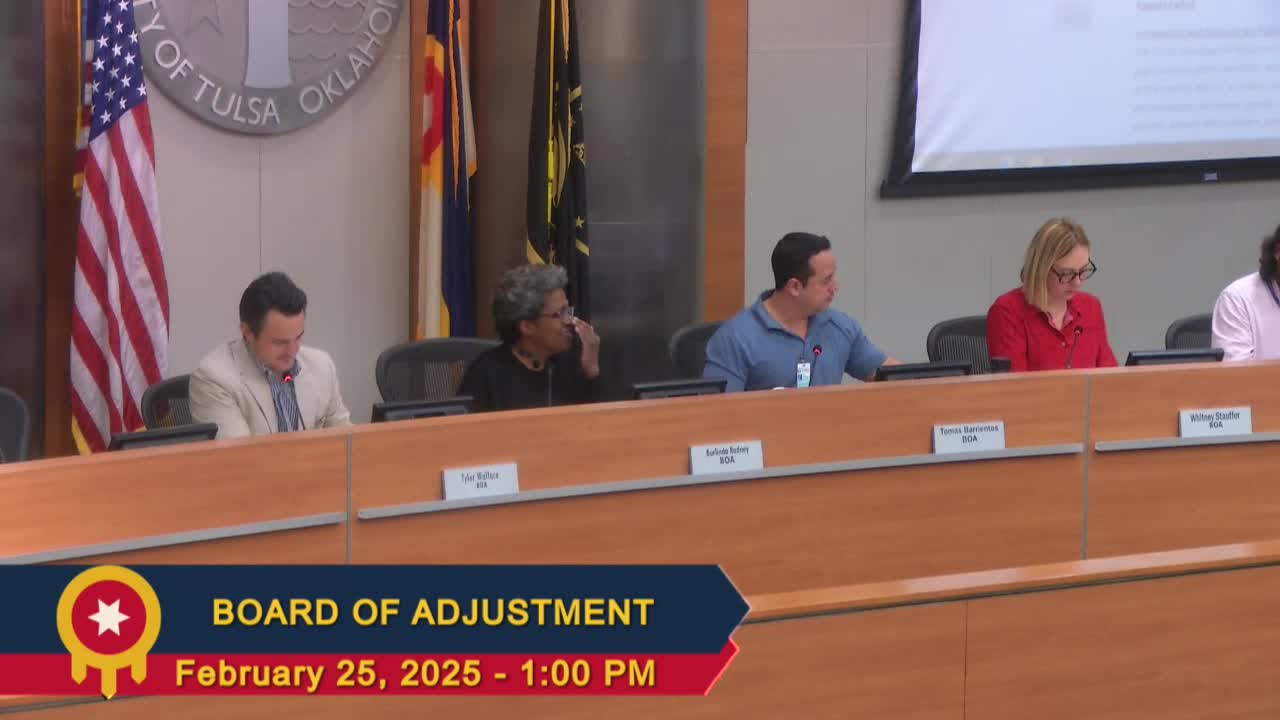
The Tulsa Board of Adjustment approved a special exception and a variance to allow parks-and-recreation trails south and west of the Gilcrease Museum and a gravel parking lot on the site after more than an hour of public comment and planning testimony.
Tulsa Parks and Recreation won approval from the City of Tulsa Board of Adjustment on a plan to build nonmotorized trails on several tracts of land south and west of the southwest corner of West Apache Street and North Gilcrease Museum Road, and to use a gravel surface for one of the new parking areas.
The board, meeting as Board of Adjustment Case BOA23833, voted unanimously to grant (1) a special exception permitting parks and recreation use in AG and RS-3 zoning districts and (2) a variance from the all‑weather surfacing requirement for the proposed parking lot in the AG district.
Why it matters: The project would open roughly 450 acres of city-owned land to soft‑surface hiking and bicycle trails, which city and nonprofit proponents say will expand city trail access on Tulsa’s north and west sides while removing debris and adding ongoing maintenance funding. Neighbors warned the board about trespass, dumping and wildlife impacts; trail advocates and city staff said increased, programmed use typically reduces those problems.
Dylan Sires, a Parks and Recreation presenter, described the requests to the board: "So what we're asking for today is a special exception for our parks and recreation use, on, these tracts of land that's south and west of the Southwest corner of Apache And Gilcrease Museum Road." He told the board the gravel parking variance is intended "to kind of really lean into the more rural natural setting of the area as well as the trails themselves." (Dylan Sires, Parks and Recreation.)
The applicant and partner nonprofit Bike Club emphasized low‑impact design and long‑term stewardship. Shane Hood of Bike Club said the group plans "to support, you know, kind of development of 14 miles of multipurpose trails. Someone asked earlier. This this means bicycles and hiking. No motorcycles. No motor vehicles." He added the trails will be designed to manage water and reduce erosion and that the club has a $600,000 maintenance endowment to support upkeep and security.
City parks director Anna America described day‑to‑day operations and security: "We will own and be responsible for and city staff will be locking and unlocking the gates on a day to day basis. City security will be the ones who will, patrol and check before they, you know, when they lock and unlock." She also said the city will partner with Bike Club for programming but will keep the facilities largely passive when not in use.
Neighbors voiced several concerns during the public‑comment period, including increased traffic on narrow 30rd West Avenue, livestock and fence damage, privacy, camping/encampments and proximity to active and abandoned oilfield infrastructure. Dennis Fagan, who lives adjacent to the proposed area, said the project "surrounds my property on a on a couple sides," and warned about potential conflicts with cattle and other rural uses.
Other public speakers pressed for attention to environmental features: Mary Byrne pointed out a small pond and a gully that she asked trail designers to avoid. Walt Costi and others asked that oilfield infrastructure be identified and secured before opening the site to the public. Parks staff responded they were coordinating with leaseholders and the city GIS and would adjust alignments and trail locations during final design.
River Parks Authority official Ryan Howell, who has led trail work at Turkey Mountain, told the board his agency's experience shows new trails often reduce vandalism, dumping and illicit use because increased daytime activity brings "eyes on the land." He said Tulsa remains underserved for trail mileage compared with regional peers and cited habitat restoration and forestry grants the project expects to use.
Parks and Bike Club offered specific mitigation and management commitments in response to neighbor questions: gates locked at dusk, minimal permanent lighting, controlled and gated access points, a maintenance endowment, periodic patrols by city security and a willingness to hold neighborhood design meetings before construction. Officials said porta‑potties would be temporary and used only for events; permanent bathrooms were not planned.
The board’s action and conditions: The board approved the special exception and the variance. The motion adopted by the Board of Adjustment limited the project to nonmotorized trails and the support uses shown on the conceptual plan presented to the board, required that support spaces (parking) be located in the positions shown on the plan, prohibited permanent lighting and prohibited construction of sports courts or sports fields and other infrastructure intended to support organized sports. The variance allowing a gravel parking surface was approved under the board’s finding that the property’s physical characteristics favor a lower‑impact surface.
Implementation and next steps: Parks staff and the Bike Club said they will continue parcel‑level fieldwork, carry out a neighborhood meeting and finalize trail alignment and site access with attention to oilfield leaseholders’ access, gated entry points, and removal of illegal dumping material already identified by volunteers and staff.
Quotes used in full in this report are drawn from the public hearing transcript and attributed to the named speakers above. The board recorded a unanimous vote to approve the special exception and the variance (vote tally recorded as 5‑0).
Ending: Parks and Bike Club leaders told the board they would return with final construction‑level plans and continue outreach. Neighbors and advocates left the hearing with commitments from staff to coordinate design details, secure oilfield infrastructure, and hold additional neighborhood meetings before construction begins.