Get Full Government Meeting Transcripts, Videos, & Alerts Forever!
Get email alerts on the Child Welfare topic
No spam. Unsubscribe anytime.
CASA of Lexington outlines volunteer-driven advocacy, warns funding limits curb capacity
Summary
CASA of Lexington told the council its volunteer program served hundreds of children across seven counties in 2024 but is meeting fewer than 20% of local need; staff and state/federal grants have shrunk, forcing increased fundraising and recruitment to maintain services.
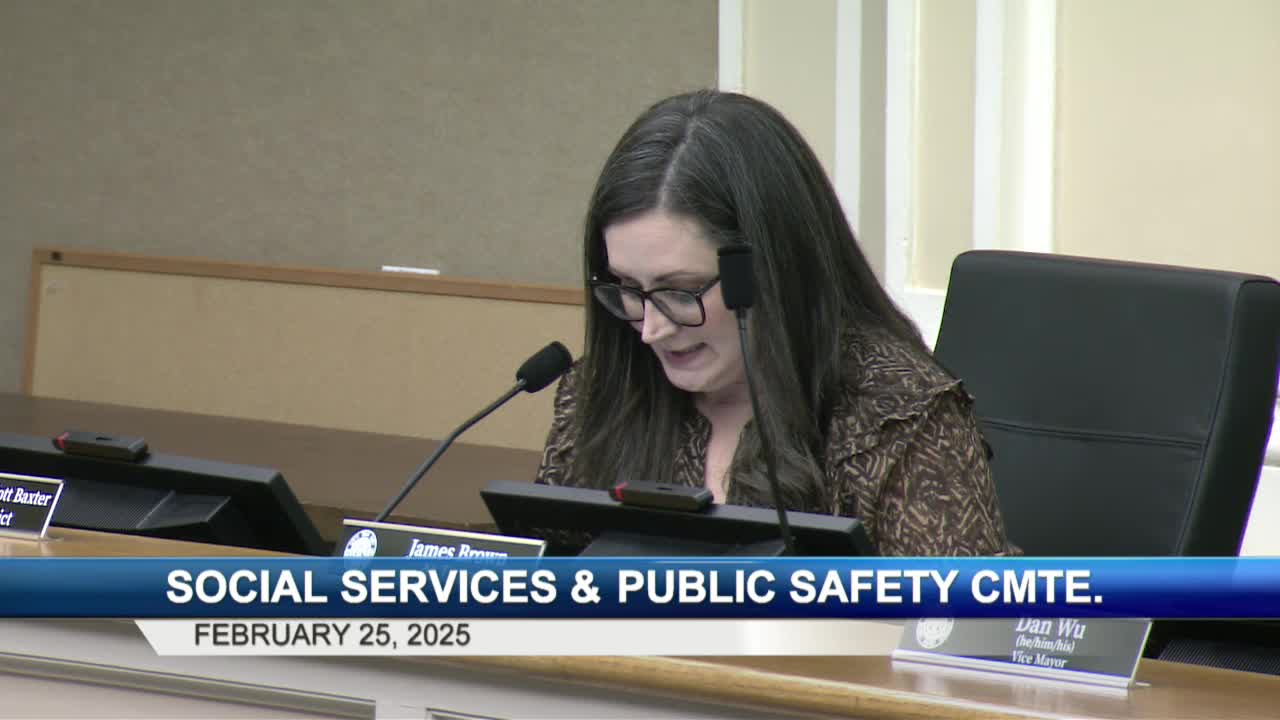
Melinda Jamieson, director of CASA of Lexington, told the Lexington City Council committee that the local Court Appointed Special Advocates program uses screened, trained volunteers to advocate for abused and neglected children in family court and that the program’s capacity is constrained by funding and staff limits.
CASA of Lexington’s volunteers are matched to children or sibling sets, visit at least monthly and prepare court reports for judges, Jamieson said. “The objective of the CASA volunteer is to find a safe and permanent home for that child,” she said.
The update matters because CASA volunteers are often the only consistent adult connected to children moving between multiple placements, Jamieson said, and the program currently serves a fraction of the need in Fayette County.
Jamieson said CASA of Lexington is part of a national network and operates as an independent 501(c)(3). In 2024 the organization reported 275 volunteers and served 673 children across seven counties (Fayette, Bourbon, Woodford, Scott, Jessamine, Garrard and Lincoln counties). Jamieson said Fayette County accounted for the largest share of services: 63 volunteers and 423 children served locally in the last calendar year, with 60 new children entering the family court system in Fayette County alone during that year. She said the program is serving under 20% of local need.
On funding, Jamieson described a mix of private donations, local government contributions, fundraising events and grants. She said the Victims of Crime Act (VOCA) federal funding that previously provided roughly $300,000 annually for the program has declined and is now about $138,000, and that a state non‑competitive grant administered by the Justice Cabinet and allocated through the Kentucky CASA Network is roughly $300,000 for the local program but faces future reductions. Jamieson said CASA of Lexington’s program budget for calendar year 2023 was “just shy of $1.4 million,” which equated to about $2,030 per child served that year.
Council members asked about other government funding and volunteer recruitment. Councilmember Sheehan asked whether the program receives other grants; Jamieson identified VOCA and the Justice Cabinet allocation and said the VOCA amount has decreased. Vice Mayor Dan Wu, a sponsor of the agenda item and a CASA volunteer, praised the program’s work and said he will seek support during the city’s budget process to increase the county’s contribution to CASA’s operating costs.
Jamieson described operational constraints created by state law that require a paid volunteer manager for every 30 CASA volunteers; she said the program needs both volunteers and paid staff to expand capacity and that recruiting and training volunteers has become more time‑intensive since the pandemic. She also described training and reporting requirements for volunteers (minimum age 21, 30 hours of initial training, annual continuing education and multi‑year case commitments).
Jamieson and council members also shared examples of individual outcomes where CASA advocacy led to corrected medical assessments and permanent placements. The presentation closed with an invitation for follow-up questions and additional detail about funding and evolving grant rules.
Jamieson offered to provide further documentation about grants and funding changes to council members who requested it.