Get Full Government Meeting Transcripts, Videos, & Alerts Forever!
Get email alerts on the Accessory Dwelling Units topic
No spam. Unsubscribe anytime.
Santa Rosa planning commission recommends zoning text updates to reflect recent state ADU and housing laws
Summary
The Planning Commission voted to recommend that City Council adopt amendments to the zoning code aligning local regulations with recent state laws affecting accessory dwelling units, density bonuses, shared parking and general-plan/zoning consistency.
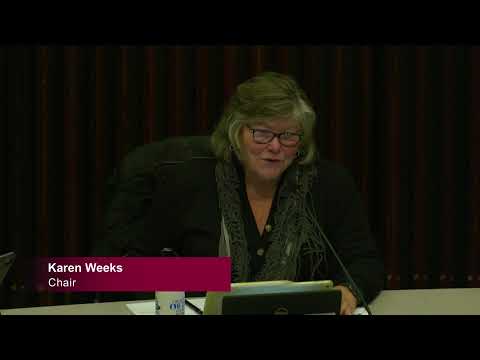
The Santa Rosa Planning Commission on Dec. 12 recommended that the City Council adopt a zoning-code text amendment to incorporate recent state legislation affecting accessory dwelling units (ADUs), density bonus provisions, shared parking rules and general-plan/zoning consistency.
The recommendation, adopted by motion and second, came after staff explained changes required by multiple state laws and a discussion among commissioners about how those changes affect unpermitted units, ADUs on SB 9 parcels and the city’s supplemental density-bonus options.
City staff said the text amendment updates local code to reflect bills enacted in 2021, 2023 and 2024. Deputy Director of Planning Jessica Jones told the commission the package includes: elimination of the owner-occupancy deed restriction for properties with ADUs; expanded eligibility for permitting certain unpermitted ADUs (changing the cut-off date from 2018 to 2020); provisions from Senate Bill 1211 that allow expanded detached ADUs on multifamily properties (up to a maximum of eight detached ADUs depending on existing multifamily unit count); clarifications on replacement of uncovered parking spaces when used to create ADUs; and adjustments tied to SB 9 lot-split provisions that allow jurisdictions to limit ADUs/JADUs on parcels created under SB 9.
The staff presentation also covered changes to the city’s density-bonus ordinance to implement Assembly Bill 1287’s additional density-bonus options, and smaller amendments such as strengthening rules for shared parking where professional parking studies are provided. Staff also described a new requirement to process applications consistent with objective general-plan standards when zoning does not implement the general plan.
Commissioner questions focused on how the city will treat previously unpermitted ADUs and what counts as a threat to health and safety that could still block legalization. Planning staff explained that “unpermitted” in this context means the unit lacked required permits and that the statute narrows exceptions: violations may only be corrected where necessary to comply with the substandard-building standards in Health and Safety Code section 17920.3. Staff also described options staff considered for regulating ADUs and junior ADUs on lots developed under SB 9, and recommended a middle approach that allows ADUs/JADUs in many cases but limits them in high-fire areas (the wildland-urban interface) and on narrow streets to protect emergency access and parking.
The Planning and Economic Development Department reported that the amendment package was noticed by newspaper ad and through the city’s web page and distribution list; staff said they received a comment letter within the hour prior to the meeting raising concerns about consistency with state law, and that staff will continue to coordinate with the Department of Housing and Community Development after council action.
Commissioner Sisco moved the resolution recommending that the City Council adopt the zoning-code text amendment (file REZ24-004); Vice Chair Duggan seconded. A roll-call vote recorded the motion as passed. The Planning Commission’s recommendation will be transmitted to the City Council for final action, tentatively scheduled by staff for Jan. 7.
A summary of next steps: staff will finalize the ordinance language, continue review with the state Department of Housing and Community Development as needed, and bring the draft ordinance to City Council. If the council adopts the ordinance but later the state requires further modifications, staff said they would return to the commission to adjust the local code.