Get Full Government Meeting Transcripts, Videos, & Alerts Forever!
Get email alerts on the Parks And Events topic
No spam. Unsubscribe anytime.
Parks board defers decision on liquor sales for Rock the Ruins after neighborhood concerns
Summary
The Indianapolis Board of Parks and Recreation heard extended testimony on security, parking, turf damage and wildlife before declining to finalize approval for liquor sales at the Rock the Ruins concert series; staff and the promoter agreed to return with more community consultation at the board's March meeting.
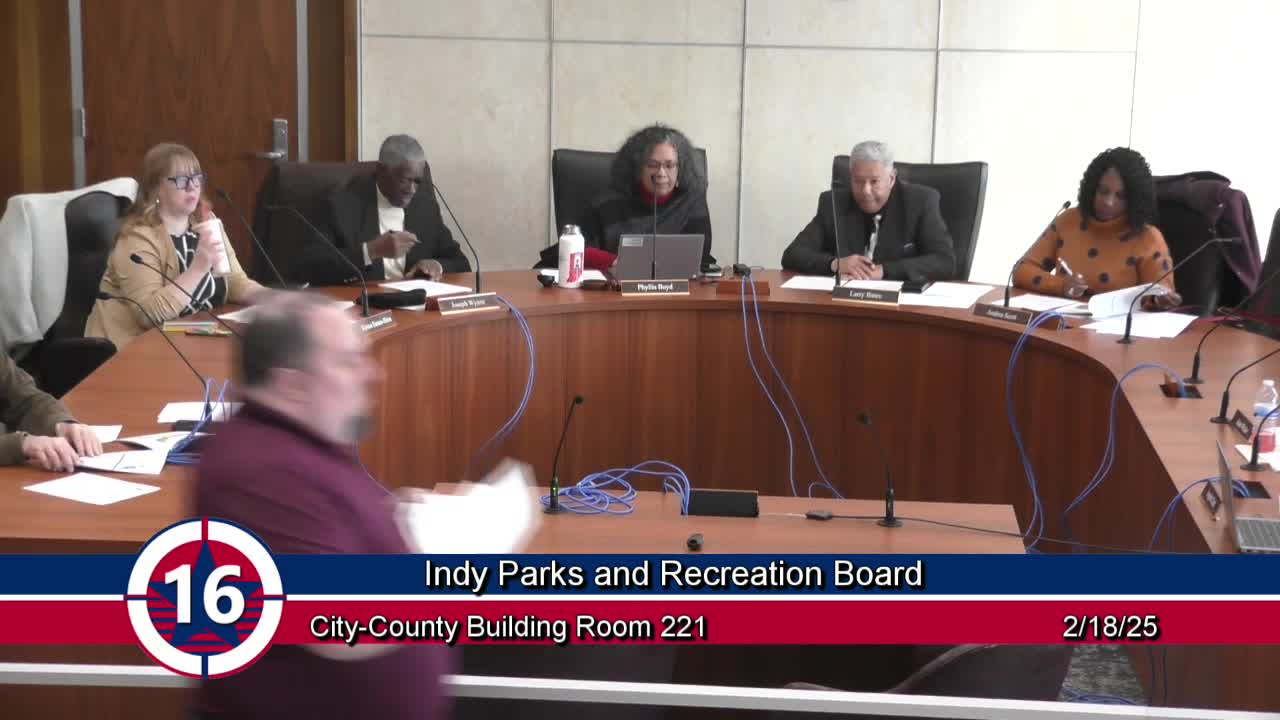
The Indianapolis Board of Parks and Recreation heard detailed testimony and deferred a final decision on allowing the sale of alcohol, including liquor, at the 2025 Rock the Ruins concert series at Holiday Park.
The board’s Feb. 18 meeting included presentations from Indy Parks staff and Jenny Boyds, CEO of promoter 45, who described operational changes for 2025: a commitment to hold no more than 12 ticketed shows, limit performances to Thursday through Saturday during summer months, require fenced, ticketed entry, conduct sound monitoring, and remove staged infrastructure after each weekend. Shyla Learson, Indy Parks’ north regional manager, joined Boyds in describing security and transportation plans, including two off‑site satellite parking lots with free shuttles and a plan to place off‑duty officers at key intersections during egress.
The promoter said the event provides both rental income to Indy Parks and donations to the Holiday Park Foundation. In the discussion the promoter and staff described a per‑event rental payment to Indy Parks of $1,250 and a per‑event donation to the Holiday Park Foundation of $2,500; they said Rock the Ruins has contributed about $170,000 cumulatively through those two vehicles to date. The board and staff did not provide further breakdowns of how foundation donations have been spent.
Several board members and other speakers pressed the promoter and staff for more detail on neighborhood impacts. Concerns included off‑site parking spilling into residential streets, pedestrian safety at night, long‑term turf damage and reseeding timing, and possible disturbance to nocturnal wildlife. Some board members said they were uncomfortable with the inclusion of distilled liquor for sale at a neighborhood park, distinguishing beer and wine from hard liquor in their concerns about risk.
Board members said staff and the promoter have held multiple community meetings but requested additional follow‑up and clearer commitments from all parties. Staff said it has been meeting with neighbors and would continue outreach.
Because members said they were not ready to vote, the board did not adopt the alcohol authorization at the Feb. 18 meeting. Staff and the promoter agreed to return with more documentation and community feedback at the board’s next regular meeting, scheduled for March 18, 2025, so members could consider revised mitigation steps before a final vote.
The board did not take final action on the memorandum that would authorize liquor sales; the item remains pending.