Get Full Government Meeting Transcripts, Videos, & Alerts Forever!
Get email alerts on the Protective Orders Firearms topic
No spam. Unsubscribe anytime.
Lawmakers consider requiring surrender of firearms when judges issue temporary domestic‑violence protections
Summary
House Bill 10 50 would require people subject to interim or temporary domestic‑violence protective orders to surrender firearms and bar purchases while the order is in force.
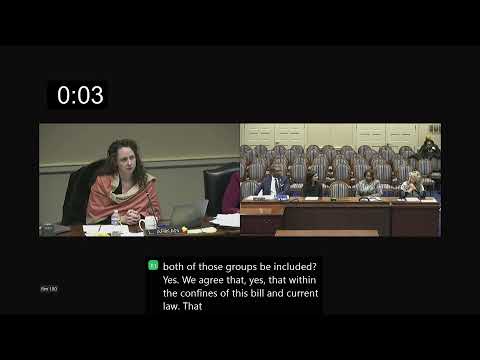
The House Judiciary Committee heard testimony on House Bill 10 50, a measure that would require respondents under interim or temporary domestic‑violence protective orders to surrender firearms and prohibit purchase or possession while the order is in effect.
Lede: Research and victims’ testimony framed the day’s debate: public‑health academics and advocates argued immediate firearm relinquishment reduces risk during the most dangerous period in abusive relationships; law‑enforcement witnesses supported the goal but urged implementation language and resources to carry out safe removals.
Nut graf: Supporters said access to firearms dramatically raises the risk that abuse will become fatal; opponents and some sheriffs emphasized the need for judicial findings or warrants before entry and asked for clear, operational procedures for safe seizures to protect officers and communities.
Body: Johns Hopkins Center for Gun Violence Solutions researchers told the committee their study found a statistically significant decline in intimate‑partner homicides in states that require removal for ex‑parte restraining orders and that require formal relinquishment after protective orders. Survivors and advocates recounted cases where respondents kept guns while orders were in effect; some survivors said immediate relinquishment likely would have prevented murder or severe violence.
Law‑enforcement representatives supported tightening the law but told the committee many practical questions must be answered: how to verify weapons, how to handle unregistered firearms, how to avoid unsafe home entries and when a search warrant is required. The police and sheriff groups also recommended pilot programs and increased training and funding to ensure safe execution of seizure orders. The Department of Health asked the committee to create a task force and gave the panel a draft amendment to extend the task force timetable to 12 months, a change the department said would allow better study and stronger implementation planning.
What backers proposed: The bill’s sponsor and advocates have offered amendments to narrow the petitioner questions to “if known” items, to require sheriff or police follow‑up, to create a task force led by the newly created state Center for Firearm Violence Prevention and Intervention, and to tighten language about surrender and a prohibition on new purchases during the order.
Concerns raised: Civil‑liberty advocates and others asked for guardrails to protect due process and privacy, and defense‑oriented witnesses stressed constitutional limits identified in recent court decisions (including the Supreme Court’s Rahimi opinion) — while some opponents argued ex parte seizure without a warrant could raise legal problems. Several members asked agencies for information and models from states such as Washington and Connecticut that have earlier versions of similar laws.
Ending: The committee accepted sponsor amendments and asked for further refinement of language and piloting options; members signaled the bill will return with additional technical edits and implementation guidance.