Get Full Government Meeting Transcripts, Videos, & Alerts Forever!
Get email alerts on the Juvenile Justice Grants topic
No spam. Unsubscribe anytime.
Criminal Justice Coordinating Council outlines juvenile-justice advisory group, $18 million in grants and program priorities
Summary
Stephanie Mickelson, juvenile justice program director at the Criminal Justice Coordinating Council, briefed the committee on the State Advisory Group (SAG), its statutory role, membership, monitoring responsibilities under the JJDP Act, and roughly $18 million in grant funds the council administers for juvenile programs.
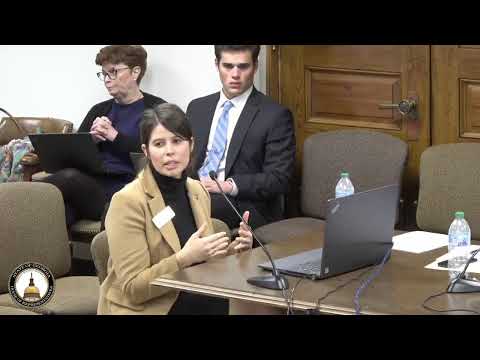
Stephanie Mickelson, juvenile justice program director at the Criminal Justice Coordinating Council (CJCC), told the House Judiciary Juvenile Committee that Georgia’s State Advisory Group (SAG) for juvenile justice is a 19-member, governor-appointed advisory body required by federal and state statute. The group produces a three-year juvenile-justice plan, oversees grant funding, and monitors compliance with core requirements of the Juvenile Justice and Delinquency Prevention (JJDP) Act.
Mickelson said the SAG focuses on strategic priorities identified through a state community-response survey (responses from more than 600 stakeholders across 100+ counties) and that the committee this year prioritized supporting CHINS (children in need of services) partners, increasing community-appropriate programming, and improving system compliance and partnerships. “We have 19 members right now,” Mickelson said, describing the SAG’s multidisciplinary membership that includes mental-health experts, DJJ representatives, juvenile court officials, local elected officials and law enforcement.
Mickelson described CJCC’s role in grant administration and monitoring. She told the committee the advisory group oversees about $18,000,000 in juvenile-justice funding across several programs; roughly 90 percent of that amount goes to subawards at the local level, with small percentages covering staff and oversight. She identified four open grant programs: a juvenile-justice incentive grant, two delinquency-prevention grants, and an intervention-and-prevention grant aimed at violence reduction and mental-health supports in schools; she also noted a competitively awarded Stop School Violence grant recently closed after a multi-year award.
On compliance, Mickelson explained key JJDP core requirements CJCC monitors: deinstitutionalization of status offenders (DSO), limitations on secure custody of status offenders and sight-and-sound separation for juveniles in adult facilities. She said the state has not experienced a federal funding deduction for noncompliance during her tenure and that staff conduct regular monitoring and technical assistance to local grantees. Mickelson said some grants are competitive and others route through juvenile courts; local governments and nonprofits can apply depending on the program. When asked about federal executive actions or guidance affecting funding, she said CJCC was awaiting federal direction and had not received specific changes to alter current grant activity.