Get Full Government Meeting Transcripts, Videos, & Alerts Forever!
Get email alerts on the Demolition Program topic
No spam. Unsubscribe anytime.
Tulsa code enforcement explains demolition program funded by CDBG; program prioritizes rehabilitation but can cover voluntary demolitions
Summary
Code enforcement described how CDBG dollars pay inspector salaries, support voluntary demolition incentives and allow the city to remove blighted structures when owners fail to bring properties into compliance.
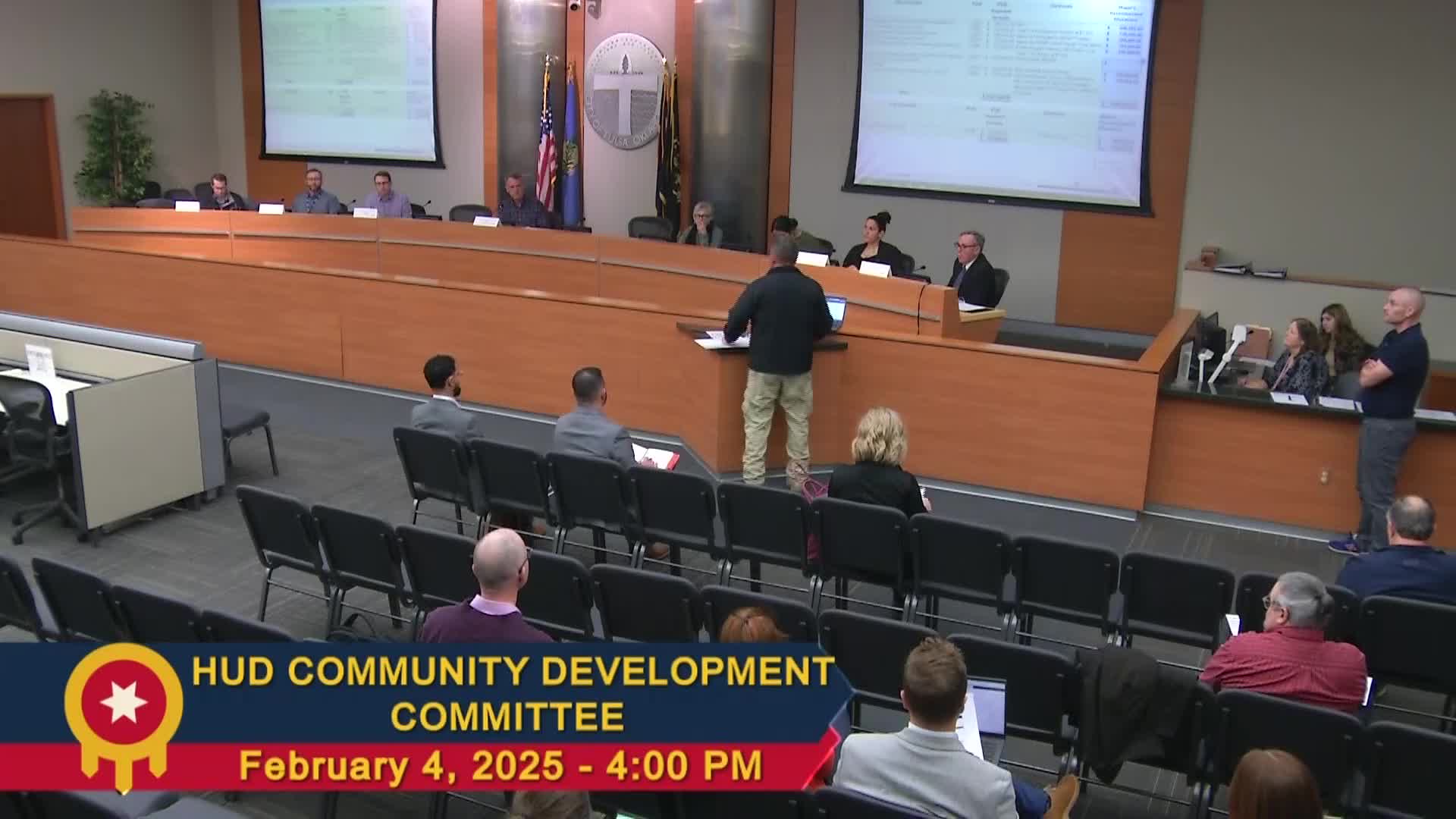
Tulsa—s Code Enforcement Division briefed the Housing and Urban Development Community Development Committee on Feb. 4 about how the city uses CDBG funding to address blighted properties through both rehabilitation efforts and a voluntary demolition incentive program.
Kevin Cox, who identified himself as a Code Enforcement Division official, said the program funds two inspector salaries and supports city actions to address neglected structures. "Our demolition program through the CDBG is used in, to pay for 2 inspector salaries. But on top of that, it is also, to address blighted properties that have, you know, that have been neglected, that have fallen to a state of disrepair," Cox said.
Program purpose and how it works
Cox said the division prefers rehabilitation when possible and spends time with property owners on construction schedules and permitting to bring buildings up to safe, habitable standards. The CDBG-funded program includes an application-driven demolition incentive that allows a property owner who meets program conditions to have a structure demolished at no cost to the owner. Owners retain title to the parcel even if the structure is removed.
"One of the primary goals that we do through our demolition program is to get these houses rehabilitated. So we spend a lot of time with property owners that wanna rehabilitate their properties ... to bring the property back up to a safe, habitable living condition," Cox said. He added that when owners fail to comply the city can use CDBG funds to remove structures.
Program scale and costs
Reese Williams, grants administration staff, said the mayor's recommendation included approximately $420,000 for the demolition program, split into roughly $144,000 for program delivery and $276,000 for demolition costs. She said the city—s average demolition cost is about $7,200 and that the recommended demolition budget would fund roughly 40 demolitions.
What this does and does not change
Cox emphasized that demolition is not an immediate first step but a last resort after attempts to rehabilitate properties and work with owners. He said the division also uses the program for accessory structures such as detached garages when owners cannot afford repairs.
Ending and next steps
Committee members asked for additional program detail and utilization numbers; Cox said he could provide exact rehabilitation-vs-demolition statistics on request. The committee will consider the demolition program funding as part of the broader CDBG package at its public hearing Thursday.
Speakers in this item included Kevin Cox, Code Enforcement Division; Reese Williams, Grants Administration; and committee members Scott (District 2) and others who asked clarifying questions.