Get Full Government Meeting Transcripts, Videos, & Alerts Forever!
Get email alerts on the Court Improvement Program topic
No spam. Unsubscribe anytime.
Court Improvement Program director outlines Georgia’s Justice for Children projects and data efforts
Summary
Diane Roo Johnson, director of Georgia's Court Improvement Program, told the House Judiciary Juvenile Committee about J4C’s work to collect judicial data, shorten time to reunification, and support foster-care permanency programs.
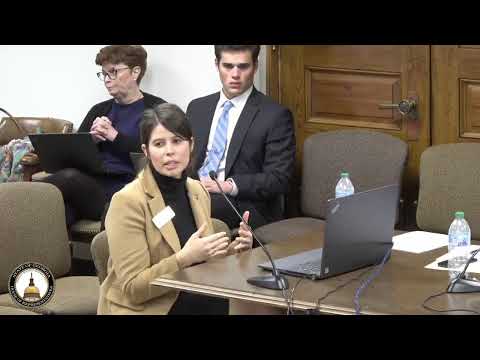
Diane Roo Johnson, Court Improvement Program Director for the State of Georgia, told the House Judiciary Juvenile Committee that the Supreme Court’s Committee on Justice for Children (J4C) and the Court Improvement Program (CIP) run multiple projects aimed at improving outcomes for children involved in the child-welfare and juvenile-court systems.
“J4C is a multi-disciplinary task force that supports and advises Georgia's Court Improvement Program,” Johnson said, describing J4C’s history (formed in 1995) and its role in advising and supporting court improvements. She listed ongoing projects that include a rewrite of the child-welfare attorney trial notebook, a data collection project called Judicial Court and Attorney Measures of Performance (JCamp) to gather juvenile-court data, a joint initiative with DFACS to shorten time from removal to reunification, and a Foster Care Cold Case Project that re-examines cases of children at risk of aging out without permanency.
Johnson said the federal Court Improvement Program grants, administered through the Children's Bureau, fund CIP work and generally operate on a reimbursement basis; she told the committee the grant was "on for now" but that the program was watching possible changes to the Department of Health and Human Services. Committee members asked about local data and trends. Johnson said Georgia’s size and the independence of 159 counties mean that trends vary by locality; she said juvenile courts are increasingly interested in child-welfare outcome data and in comparing county performance.
Committee members also raised workforce concerns. A committee member reported a turnover rate of 43.5 percent and said that figure had been presented to the Appropriations Subcommittee; Johnson said turnover shows up in court data as a factor in continuances when case managers are unavailable or new to cases.
Johnson closed by noting J4C meets quarterly, supports judge education and scholarships, administers a court process reporting system for near-real-time data exchange between DFACS and courts, and offers the annual Justice Harris Hines Award for exemplary child-welfare workers.